
- $38 million: Potential funding from the U.S. Department of Commerce for Diraq's quantum computing efforts.
- 2029: Diraq's ambitious deadline to deliver a quantum computer capable of outperforming supercomputers.
- $100 million: Total raised by Diraq from deep-tech specialists and global funds.
Experts would likely conclude that Diraq's silicon-based approach, combined with McGregor's semiconductor expertise, positions the company as a strong contender in the race to commercialize scalable quantum computing.
From Windows to Quantum: A Tech Titan's Bet on Silicon's Future
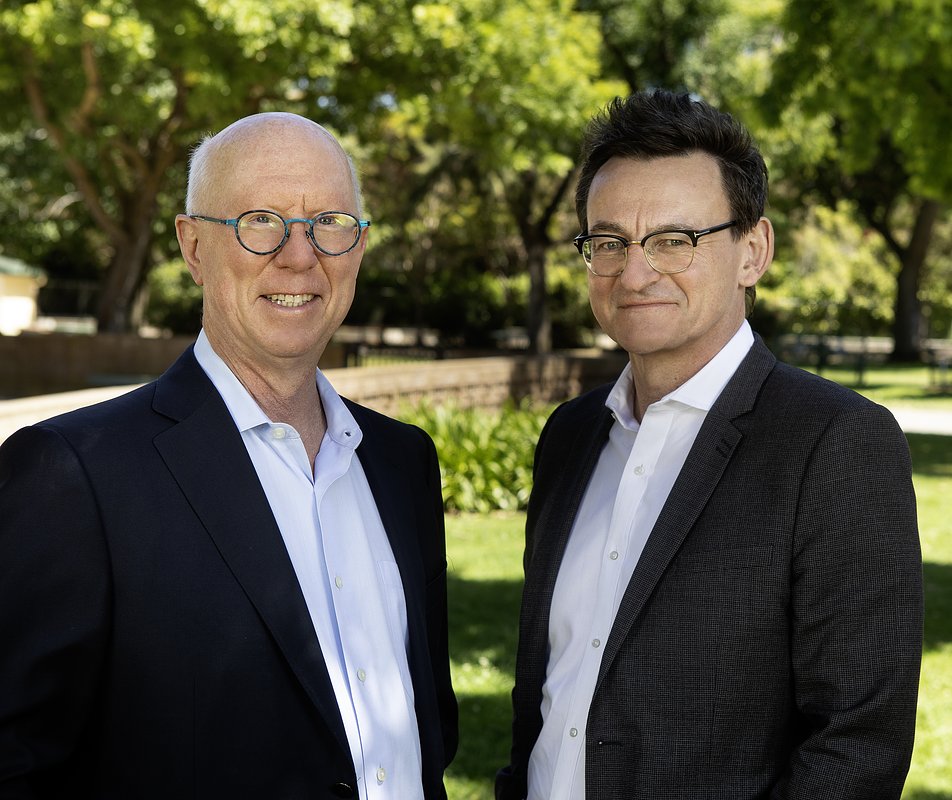
PALO ALTO, CA – June 08, 2026 – In a move that sends a clear signal about the future of quantum computing, pioneer Diraq has appointed Scott A. McGregor as its new Chairman of the Board. For those who track the history of technology, the name resonates. McGregor is a semiconductor industry titan, the former CEO of Broadcom and Philips Semiconductors, and part of the original team that developed Microsoft Windows 1.0. His decision to chair a quantum startup isn't just a high-profile appointment; it's a strategic declaration that the race to build a practical quantum computer may be won not in exotic new labs, but in the familiar, silicon-producing foundries that power our digital world.
The appointment marks a critical inflection point for Diraq as it pivots from deep research into aggressive commercialization. The company is betting that McGregor’s legendary experience in scaling global semiconductor giants is the final, crucial ingredient needed to bring its silicon-based quantum processors to market by its ambitious 2029 deadline.
“The quantum computing race will closely mirror the evolution of the classic semiconductor industry, and the ultimate winners will have the most scalable manufacturing economics,” said McGregor in a statement. “Diraq’s silicon-based approach is the most promising path forward.”
A Veteran's New Frontier
McGregor’s career is a roadmap of modern computing's evolution. From his foundational work on graphical user interfaces at Xerox PARC and Microsoft to his leadership transforming Philips Semiconductors (now NXP) into a profitable powerhouse and steering Broadcom’s massive growth before its $37 billion acquisition, his expertise is in turning breakthrough technology into mass-market reality. His transition to Diraq is therefore less a retirement project and more a targeted application of a lifetime's experience to a new, formidable challenge.
His deep background in Complementary Metal-Oxide-Semiconductor (CMOS) technology—the bedrock of the modern electronics industry—is precisely what Diraq needs. While competitors explore modalities like superconducting circuits or trapped ions, which require bespoke, cryogenically cooled, and often difficult-to-scale hardware, Diraq has staked its future on silicon.
“We’ve shown that silicon chips are the best path forward for economical and ubiquitous quantum computing,” said Diraq CEO and Founder Andrew Dzurak. He noted that McGregor’s “commercial leadership will be critical as we accelerate the roll out of our technology and scale the global deployment of Diraq’s quantum computers.” This sentiment underscores a strategic shift: the primary challenge is no longer just about proving quantum mechanics, but about mastering manufacturing and economics.
The Silicon Wager: A Path to Quantum Scale
At the heart of Diraq's strategy is a proprietary technology based on 'quantum dots'—tiny semiconductor structures that can trap single electrons and use their quantum 'spin' property to act as a qubit. This innovation, born from two decades of research by Dzurak, is designed to be fully compatible with the standard CMOS manufacturing processes used by today's chip foundries.
This is the company's core differentiator and its most significant wager. Instead of building a new multi-billion dollar industry from scratch, Diraq plans to leverage the existing, multi-trillion dollar semiconductor ecosystem. This approach promises to sidestep the immense manufacturing hurdles and costs faced by other quantum modalities. If successful, Diraq could potentially print millions of high-quality qubits onto a single chip using the same infrastructure that produces the processors in our phones and computers.
This silicon-based approach directly addresses what many industry analysts see as the Achilles' heel of the quantum revolution: scalability. While rivals have demonstrated impressive small-scale quantum processors, the path to the millions of stable qubits needed to solve commercially relevant problems remains fraught with scientific and engineering challenges. Diraq argues that by piggybacking on the most mature and scaled manufacturing process on Earth, it can leapfrog these challenges. The 2029 goal to deliver a product capable of outperforming supercomputers in finance, health, and energy is audacious, but it is grounded in this strategy of industrial scaling.
Building a Quantum Ecosystem: U.S. Ambition and Strategic Alliances
Diraq's leadership change is happening in concert with an aggressive U.S. expansion, bolstered by powerful alliances and significant government interest. The company, originally founded in Sydney, Australia, has established its U.S. headquarters in Palo Alto and is rapidly growing its American team. This expansion is not just about talent acquisition; it's a strategic move to embed itself within the world's largest technology market and align with U.S. national priorities.
A recent Letter of Intent with the U.S. Department of Commerce for up to $38 million in proposed funding from the CHIPS Research and Development Office highlights this alignment. The CHIPS Act is designed to boost domestic semiconductor capabilities, and Diraq's CMOS-compatible technology makes it a natural fit. This potential funding serves as a powerful endorsement of Diraq's approach and its importance to securing a U.S. foothold in the future of critical computing technologies.
The strategic value of Diraq’s partnerships further solidifies its industrialization strategy. A collaboration with GlobalFoundries, a leading semiconductor foundry, provides a direct and credible path to manufacturing at scale. Alliances with tech giants like Dell and Nvidia signal a clear go-to-market plan, envisioning a future where Diraq's quantum processors are integrated into enterprise data centers and the broader high-performance computing ecosystem.
Perhaps most tellingly, Diraq counts In-Q-Tel (IQT) among its early investors. As the strategic investor for the U.S. intelligence community, IQT's involvement underscores the geopolitical significance of the quantum race. “Making quantum available at scale is a necessity because the true value of quantum will come from widespread access to the technology, which is why Diraq’s focus on industrialization is important,” said Diana Keenan, a Director at IQT. This backing, along with over $100 million raised from deep-tech specialists and global funds, positions Diraq not just as a technology pioneer, but as a key player in the strategic landscape of the 21st century.