
- €2 million grant from the European Union to lead the ADWANCE-Asia project over three years.
- Wastewater surveillance can detect pathogens days or weeks before clinical cases appear.
- Multi-pathogen genomic sequencing enables simultaneous scanning for a wide array of threats, including drug-resistant tuberculosis.
Experts would likely conclude that ADWANCE-Asia represents a strategic and scientifically sound approach to enhancing global pandemic preparedness, particularly in low- and middle-income countries, by leveraging wastewater surveillance for early outbreak detection and public health intervention.
From Sewers to Sentinels: Asia's New Pandemic Defense Network
SINGAPORE – June 09, 2026 – In the quiet, unseen infrastructure beneath our cities, a new frontline is being established in the global fight against pandemics. Singapore's Duke-NUS Medical School has secured a €2 million grant from the European Union to lead a groundbreaking three-year project, ADWANCE-Asia. The initiative aims to transform municipal wastewater from a sanitation byproduct into a powerful, data-rich early warning system for infectious disease outbreaks across the continent, with a sharp focus on equipping low- and middle-income countries (LMICs) with this next-generation capability.
Led by the Duke-NUS Centre for Outbreak Preparedness (COP), the project represents a significant step in operationalizing the hard-won lessons of the COVID-19 pandemic. The core concept is to detect pathogens circulating in a population through wastewater and environmental surveillance (WES) days or even weeks before individuals become sick enough to seek clinical care. This lead time is a critical advantage for public health authorities, enabling preemptive action rather than reactive crisis management. For leaders who value execution over hype, ADWANCE-Asia is a case study in the practical application of emerging technology to solve one of our most pressing global challenges.
The Science of the Unseen: Turning Wastewater into Data
The power of WES lies in its ability to provide an unbiased, population-level health snapshot. While clinical surveillance relies on individuals being tested, WES aggregates biological information from thousands of people into a single, cost-effective sample. The true innovation, however, is what happens after the sample is collected. ADWANCE-Asia will leverage cutting-edge genomic sequencing to unlock the information hidden within.
By employing techniques like multi-pathogen genomic sequencing and targeted next-generation sequencing (tNGS), laboratories can move beyond testing for a single virus like SARS-CoV-2. Instead, they can simultaneously scan for a wide array of threats. This includes vaccine-preventable diseases, emerging viruses like mpox, and even the genetic markers of antimicrobial resistance—a silent pandemic in its own right. The Asia Pathogen Genomics Initiative (Asia PGI), the Duke-NUS program that provides the foundation for this work, has already prioritized threats like drug-resistant tuberculosis, a persistent scourge in the region.
This approach turns a wastewater treatment plant into a sophisticated biosurveillance outpost. Rather than waiting for hospital admissions to spike, officials can see the faint signal of a pathogen's arrival and track its spread and evolution in near real-time. It’s a paradigm shift from counting the sick to anticipating sickness.
"This is about helping countries get ahead of outbreaks before they reach vulnerable populations," said Duke-NUS Assistant Professor Vincent Pang Junxiong, the project lead for ADWANCE-Asia. "By detecting multiple pathogens from a single wastewater sample, this approach can give public health an earlier signal of what may be circulating in the community, potentially even before a surge in cases is reported, so that they can act faster and more effectively."
A Strategic Shield: The Geopolitics of Global Health
The €2 million grant is not an act of charity but a calculated strategic investment by the European Union. The funding, managed by the European Health and Digital Executive Agency (HaDEA) on behalf of the Health Emergency Preparedness and Response Authority (HERA), underscores a fundamental reality of the 21st century: a health threat anywhere is a health threat everywhere. HERA was established in the wake of the COVID-19 pandemic with a clear mission to strengthen the EU's ability to prevent, detect, and rapidly respond to cross-border health emergencies.
By funding ADWANCE-Asia, the EU is extending its health security shield far beyond its own borders. The project builds on lessons from similar EU-led programs, including EU-WISH in Europe and the Wastewater Surveillance for Africa Initiative, creating a global network of interconnected surveillance systems. This coordinated effort aims to build a global early-warning tool, preventing regional outbreaks from escalating into global crises that disrupt supply chains, ground travel, and threaten lives worldwide.
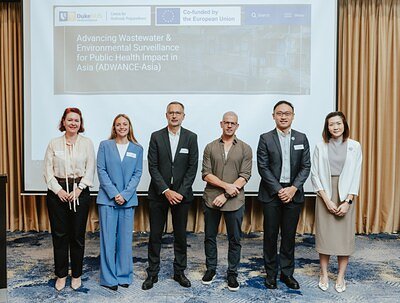
Laurent Muschel, Deputy Head of DG HERA, articulated this strategy at the project's kickoff meeting in Kuala Lumpur. "Strengthening early-warning systems through innovative approaches like wastewater surveillance is essential to improving preparedness across regions and response," he stated. "Initiatives such as ADWANCE-Asia demonstrate the value of cross-border collaboration and scientific innovation in protecting public health and enhancing pandemic readiness."
From Pilot to Practice: Execution in Resource-Limited Settings
The most significant challenge—and greatest potential impact—of ADWANCE-Asia lies in its implementation within resource-constrained environments. The project's success hinges not just on sophisticated technology, but on building sustainable, locally-owned capacity. The leadership at Duke-NUS has structured the project around four pragmatic pillars to address this.
First, network collaboration will strengthen the existing Asia PGI network, ensuring that information and best practices are shared seamlessly across borders. Second, capacity building through the Asia PGI Academy will deliver structured training in standardized laboratory, genomics, and bioinformatics workflows, upskilling local scientists and technicians. Third, capability development will support LMICs in piloting and scaling genomics-based surveillance, starting with vaccine-preventable diseases to demonstrate immediate value. Finally, strategic evidence and integration will focus on generating practical tools and frameworks to help governments integrate WES data into their national public health decision-making processes.
This is not a top-down model. It relies on a broad coalition of partners, including Singapore’s A*STAR Bioinformatics Institute, the Saw Swee Hock School of Public Health, and the World Health Organization, alongside in-country institutions from Bangladesh, Cambodia, India, Pakistan, and others. The goal is to create a self-sustaining ecosystem of expertise, ensuring these systems are maintained and utilized long after the initial three-year funding period ends.
The Data Dilemma: Navigating Ethics and Governance
As with any powerful surveillance technology, WES carries significant ethical and data governance responsibilities. The collection of community-level health data, even when anonymized, requires a robust framework to ensure transparency, prevent misuse, and maintain public trust. The challenge is magnified in a cross-border project spanning nations with vastly different legal systems and cultural norms.
Recognizing this critical hurdle, the Duke-NUS Centre for Outbreak Preparedness has been proactive. A key component of the ADWANCE-Asia project is the development of legal and ethical guidance frameworks for national WES integration. This goes beyond technical protocols to address the complex questions of data ownership, sharing agreements, and privacy protection. The team has even developed a 'WWS ethics adviser app' to help stakeholders navigate these issues on the ground.
This deliberate focus on the legal and ethical architecture is perhaps the most telling indicator of the project's maturity. It demonstrates an understanding that for innovation to be successfully executed at scale, the technical solution is only half the battle; building the trust and governance to support it is just as crucial.