
- 850-acre organic operation
- 15 different organic commodities grown
- 5.7 million pounds of organic kale supplied to Sweetgreen
Experts would likely conclude that Courtney Schuster Moore's success demonstrates how strategic partnerships and innovative farming practices can overcome significant agricultural challenges, setting a new standard for organic farming in difficult climates.
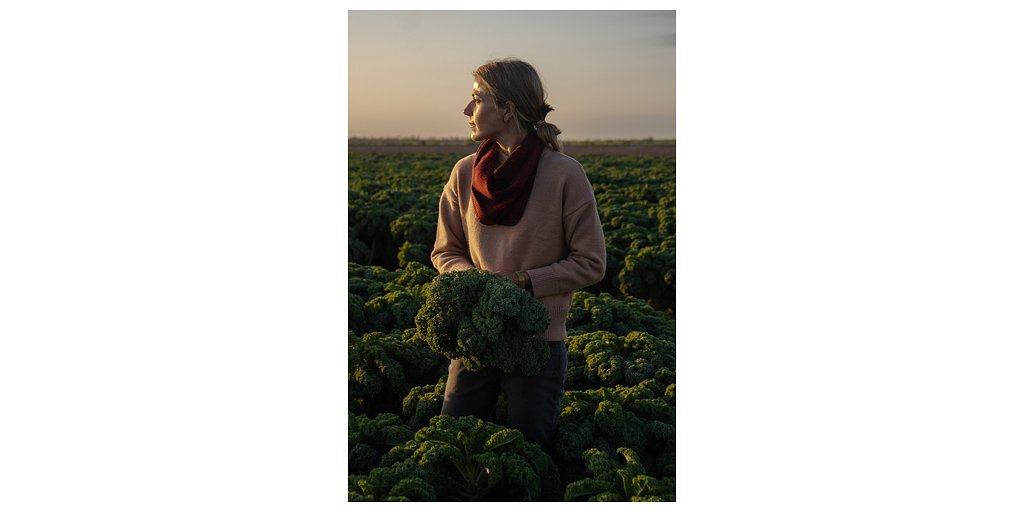
From Rocket Science to Rio Fresh: A Farmer's Unlikely Organic Triumph
LOS ANGELES, CA – April 28, 2026
Eight years ago, Courtney Schuster Moore’s world was one of aerodynamics and flight paths. Today, her focus is on soil health and harvest schedules. In a remarkable career pivot, the former aerospace professional has become one of the most significant organic vegetable farmers in Texas, a story of resilience and innovation now being spotlighted by the fast-casual chain Sweetgreen in its latest “Faces of the Farm” feature.
Moore leads the organic program at Rio Fresh, her family's farm in South Texas, which she built from the ground up. The feature by Sweetgreen, a brand built on connecting consumers to its food sources, highlights a journey that began not with a grand agricultural plan, but with a single, urgent phone call during a kale shortage. That call set in motion a partnership that would transform 50 acres of experimental land into a thriving 850-acre organic operation, challenging long-held beliefs about what’s possible in one of America's toughest farming climates.
A Partnership Planted in Scarcity
The collaboration between Rio Fresh and Sweetgreen began with a problem: the restaurant chain needed kale, and conventional supply lines were strained. Moore, who had recently returned to her family’s conventionally farmed land, saw an opportunity. It was a pivotal moment that required a significant leap of faith into the complex world of organic agriculture.
“Eight years ago, this started as a leap of faith,” said Courtney Schuster Moore, now the Organic Program Manager at Rio Fresh. “It hasn’t been easy, there are challenges every single day, but having partners like Sweetgreen believe in what we were building, and in the importance of regenerative and organic agriculture, made all the difference.”
That belief was backed by a long-term commitment. Sweetgreen's partnership provided Rio Fresh with the stability needed to invest, experiment, and scale. The initial 50 acres dedicated to organic farming have since expanded to more than 850. Today, Rio Fresh grows 15 different organic commodities, including broccoli, beets, and various greens, shipping produce to 20 states and Canada. The partnership has been particularly fruitful for the crop that started it all; Rio Fresh has supplied Sweetgreen with more than 5.7 million pounds of organic kale to date.
For Sweetgreen, this relationship is the embodiment of its founding principles. “When we started Sweetgreen, our mission was to connect more people to real food and the farmers behind it,” said Nicolas Jammet, Co-founder and Chief Concept Officer. “Courtney’s story is a powerful example of what that connection can look like in practice - how partnership, persistence, and a shared belief in better ingredients can drive real change on the farm.”
Cultivating Resilience in an Unforgiving Climate
Moore’s success is not just a story of a fruitful partnership; it is a testament to agricultural tenacity. South Texas is notoriously difficult for organic farming. The region’s subtropical climate means there is no true winter freeze to naturally kill off pests and diseases. This creates intense, year-round pressure that forces organic growers to find innovative, non-chemical solutions for problems that conventional farmers solve with synthetic sprays.
Compounding these environmental challenges are issues with water availability and a historical lack of institutional research support for organic methods in the region. To succeed, Moore and her team at Rio Fresh had to write their own playbook. This involved a process of constant learning, adapting to extreme heat and weather, and embracing emerging technology. One of their most striking innovations involves transplanting delicate seedlings at night under massive stadium lights, a strategy that helps the young crops avoid the punishing daytime sun and establish stronger roots.
This willingness to experiment is central to the farm’s ethos. Moore describes her approach as a process of “reading needs and responding,” a philosophy she applies to both her crops and her family. This deep, attentive care has allowed Rio Fresh to not only survive but thrive, creating a consistent, high-quality supply of organic produce from a region where many believed it was impossible to do so at scale.
More Than a Meal: Sweetgreen's Strategy of Transparency
For Sweetgreen, showcasing farmers like Courtney Schuster Moore is a cornerstone of its brand identity and business strategy. In a competitive fast-casual market, the “Faces of the Farm” series serves as a powerful differentiator, moving the conversation beyond price and convenience to focus on quality, transparency, and human connection. By telling the stories behind its ingredients, the company builds an emotional tie with its customers, reinforcing the idea that a Sweetgreen salad is an investment in a healthier and more sustainable food system.
This initiative is a key part of the company's broader mission. Sweetgreen has set an ambitious goal to become carbon neutral by 2027 and has already made significant strides, powering 100% of its operations with clean electricity from solar farms. According to its 2022 impact data, 65% of its produce suppliers utilized organic, transitional, or integrated pest management practices. By putting a face to these statistics, the company makes abstract sustainability goals tangible and relatable.
The strategy is about cultivating brand loyalty through a narrative of shared values. It allows customers to feel they are participating in a positive food movement, supporting not just a restaurant, but the very farmers who are pioneering climate-resilient agriculture and stewarding the land for future generations.
A New Face for Modern Agriculture
Beyond the business metrics and agricultural innovations, Moore’s story represents a significant cultural shift. As one of the few female farmers leading a large-scale operation in South Texas—and an even smaller minority among organic producers—she is reshaping the image of modern agriculture. Her path stands out not just for representation, but for the sheer scale of her success.
She carries the legacy of her family’s multi-generational farm with a profound sense of responsibility, blending tradition with a forward-thinking vision. She speaks of her work with a nurturing instinct, describing the process of tending to the land as a form of “mothering” that requires patience, adaptability, and a commitment to fostering growth even in difficult circumstances.
This perspective has been fundamental to building an organic program that is now central to the future of the entire Rio Fresh operation. “It’s the most meaningful and rewarding work I could be doing,” Moore stated. “Farming has become my calling, and I’m so grateful I get to follow in my father’s footsteps.” Her journey from aerospace to agriculture demonstrates that the future of farming may be found not just in new technologies, but in new leaders with the vision to grow great things in hard places.