
- Auction Market Growth: The contemporary African art market is projected to reach $1.5 billion by 2025.
- Imperial Art Highlight: Lot 4, a Qing Dynasty 'Marriage' dish, bears the rare 'Chang Chun Tong Qing' mark, linked to Empress Dowager Cixi.
- Global Reach: Apollo Art Auctions allows bidders from over 70 countries to participate digitally.
Experts would likely conclude that this auction exemplifies how digital accessibility and historical provenance are driving a more inclusive and resilient art market, appealing to both traditional and younger, tech-savvy collectors.
From Imperial Courts to Digital Carts: Art Auctions Unlock New Assets
LONDON, UK – June 12, 2026 – In a quiet London showroom, objects that once graced imperial courts and sacred temples are preparing to enter the global digital marketplace. On June 19, Apollo Art Auctions will present its 'Fine Asian and Tribal Art' sale, a meticulously curated event that does more than just offer beautiful artifacts; it provides a compelling snapshot of how technology and shifting financial strategies are reshaping the market for tangible, historical assets.
The sale, featuring distinguished pieces from Asia, Africa, and the Himalayas, draws heavily from 'The Prince Collection,' a significant private assemblage known for its items with royal and distinguished provenance. This auction is a masterclass in modern market dynamics, blending the allure of ancient history with the accessibility of 21st-century commerce, creating unique opportunities for a new generation of investors and collectors.
The New Asset Frontier: Provenance Meets Price Point
In today's volatile financial landscape, tangible assets with intrinsic historical value are gaining renewed attention. The upcoming sale at Apollo Art Auctions serves as a potent case study in this trend, spotlighting how rarity and provenance are key drivers of value. The inclusion of 'The Prince Collection,' assembled over two decades, lends the auction a significant layer of prestige. While the collector's identity remains private, the name refers to the historical ownership of the artworks themselves—a critical distinction that enhances their desirability. An object with a documented history, especially one linked to royalty or notable figures, carries an assurance of quality and authenticity that commands a premium.
This sale arrives at a fascinating juncture for the Asian and Tribal art markets. The market for contemporary African art, for instance, has seen explosive growth, projected to reach $1.5 billion by 2025, fueled by a surge of global interest and a new wave of younger collectors leveraging digital platforms. While the auction market saw a correction in 2024, it has shown remarkable resilience, with loyalist buyers shifting from speculative purchases to acquiring works of art-historical significance. Similarly, the market for Chinese ceramics, particularly high-end 'art ware,' continues to show robust growth, driven by strong domestic demand and expanding exports. Apollo Art Auctions is tapping directly into these currents, offering pieces that appeal to this more discerning, history-focused buyer.
The auction house, a recognized leader in antiquities since its founding in 2010, employs a savvy strategy to broaden its reach. Many lots will open with starting bids set below their pre-sale estimates. This is not a fire sale, but a calculated tactic. "Setting a low starting bid is a psychological tool to attract a wider pool of buyers," notes one market strategist. "It lowers the barrier to entry and encourages engagement." This competition often drives the final price to, or even beyond, the object's true market value, while sellers are protected by a confidential reserve price. It’s a strategy that transforms the auction from a passive listing into an active, competitive event.
Echoes of Empire and Artistry
The financial strategy is compelling, but the soul of the auction lies in the objects themselves. Each piece is a conduit to a different time and culture, offering a narrative that transcends its material value. Three highlights, in particular, capture the breadth and historical depth of the collection.
Lot 4, a Chinese iron-red gilt-decorated 'Marriage' dish, is a stunning relic from the court of the Qing Dynasty. Dating to the Tongzhi period, it is part of a celebrated group of imperial wares associated with the powerful Empress Dowager Cixi. The dish is adorned with gilt double happiness symbols and longevity motifs, and its base bears the rare 'Chang Chun Tong Qing' mark, used specifically for these imperial marriage porcelains. For collectors of Qing ceramics, such a piece is not just a dish; it is a direct link to the elaborate rituals and political power of the imperial court.
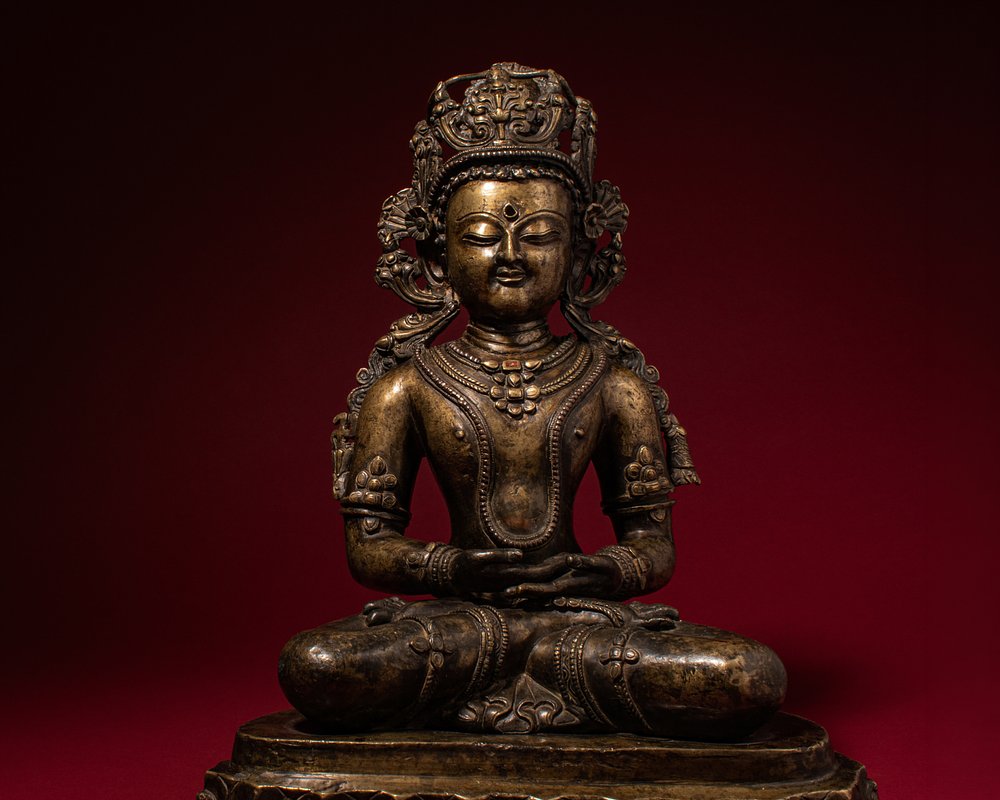
From the sacred landscapes of the Himalayas comes Lot 55, a bronze figure of Buddha Shakyamuni. Created in Kashmir or Western Tibet during the 10th–11th century, the sculpture embodies the elegant stylistic features of a formative period in Himalayan art. This era saw a profound artistic and religious synthesis that would define the traditions of Tibet and Nepal for centuries. The relative scarcity of bronzes from this period makes them highly sought after by both private collectors and major institutions seeking to capture a pivotal moment in the history of Buddhist art.
Perhaps most intriguing is Lot 181, a Zande anthropomorphic clay vessel from the early twentieth century. This piece is significant not only for its masterful blend of sculptural and functional form but also for its attribution to a named artist: Mbitim. In the world of tribal art, where artisans often remained anonymous, an attributed work is a rarity. It challenges the conventional, often colonial-era view of 'tribal art' as a collective, anonymous output and instead celebrates individual creative genius. With a distinguished provenance that includes the collections of Helmut Gernsheim and Robert Rubin, this vessel represents a crucial shift in the appreciation and scholarship of African art.
Democratizing the Auction Block
What makes this auction particularly relevant is its embrace of technology to dismantle traditional barriers to entry. Apollo Art Auctions has built a robust online presence, allowing bidders from over 70 countries to participate in real-time through its proprietary platform and major aggregators like LiveAuctioneers and The Saleroom. This digital infrastructure transforms a London-based event into a global phenomenon.
This approach aligns perfectly with the behavior of emerging collector demographics. Younger buyers, particularly those drawn to the cultural richness of African and Asian art, are digital natives who are comfortable discovering, researching, and acquiring art online. The combination of a user-friendly digital interface, transparent bidding, and the accessible starting-bid strategy creates a powerful on-ramp for those looking to start or grow a collection. Positive customer feedback for the auction house highlights professional service and reliable global shipping, further reducing the friction for international buyers.
By placing a rare Zande vessel and an imperial Qing dish on the same virtual platform, and making them accessible to bidders in New York, Singapore, and beyond, the auction illustrates a broader trend. The art market, once a bastion of exclusive, in-person events, is becoming increasingly decentralized. This sale is more than a collection of artifacts; it is a live demonstration of how ancient history and modern technology are converging to create a more inclusive and dynamic market for cultural assets.