
- 100 million patient cases analyzed by Aidoc’s AI Operating System (aiOS)
- 1,600+ medical centers worldwide using aiOS
- 98.5% sensitivity and 99.7% specificity in FDA submission for abdominal AI solution
Experts view Dr. Ehrenfeld’s move to Aidoc as a strong validation of AI’s growing role in healthcare, signaling its transition from experimental to essential infrastructure.
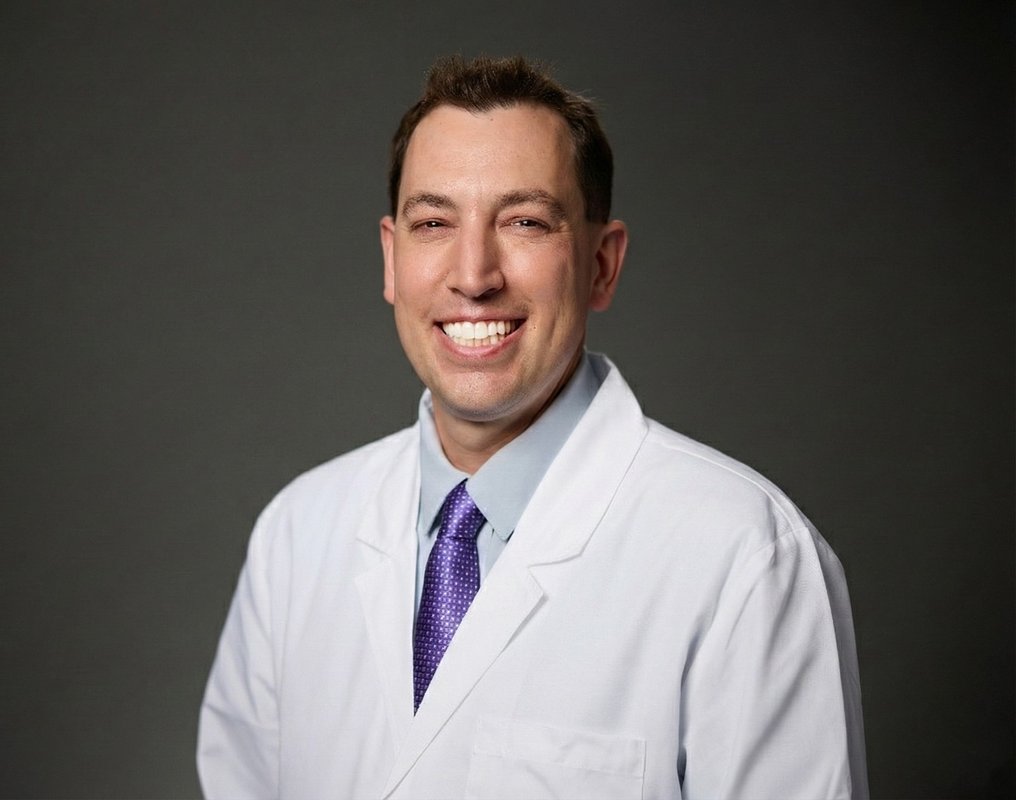
From AMA President to AI Chief: Ehrenfeld’s Move Signals a New Era for AI
NEW YORK, NY – January 07, 2026 – In a move that powerfully signals the maturation of artificial intelligence in medicine, Dr. Jesse M. Ehrenfeld, the immediate past president of the American Medical Association (AMA), has joined clinical AI leader Aidoc as its new Chief Medical Officer. The high-profile appointment comes as Aidoc announced its proprietary AI Operating System (aiOS) has surpassed 100 million patient cases analyzed, marking a convergence of trusted leadership and proven technology poised to accelerate the adoption of AI across health systems globally.
Dr. Ehrenfeld's transition from the helm of the nation's largest physician organization to a leadership role at an AI company is seen by industry observers as a major validation for the entire clinical AI sector. It suggests that the technology is moving beyond its experimental phase and is now considered an essential component of modern healthcare infrastructure.
A Powerful Endorsement for Mainstream AI
Dr. Ehrenfeld is not just a former AMA president; he is a board-certified anesthesiologist, a clinical informaticist, and a former Commander in the U.S. Navy with a long history of advocating for the responsible use of technology in medicine. During his AMA presidency, which concluded in June 2024, he was a vocal proponent of establishing strong ethical guardrails for AI, focusing on mitigating bias, ensuring transparency, and prioritizing patient safety.
His tenure at the AMA was marked by a push for policies that would expand AI literacy in medical education and ensure that technology serves to augment, not replace, human physicians. His consistent focus has been on leveraging innovation to combat physician burnout and reduce administrative burdens. His decision to join Aidoc is a direct continuation of this work.
"During my tenure at the AMA, my focus was on supporting physicians and strengthening the systems they work in," Dr. Ehrenfeld stated in the press release. "It's clear that Aidoc's success to date has been rooted in building technology physicians trust. I'm joining to help scale that impact, ensuring that clinical AI continues to be a seamless, essential part of the modern care delivery model."
This move lends significant credibility to Aidoc's mission, suggesting that its platform has met a high standard of clinical rigor and physician-centric design, two cornerstones of Dr. Ehrenfeld's advocacy.
Beyond the Hype: Enterprise AI's Real-World Impact
While the appointment itself is noteworthy, its timing coincides with a significant operational milestone for Aidoc. The company's aiOS, an enterprise-grade platform that integrates directly into hospital workflows, has now been used to analyze over 100 million patient imaging exams across more than 1,600 medical centers worldwide. This scale demonstrates a definitive shift in how health systems approach AI.
For years, hospitals have experimented with individual, task-specific AI algorithms, often called "point solutions." However, the industry is now gravitating toward comprehensive, enterprise-wide platforms that can manage multiple AI applications, streamline data flow between medical imaging systems and the Electronic Medical Record (EMR), and deliver value across various clinical departments, or service lines.
Aidoc’s aiOS is designed to be this central AI layer. It helps radiologists and other clinicians prioritize critical cases, detect incidental findings that might otherwise be missed, and coordinate care more efficiently. By automating parts of the diagnostic workflow, such platforms aim to improve patient outcomes while alleviating the immense pressure on healthcare staff who are facing workforce shortages and rising patient volumes.
"Despite workforce shortages and rising volumes, radiologists have been leading the evolution of clinical AI," Dr. Ehrenfeld noted. "Imaging is foundational to patient flow and outcomes... That trajectory made it clear to me: leading the next chapter of healthcare requires a deep partnership with the radiology community."
The Next Frontier: Foundation Models and the Future of Radiology
Underpinning Aidoc's enterprise strategy is a significant technological advancement: the use of foundation models. Unlike traditional AI trained on narrow tasks, foundation models are large, versatile systems trained on vast, multimodal datasets. This allows them to be adapted to a wide range of clinical applications with greater accuracy and context.
Aidoc’s Clinical AI Reasoning Engine, CARE™, is one such foundation model. The company recently filed for FDA Breakthrough Device designation for a comprehensive abdomen AI solution powered by this engine. The submission is a landmark for the industry, as it seeks to use a single AI system to detect and prioritize a double-digit number of time-sensitive, life-threatening conditions found in abdominal scans. The FDA grants Breakthrough designation to technologies that have the potential to provide more effective diagnosis for debilitating or life-threatening diseases.
In its pivotal study submitted to the FDA, the CARE-powered device demonstrated extremely high levels of accuracy, with up to 98.5% sensitivity and 99.7% specificity across a wide range of abdominal findings. This level of performance is critical for building clinical trust and ensuring patient safety at scale. The successful deployment of such comprehensive tools could transform radiology from a primarily diagnostic field into a proactive hub for care coordination.
Navigating a Competitive and Cautious Landscape
Aidoc operates in a fiercely competitive market, with giants like GE Healthcare, Siemens Healthineers, and Philips, as well as specialized AI firms like Viz.ai, all vying for leadership in the rapidly expanding healthcare AI space. The FDA has approved over 1,300 AI-enabled medical devices, with nearly 80% of them focused on radiology, highlighting the intense innovation in the field.
However, health systems remain cautiously optimistic. While eager to adopt tools that promise efficiency and improved outcomes, they are also keenly aware of the challenges related to cost, integration with legacy IT systems, data governance, and demonstrating a clear return on investment. This is precisely where Dr. Ehrenfeld's expertise becomes invaluable.
As CMO, he will be tasked with guiding health systems through this complex transition, helping them build the governance structures and clinical integration strategies needed to deploy AI responsibly and effectively. His role is to bridge the gap between cutting-edge technology and real-world clinical practice.
Aidoc's CEO, Elad Walach, emphasized this point, stating, "As AI reshapes medicine, Dr. Ehrenfeld brings a unique perspective that keeps our strategy grounded in safety, quality and real-world physician experience. He will lead the charge in ensuring AI serves as a trusted 'force multiplier' for physician capacity, not a distraction."
Dr. Ehrenfeld is slated to make his first public address as Aidoc's CMO at the CES 2026 conference in Las Vegas, where he will join a panel discussing the future of agentic AI in healthcare.