
- $10M to $3.2B: Dr. Silver Kung transformed a $10 million family debt into a $3.2 billion asset management firm.
- 15-year recovery: Took 15 years of strategic effort to regain financial solvency after inheriting the debt.
- Growth milestone: Siegfried Capital's assets under management grew from $2.62B in early 2025 to $3.2B by April 2026.
Experts would likely conclude that Dr. Silver Kung’s journey exemplifies how strategic resilience, long-term thinking, and ethical leadership can transform financial adversity into sustained business success.
From $10M Debt to a $3.2B Firm: Dr. Silver Kung's Playbook on Resilience
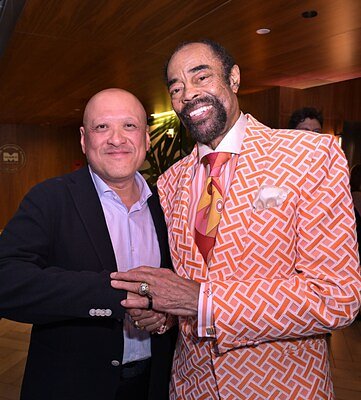
NEW YORK, NY – June 23, 2026 – At a gathering of financiers and business leaders, the launch of a memoir became a masterclass in strategic resilience. Dr. Silver Kung, founder and chairman of the $3.2 billion asset management firm Siegfried Capital, celebrated the release of Silver Linings, a book that chronicles a journey few could imagine: inheriting a staggering $10 million in family debt and transforming that liability into the foundation of a global financial enterprise. The evening was underscored by an unlikely but fitting endorsement from NBA legend Walter “Clyde” Frazier, who drew a direct line from the discipline of the basketball court to the grit required to build a lasting business.
While book launches are common, this one offers a rare glimpse into a business philosophy forged not in a classroom, but in the crucible of profound personal and financial crisis. Dr. Kung’s story is more than a tale of redemption; it’s a strategic blueprint for navigating disruption, building value from ashes, and embedding humanity into the core of a competitive business model.
The Architect of Resilience: From Debt to a $3.2B Niche
The central narrative of Silver Linings is a case study in long-term strategic recovery. At age 27, Dr. Kung was confronted with a $10 million family debt stemming from political upheaval that decimated his father’s business in Taiwan. As he recounted in a recent interview, the consequences were immediate and crippling. With creditors legally entitled to a third of his income, many potential employers in Taiwan turned him away. The challenge was not merely financial; it was a fundamental barrier to building a career. This forced a strategic pivot: relocating to Hong Kong to start over.
What followed was not a rapid, miraculous turnaround, but a grueling 15-year marathon to regain financial solvency. It is from this period of intense pressure that the principles behind Siegfried Capital were born. Founded in 2015, the firm is not a conventional hedge fund. It has carved out a highly specialized and successful niche in supply chain finance, managing investment-grade global trade receivables and securitizations for institutional investors. This focus on the tangible, often overlooked mechanics of global trade reflects a leader who understands risk from the ground up.
Siegfried Capital’s success is quantifiable. The firm’s assets under management have grown steadily, reaching approximately $3.2 billion as of April 2026, up from $2.62 billion in early 2025. This growth is validated by industry recognition, including multiple “Best Performer Awards” from Bloomberg Businessweek. Critically, the firm is a signatory of the United Nations Principles for Responsible Investment (UN PRI), a move that aligns its financial strategy with a broader commitment to sustainable and ethical practices—a direct reflection of its founder's personal journey.
The 'Clyde' Philosophy: Where Hardcourt Meets the Boardroom
The presence of Walter “Clyde” Frazier at the launch event was far from a simple celebrity endorsement. The New York Knicks legend, known for his on-court poise and off-court style, provided a powerful external validation of Dr. Kung’s core message. Frazier, a voice of perseverance in his own right, praised the memoir, emphasizing that success in any high-stakes arena—be it the NBA Finals or global finance—requires “discipline, vision, teamwork, and a commitment to something greater than oneself.”
His words highlight a critical, often-underestimated component of business strategy: the human element. Frazier’s personal mantra, “It is nice to be important, but it is more important to be nice,” resonated through the room. In the context of Dr. Kung’s story of overcoming financial ruin while maintaining his integrity, the message was clear. Lasting success is not built on ruthless, zero-sum tactics but on a foundation of character that can withstand immense pressure.
For business leaders and strategists, this intersection is significant. It suggests that the “soft” principles of decency and teamwork are, in fact, hard strategic assets. They foster loyalty, enable long-term vision, and build organizational resilience that can weather market volatility and internal crises. Dr. Kung’s ability to attract and retain talent, secure institutional investment, and build a multi-billion-dollar firm after a decade and a half of personal financial struggle is a testament to this philosophy in action.
A Blueprint for a Volatile Era
Silver Linings arrives at a moment of significant economic uncertainty, with younger generations in particular seeking credible guidance on navigating financial anxieties. The memoir diverges from typical get-rich-quick narratives, instead offering a sober and powerful argument for patience, long-term thinking, and the relentless application of a diverse skill set. Dr. Kung’s unique educational path—with degrees in aerospace engineering, finance, and economics—demonstrates a multidisciplinary approach to problem-solving that is essential in today's complex global market.
Before Siegfried, he founded Hyperion Capital Management, a firm focused on renewable energy—another example of his ability to identify and build businesses in forward-looking sectors. His decade-long tenure as a part-time university professor further underscores a commitment to translating complex principles into actionable knowledge.
Ultimately, Dr. Kung’s journey provides a powerful counter-narrative to the myth of overnight success. It reframes adversity not as a roadblock but as a training ground for developing a unique competitive edge. His story, supported by his philanthropic work, including a recent $300,000 gift to his alma mater Wichita State University, illustrates a holistic model of success where financial acumen is balanced with personal integrity and a commitment to creating lasting value. For any leader navigating disruption, Silver Linings proposes that the most resilient strategies are built not despite our hardest roads, but because of them.