
- 290,000 patients served across Fresenius Medical Care's global network of 3,500 clinics
- 4% organic revenue growth and 10% operating income growth (constant currency) in Q1 2026
- EUR 650 million in sustainable savings expected by end of 2025 through the FME25+ program
Experts would likely conclude that Fresenius Medical Care's decision to extend Martin Fischer's tenure as CFO until 2031 reflects a strategic commitment to financial stability and long-term growth, particularly amid a complex healthcare landscape.
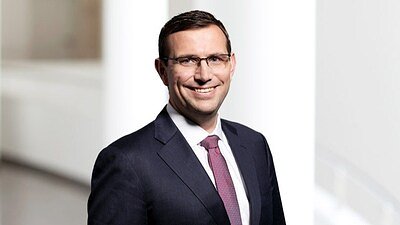
Fresenius Locks in Financial Architect Martin Fischer Through 2031
BAD HOMBURG, Germany – May 20, 2026 – Fresenius Medical Care AG, the global leader in renal care products and services, has decisively reinforced its leadership team by reappointing Martin Fischer as Chief Financial Officer and Management Board Member. The five-year extension, securing his role until 2031, signals a powerful vote of confidence in the financial architect who has been instrumental in navigating the company's recent strategic transformation and return to robust financial health.
The reappointment is more than a procedural renewal; it is a clear statement of intent. For a company that provides life-sustaining dialysis treatment to approximately 290,000 patients across its global network of over 3,500 clinics, leadership stability is paramount. This move ensures continuity at the financial helm as Fresenius continues to execute a complex, multi-year turnaround strategy.
A Mandate for Stability and Discipline
The announcement was accompanied by strong endorsements from the company's top leadership, underscoring Fischer's integral role in the ongoing corporate overhaul. Fischer first took the CFO post on October 1, 2023, during a period of significant change.
Michael Sen, Chairman of the Supervisory Board, lauded Fischer's track record. "Martin Fischer has demonstrated strong and consistent leadership and has further strengthened Fresenius Medical Care's governance, transparency, and financial discipline," Sen commented. He added that Fischer has made a "significant contribution to driving forward the transformation" of the company.
This sentiment was echoed by CEO and Chair of the Management Board, Helen Giza, who has worked closely with Fischer to implement the company's new strategic direction. "Martin has been a trusted partner in driving performance across the organization," Giza stated. "He has played a critical role in strengthening our financial resilience, supporting disciplined capital allocation, and advancing our strategic priorities. I welcome the Supervisory Board's decision and look forward to continuing our close collaboration."
In his own statement, Fischer acknowledged the board's confidence and expressed his commitment to the path forward. "Our company has a clear strategic direction, and I am excited about shaping the next chapter by further strengthening financial discipline, resilience, and long‑term value creation as we execute our priorities."
Engineering a Financial Turnaround
Fischer's tenure as CFO has coincided with a period of intense activity and measurable success. The company's 2023 annual report, titled "Shaping the Future of Kidney Care," described a "transformative" year defined by a new operating model that streamlined the business into two global segments—Care Delivery and Care Enablement—and simplified governance structures.
The results of this strategic shift are evident in the company's recent financial performance. After a period of headwinds, Fresenius reported an "outstanding step up in profitability" in the fourth quarter of 2025. The momentum carried into 2026, with the first quarter delivering solid organic revenue growth of 4% and a strong 10% growth in operating income at constant currency.
Central to this turnaround has been the FME25+ program, a comprehensive cost-saving and efficiency initiative that Fischer has helped execute. The program is on track to deliver EUR 650 million in sustainable savings by the end of 2025 through disciplined measures, including optimizing the company's manufacturing and supply chain footprint. This financial rigor has also enabled a healthier balance sheet. The company has steadily reduced its net financial debt, improved its leverage ratio to the lower end of its target band, and initiated a EUR 1 billion share buyback program, signaling confidence to investors.
Steering Through a Complex Healthcare Landscape
Fischer's extended mandate comes as Fresenius Medical Care navigates a complex and evolving global healthcare market. The demand for dialysis is relentlessly driven by a rising global prevalence of chronic kidney disease, linked to aging populations and increases in diabetes and hypertension. However, the industry faces significant financial pressures.
In the United States, which represents a major market, providers contend with a challenging reimbursement environment. For example, the Centers for Medicare & Medicaid Services (CMS) adopted only a modest payment rate increase for 2024, which struggles to keep pace with rising labor costs and inflation. Furthermore, regulatory changes to the End-Stage Renal Disease Prospective Payment System (ESRD PPS) bundle create uncertainty for new product reimbursement. The company has also noted that regulatory pressure in China has created headwinds for its Care Enablement segment.
Yet, for every challenge, there is an opportunity. Fischer's role will be crucial in allocating capital to capitalize on key growth trends. These include the significant shift toward home dialysis, which offers patients greater convenience and can reduce systemic healthcare costs. Fresenius is also investing heavily in technological innovation, such as the U.S. rollout of its advanced 5008X CAREsystem dialysis machine. Moreover, the company has seen promising, profitable growth in its Value-Based Care segment, which aligns provider incentives with improved patient outcomes and cost efficiency.
The Strategic Value of Enduring Leadership
The decision to secure Fischer's leadership until 2031 is particularly noteworthy when viewed against industry benchmarks. The average tenure for a CFO is just under five years, and the healthcare sector has seen significant turnover in its financial leadership, with some reports indicating that over 70% of organizations have experienced a CFO change since 2020.
By locking in its chief financial architect for a term that will far exceed the industry average, Fresenius Medical Care is making a strategic bet on stability. This continuity provides a predictable foundation for long-term planning, builds investor confidence, and ensures that the complex, multi-year strategic initiatives currently underway are seen through to completion by the leadership team that initiated them. For a company whose operations have a direct and profound impact on the lives of millions of patients, this stable hand on the financial tiller is a critical asset for navigating the years ahead.