
- First home energy storage system to achieve TIA-942 certification (Rated 1 to Rated 4).
- Certification ensures UPS-grade power delivery with fault tolerance.
- Targets resilience in extreme weather events and grid failures.
Experts view this certification as a significant leap in residential energy reliability, setting a new benchmark for fault tolerance and uptime, though its cost-effectiveness for average homeowners remains debated.
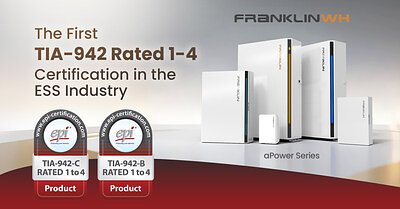
FranklinWH Sets New Home Energy Standard with Data Center Certification
SAN JOSE, Calif. – December 29, 2025 – In a move that could redefine expectations for residential power, FranklinWH Energy Storage Inc. has announced that its home energy storage system is the first in the world to achieve TIA-942 certification. The standard, traditionally the benchmark for ensuring uptime in mission-critical data centers, has never before been applied to a residential product, signaling a potential new era for household energy reliability.
The company’s FranklinWH System, which includes its aPower battery, secured certification across the full spectrum of the standard, from Rated 1 to the highest level, Rated 4. This achievement introduces a rigorous, third-party verified metric for reliability into a consumer market that has, until now, largely relied on manufacturer warranties and safety ratings to gauge product dependability. By adopting a framework trusted by facilities where downtime is measured in millions of dollars, FranklinWH is making a bold statement about the robustness of its technology.
A New Benchmark for Home Power
The residential energy storage system (ESS) market has grown rapidly, driven by consumer demand for backup power during grid outages and savings from solar energy. However, the industry has lacked a universal, independent standard for measuring and comparing system reliability. Homeowners typically evaluate options based on battery capacity, power output, and safety certifications like UL 9540, but objective measures of long-term availability and fault tolerance have been elusive.
The TIA-942 standard, developed by the Telecommunications Industry Association (TIA) and accredited by the American National Standards Institute (ANSI), fills this gap. It provides a tiered system for evaluating infrastructure resilience:
- Rated 1 represents a basic system with a single path for power and no redundancy.
- Rated 2 adds redundant components to that single path, improving maintainability.
- Rated 3 requires multiple independent power paths, allowing for concurrent maintenance without disrupting operations—a significant leap in reliability.
- Rated 4 signifies a fully fault-tolerant system, capable of withstanding any single equipment failure without impacting power delivery.
For a homeowner, achieving these ratings translates into tangible benefits. The certification promises “UPS-grade power delivery,” referring to the seamless, instantaneous backup provided by an Uninterruptible Power Supply. This means that during a grid failure, the switch to battery power is so fast that sensitive electronics like computers, network routers, and medical equipment continue to run without a flicker. The highest ratings imply a system designed to keep the lights on even if one of its internal components fails, offering a level of assurance previously reserved for corporate and industrial clients.
“With this certification, we are raising the bar for residential energy storage, giving homeowners added confidence that their system will perform when they need it most,” said Gary Lam, CEO of FranklinWH, in the company's announcement. “TIA-942 is a rigorous, measurable standard trusted by the world's most critical facilities. Bringing this level of proven reliability to the home means performance isn't just promised, it's verified.”
Is Data Center Dependability Necessary for Every Home?
While the technological achievement is significant, it raises a critical question for the market: is this level of reliability necessary—or cost-effective—for the average homeowner? Competitors in the crowded ESS space, including major players like Tesla, Enphase, and Generac, have historically emphasized long-term warranties, battery chemistry, and sophisticated software as their primary reliability indicators.
The engineering required to meet TIA-942’s higher-rated levels, particularly the redundancy and fault tolerance of Rated 3 and 4, almost certainly adds complexity and cost to the system. This positions the FranklinWH system as a premium offering, potentially placing it outside the budget of many consumers for whom upfront cost remains a primary barrier to adoption.
Industry observers suggest the certification may create a new, high-end tier in the market. “For most households, a well-regarded brand with a solid 10-year warranty provides sufficient peace of mind,” noted one independent energy analyst. “But this changes the conversation for a specific, and growing, segment of buyers. If you live in an area with frequent, multi-day outages or rely on life-sustaining medical equipment at home, ‘verified fault tolerance’ moves from a luxury to a necessity.”
Installers may also find the certification to be a powerful sales tool. Instead of speaking abstractly about reliability, they can now point to a concrete, independent standard. This could prove decisive for customers weighing options and willing to invest more for guaranteed performance, shifting the decision-making process from a comparison of spec sheets to a discussion about verifiable levels of resilience.
Powering Resilience in an Era of Grid Uncertainty
The timing of FranklinWH’s announcement aligns with a growing sense of urgency around energy security. Across the country, aging grid infrastructure, coupled with an increase in extreme weather events, has made power outages more frequent and prolonged. From wildfires in California to winter storms in Texas and hurricanes along the Gulf Coast, the vulnerability of the centralized grid has become a pressing concern for millions.
In this context, a home battery is no longer just a way to save on electricity bills; it is a critical piece of personal infrastructure for climate adaptation and resilience. The value of a home energy system is most apparent when the grid fails, and its failure to perform at that critical moment can have serious consequences. By obtaining certification from Enterprise Products Integration (EPI), a globally recognized TIA-942 auditor, FranklinWH is directly addressing this core anxiety.
The credibility of the standard and its auditors helps elevate the company's claims above marketing slogans. It provides a third-party assurance that the system's design has been rigorously vetted for its ability to withstand faults and continue operating. For a growing number of consumers, this promise of unwavering power is becoming the most important feature of all.
As homes become increasingly electrified—powering everything from vehicles and heating systems to smart devices and home offices—the demand for continuous, high-quality power will only intensify. FranklinWH's move to adopt the data center world's toughest reliability standard may be an early indicator of a broader market shift, where the fundamental expectation for home energy moves from simple backup to truly uninterruptible power.