
- Projected Market Growth: China's medical tourism industry is expected to expand from USD 11.3 billion in 2025 to nearly USD 22.8 billion by 2035.
- Cost Savings: Medical procedures in China can be 30-70% less expensive than in Western nations, with a knee replacement costing under $20,000 compared to over $30,000 in the U.S.
- Awards Won: Fosun Health received three major industry awards, including 'Oncology Service Provider of the Year in Asia-Pacific' and 'Hospital of the Year China.'
Experts view China's rise in medical tourism as a significant shift driven by advanced medical capabilities, cost efficiency, and strategic government support, positioning it as a formidable competitor in the Asia-Pacific market.
Fosun Health Signals China’s Rise in Asia's Medical Tourism Market
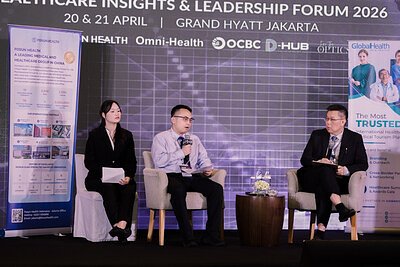
JAKARTA, Indonesia – April 23, 2026 – Chinese healthcare giant Fosun Health made a formidable statement at the GlobalHealth Asia-Pacific Healthcare Insights & Leadership Forum this week, signaling a strategic push to position China as a top-tier destination for medical tourists from Southeast Asia. The company collected three major industry awards and detailed an ambitious plan to build a comprehensive cross-border healthcare ecosystem, challenging established players in the region.
During a featured fireside chat at the Jakarta forum, Mr. Hu Hang, Chairman and CEO of Fosun Health Group, articulated a trend he termed "The China Effect." He described a global rediscovery of China's rapidly advancing medical capabilities, particularly in complex specialties that are in high demand.
"China's healthcare sector is being rediscovered by the global market," Hu stated. "With advances in clinical capabilities, technology, and efficiency, we are increasingly seeing international patients—including those from Southeast Asia—choosing China for high-quality treatment."
This declaration comes as Fosun Health, a subsidiary of the global conglomerate Fosun International, seeks to become the preferred gateway for patients navigating the complexities of seeking care abroad. The move capitalizes on a broader shift where China is no longer just a source of outbound tourists but a destination for inbound medical travel.
The 'China Effect': A New Medical Powerhouse Emerges
The rising prominence of China in the global healthcare landscape is driven by a confluence of factors. The country has invested heavily in medical innovation, with its leading hospitals now offering cutting-edge treatments like CAR T-cell therapy, proton and heavy-ion radiation, and precision genomic profiling. These advanced capabilities are particularly relevant in fields like oncology, cardiovascular care, and orthopedics—the very areas Fosun Health is highlighting.
Beyond technology, cost and efficiency are significant draws. Medical procedures in China can be 30-70% less expensive than in Western nations and are often competitive with regional hubs like Singapore and Thailand. A knee replacement that might cost over $30,000 in the United States could be performed for under $20,000 in a top Chinese facility. This cost-effectiveness, combined with significantly shorter wait times for appointments and procedures, creates a compelling value proposition for international patients.
Furthermore, the Chinese government's "Healthy China 2030" initiative and the development of special economic zones like the Boao Lecheng International Medical Tourism Pilot Zone in Hainan underscore a national commitment to the sector. The industry is projected to grow from an estimated USD 11.3 billion in 2025 to nearly USD 22.8 billion by 2035, with international patients forming a substantial part of that market.
Building a Cross-Border Healthcare Ecosystem
Fosun Health's strategy extends far beyond simply promoting its hospitals. The company is architecting an integrated, cross-border ecosystem designed to provide a seamless patient journey. This model aims to connect its network of hospitals, digital platforms, insurance partners, and pharmaceutical resources.
At the core of this ecosystem is Fosun Health's physical infrastructure, which includes 18 majority-controlled hospitals and clinics in China. Among them is Foshan Fosun Chancheng Hospital, a flagship institution that was recognized at the forum. These facilities are increasingly equipped to handle the logistical and cultural needs of international patients.
Digitally, the "Fosun Health" app and its associated platforms serve as the initial touchpoint, offering services from online consultations and chronic disease management to appointment scheduling. This digital front door is crucial for engaging patients before they ever leave their home country.
Perhaps most critical is the company's focus on "insurance empowerment." Fosun Health is actively forging partnerships with international commercial insurance providers to create direct-payment models. This strategy, already in motion through a collaboration with Prudential in the Greater Bay Area, removes one of the largest financial and administrative hurdles for patients seeking cross-border care.
"We are here to collaborate," Hu explained, emphasizing a partnership-driven approach. "Through partnerships with local institutions, two-way referrals, and technology-enabled care models, we aim to build a more connected and efficient regional healthcare network."
Awards Signal Strength in a Competitive Field
Fosun Health's strategic ambitions were bolstered by significant industry recognition in Jakarta. The company was honored with "Oncology Service Provider of the Year in Asia-Pacific," a direct endorsement of its capabilities in one of the most sought-after fields for medical travel. Its flagship, Fosun Hospital Foshan, secured two prestigious titles: "TCM Hospital of the Year Asia-Pacific" and "Hospital of the Year China."
The GlobalHealth Asia-Pacific Awards, now in their tenth year, are a recognized benchmark in the regional healthcare industry, with past winners including major players like IHH Healthcare. Winning the oncology award validates Fosun Health's focus on complex, high-acuity care, while the recognition for its Traditional Chinese Medicine (TCM) services highlights a key differentiator. The integration of modern medicine with TCM offers a holistic appeal that resonates with many patients in Asia and beyond.
These accolades provide crucial credibility as Fosun Health enters a crowded marketplace. They serve as third-party validation of the quality and specialization the company claims to offer, helping to build trust with potential patients, partners, and insurers across Southeast Asia.
Navigating a Crowded and Evolving Market
Fosun Health's expansion does not exist in a vacuum. The Asia-Pacific medical tourism market is mature and highly competitive, with established destinations like Malaysia, Singapore, and Thailand attracting millions of patients annually. These countries have well-developed healthcare travel councils, extensive networks of internationally accredited hospitals like Bumrungrad International and Mount Elizabeth, and strong government support.
To compete, Fosun Health is differentiating itself not just on cost or technology but on the promise of an integrated, end-to-end service. By bundling digital access, insurance coordination, advanced medical treatment, and specialized care pathways, the company aims to simplify what is often a daunting process for patients and their families.
This ecosystem approach mirrors a growing trend in the region, where insurers like AXA and FWD are increasingly partnering directly with hospital groups to offer seamless cross-border health services. By adopting a similar, asset-light model focused on partnerships and technology rather than solely on building new infrastructure, Fosun Health is aligning with the future of international healthcare delivery.
As it deepens its presence in Southeast Asia, the company's success will depend on its ability to execute this complex strategy—building robust referral networks, expanding its insurance collaborations, and consistently delivering a high-quality patient experience. In doing so, Fosun Health is positioning itself not merely as another medical provider, but as a key architect of the region's evolving healthcare landscape.