
- 20,000 Americans contributed input to shape the memorial design, including veterans, active-duty service members, and Gold Star families.
- The memorial will be built using reclaimed steel from combat operations during the Global War on Terrorism.
- The project must be fully funded by private donations, with no federal funds permitted.
Experts would likely conclude that the GWOT Memorial represents a groundbreaking fusion of community-driven design and innovative architecture, setting a new standard for how national remembrance can be shaped by lived experiences.
Forging a Monument: How Data and Lived Experience Built the GWOT Memorial
WASHINGTON, D.C. – June 10, 2026
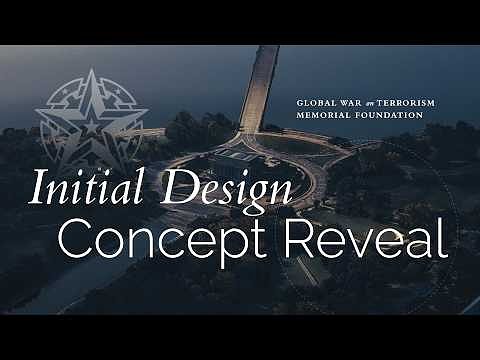
The landscape of the National Mall, a repository of American history cast in stone and steel, is poised for a significant addition. The Global War on Terrorism Memorial Foundation (GWOTMF) today unveiled the initial design for a permanent memorial honoring the generations who have served and sacrificed since September 11, 2001. Designed by world-renowned architect Kengo Kuma, the concept is not merely an architectural statement but a culmination of an unprecedented data-gathering effort, translating the lived experiences of thousands into a tangible space for reflection and healing.
Introduced by former President George W. Bush, the Honorary Chairman of the Foundation, the design represents a critical milestone for a conflict that, for many, remains an unfinished chapter. It moves beyond traditional monumentality, leveraging innovative design processes and materials to address the complex legacy of modern warfare.
A Design Forged by Their Voices
At the heart of this project is a departure from the top-down design ethos often associated with national monuments. Instead of relying solely on an architect’s abstract interpretation, the GWOTMF embarked on a massive data collection initiative dubbed the "Help Design History" campaign. This effort solicited input from 20,000 Americans, including Gold Star families, active-duty service members, and veterans from every conflict since World War II. This rich dataset became the foundational blueprint for Kengo Kuma and his team.
"Our role was not to impose a design, but to listen," said Kengo Kuma, who has a personal connection to the tragedy, having lost a close friend in the World Trade Center on 9/11. "The voices of those who served and the families who stood beside them became our source of inspiration."
This community-centric approach was further refined by a 23-member Design Advisory Council, a panel of veterans and their families who ensured the final design was steeped in authenticity. The result is a memorial where every element is tied to a specific experience or sentiment expressed by the community it aims to honor. This process—transforming qualitative feedback from thousands into quantitative design drivers—marks a significant innovation in how we conceive of and build spaces for national remembrance. It ensures the final structure is not just a symbol of sacrifice, but a repository of it.
"This design was shaped by history and held sacred from the beginning — forged by sacrifice and informed by the voices of warriors and their families," stated Michael "Rod" Rodriguez, President and CEO of the GWOTMF and a retired U.S. Army Green Beret.
The Architecture of Healing and Remembrance
The design itself is a powerful synthesis of nature, light, and materials imbued with history. The memorial journey begins at one of three entrances, each marked by sacred steel and stone relics recovered from the 9/11 attack sites—a tangible link to the conflict's origin. From there, visitors follow a marble "path of honor" embedded with footprints, symbolizing the varied and heavy weight of service carried by individuals and their families.
Rising above the site is a classically inspired amphitheater featuring a sweeping arch, affectionately called "the embrace." This is not just an aesthetic feature; it is a piece of industrial and military history. The structure is built from reclaimed steel sourced from combat operations during the Global War on Terrorism—metal from vehicles and weapons that were part of the very fabric of the war. Covered in historically native vegetation, the arch is designed to filter light, casting shifting shadows that create a dynamic, living environment. Its orientation is precisely aligned with Section 60 of Arlington National Cemetery, forging a direct, visible link between the memorial and the final resting place of many who fell in the conflict.
Perhaps the most poignant innovation is the use of interactive reflecting pools. As visitors step through the shallow water, their own wet footprints temporarily appear on the stone path alongside the permanently embedded footprints of service members. This simple yet profound feature allows for a moment of shared journey, a chance to symbolically walk alongside a loved one or a stranger who served, bridging the gap between civilian and military experience.
Navigating the Path to the National Mall
Bringing such a significant project to life, especially on the hallowed ground of the National Mall, is a monumental undertaking in itself. The memorial's journey began with the passage of the Global War on Terrorism Memorial Act in 2017, which authorized the GWOTMF to lead the effort. Crucially, it exempted the project from a rule requiring a conflict to be over for 10 years before a memorial can be built, a tacit acknowledgment of the enduring nature of these global operations.
In 2021, the Global War on Terrorism Memorial Location Act, signed by President Joe Biden, secured its place within the Reserve area of the National Mall, near the Lincoln Memorial at the intersection of 23rd Street NW and Constitution Avenue NW. The project is now navigating the rigorous 24-step regulatory process overseen by the National Capital Planning Commission.
Funding for the memorial presents its own unique challenge and industry model. By law, the project must be financed entirely by private donations, with no federal funds permitted. This places immense pressure on the GWOTMF's fundraising strategy, which relies on corporate partnerships, grassroots campaigns, and major philanthropic gifts. The Foundation has already secured significant support from organizations like the Tunnel to Towers Foundation and MISSION BBQ, but the road to reaching its total funding goal remains long. With a groundbreaking tentatively planned for mid-2027 and a dedication in late 2028, public support remains vital to transforming this design concept into a permanent reality.