
- 25% of Ford Pro's EBIT to come from software and services by 2026
- 879,000 paid software subscriptions globally in Q1 2026, with gross margins exceeding 50%
- Five all-new passenger vehicles to be launched in Europe by the end of 2029
Experts would likely conclude that Ford's strategy combines a strong focus on commercial vehicle innovation with a pragmatic approach to passenger EV adoption, positioning the company to navigate Europe's competitive and regulated automotive market effectively.
Ford's European Gambit: New Models and a Pragmatic EV Stance
SALZBURG, Austria – May 18, 2026 – Ford today detailed a sweeping new strategy for its European operations, launching a multi-year product offensive designed to defend its commercial vehicle crown while aggressively revitalizing its passenger car lineup. At a gathering of partners and dealers, the American automotive giant unveiled plans for seven new models and a significant push into software and services, all while issuing a pointed call for a more pragmatic, customer-focused approach to Europe's transition to zero-emission mobility.
The comprehensive vision, branded under the new global 'Ready-Set-Ford' platform, marks a decisive moment for the company in a fiercely competitive and highly regulated market. The strategy hinges on a dual approach: leveraging its dominant Ford Pro commercial division as a high-margin technology and services engine, and rebooting its passenger vehicle portfolio with a diverse range of 'multi-energy' vehicles tailored to European tastes.
The Digital Mechanic: Software Drives Commercial Profits
The cornerstone of Ford's European business and its primary profit driver is Ford Pro, the continent's leading commercial vehicle brand for 11 consecutive years. The new strategy sees this division evolving far beyond simply manufacturing vans. Ford is repositioning Ford Pro as an indispensable “productivity partner” for businesses, with a heavy emphasis on software and connected services designed to maximize vehicle uptime and, consequently, customer earnings.
"We don't just sell vans and pickups, we deliver an integrated ecosystem of vehicles, software and services," said Jim Baumbick, President of Ford in Europe. "Our vehicles lead the market, and around them we've built a productivity accelerator our competition cannot match."
This is more than just marketing rhetoric. The company is targeting 25% of Ford Pro's earnings before interest and taxes (EBIT) to come from software and services. The financial incentive is clear: Ford reported that paid software subscriptions surged 30% year-over-year in the first quarter of 2026, reaching 879,000 globally with gross margins exceeding 50%. This software-as-a-service (SaaS) model is a key battleground, with competitors like Mercedes-Benz Vans with its 'Mercedes PRO' services and Stellantis with its 'Pro One' plan also investing heavily in telematics and predictive maintenance.
At the heart of Ford's offering is its FORDLiive uptime system. By leveraging data from over 1.2 million connected vehicles in Europe, the system uses predictive intelligence to identify potential maintenance issues before they cause a breakdown. The results are tangible: the company claims its services delivered nearly one million additional days of uptime for European customers last year. Now, these capabilities are being extended to smaller businesses through new Dealer Uptime Services, which aim to cut repair times by up to 50% by allowing dealers to proactively monitor vehicle health and prepare for service visits in advance.
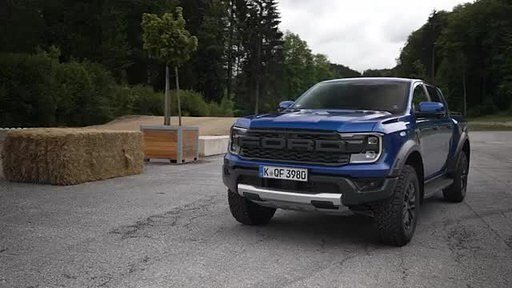
Bolstering this digital push are two new vehicles for distinct commercial needs. The new Ranger Super Duty creates a new heavy-duty pickup segment in Europe, targeting extreme-use sectors like forestry, mining, and military operations with an 8-tonne combined mass capacity and factory-installed heavy-duty components. At the other end of the spectrum, the all-electric Transit City is a cost-effective, no-frills van designed specifically for urban fleets navigating the growing number of electric-only zones in European cities.
Rally-Bred Revival: Courting Drivers with SUVs and Choice
While Ford Pro provides the financial backbone, the company is embarking on a much-needed revitalization of its passenger vehicle lineup. After streamlining its offerings by discontinuing iconic models like the Fiesta and Mondeo, Ford is now planning a comeback with five all-new vehicles made in and for Europe by the end of 2029.
The strategy is a direct response to prevailing market trends. SUVs continue to dominate European sales, accounting for over half of all new registrations. Simultaneously, while the long-term goal is electric, recent data shows a slowdown in BEV adoption and strong growth in hybrid sales, which many consumers see as a pragmatic bridge technology. Ford's new lineup reflects this reality.
Anchoring the new portfolio is a rugged compact SUV, a new member of the global Bronco family, which will be built in Valencia, Spain, from 2028. It will be joined by a small Electric Hatch, a dynamic Small Electric SUV, and two additional Multi-Energy Crossovers. The emphasis on "multi-energy"—offering a mix of hybrid, plug-in hybrid (PHEV), and fully electric powertrains—allows Ford to cater to a wider range of consumer needs and infrastructure realities across the continent. To differentiate itself in a crowded market dominated by the likes of Volkswagen Group and Stellantis, Ford is infusing its new models with a "rally-bred" design language, aiming to evoke a sense of adventure and performance.
"Building on the success of Ford Pro, while also tapping into Ford's racing heritage for the design of the new passenger vehicles – it's clear that Ford is back to win," said Nicola Gilda, Chair of Ford's European Dealer Council.
Navigating the Green Transition: A Call for Pragmatism
Beyond new products, Ford's announcement included a significant and assertive policy statement, calling on European regulators to adopt a more flexible and realistic path toward carbon-free mobility. The company is challenging the prevailing 'EV-or-nothing' narrative, arguing that rigid mandates that are detached from consumer demand and infrastructure readiness could be counterproductive.
"The fastest route to zero emissions is the one customers will actually take," Baumbick stated, encapsulating the company's core argument. Ford is advocating for a framework that supports a wider range of electrified technologies, including PHEVs and extended-range electric vehicles (EREVs), which allow customers to reduce emissions today while the charging network matures.
This position comes as the EU reviews its landmark regulation mandating 100% zero-emission new car sales by 2035. Ford's call for flexibility echoes lobbying efforts by industry groups like the European Automobile Manufacturers' Association (ACEA), which have highlighted slowing EV demand and intense competition. Recent proposals from the European Commission suggest a potential softening, possibly allowing for a small percentage of sales from vehicles running on e-fuels or from PHEVs beyond 2035. However, this stance faces fierce opposition from environmental groups, who point to studies showing that the real-world emissions from PHEVs are often far higher than official test figures, undermining their green credentials.
Ford also raised concerns about 'Made in Europe' rules, arguing they must reflect integrated regional supply chains that include vital partners like Türkiye and the UK to avoid undermining European competitiveness and increasing consumer costs. By wading so publicly into the regulatory debate, Ford is positioning itself not just as a participant in Europe's green transition, but as a vocal and influential force seeking to shape its trajectory.