
- 65 leaders from 14 countries are part of FOH, aiming to integrate perspectives from low- and middle-income nations into global health policy.
- 2 inaugural recipients: Aria Institute of Medical Sciences (Pakistan) and M.P. Shah Hospital (Kenya) selected for full membership.
- Innovative funding model: Philanthropic contributions are matched dollar-for-dollar to double the impact of donations.
Experts view this initiative as a crucial step toward rebalancing global health leadership by ensuring underrepresented regions have a meaningful voice in policy and research, though its long-term success depends on fostering genuine influence rather than symbolic inclusion.
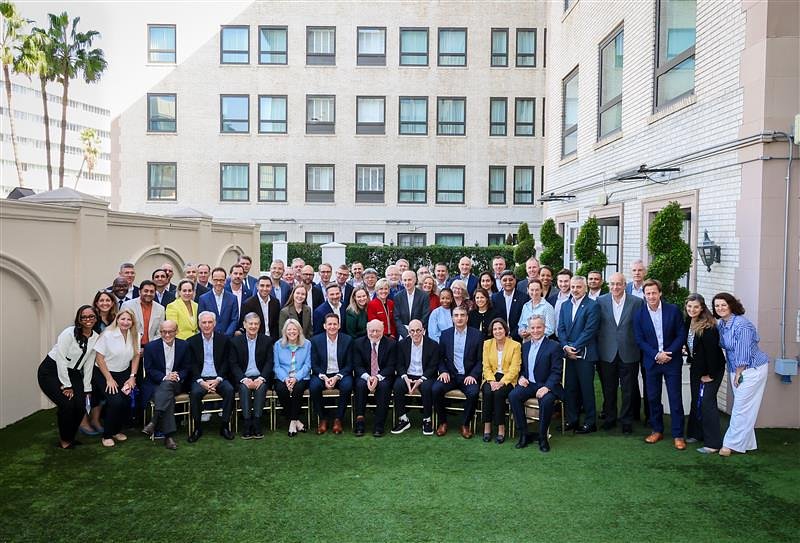
FOH Scholarship Aims to Bridge Global Health's Leadership Divide
BOSTON, April 15, 2026 – A new initiative is seeking to reshape the global health conversation by amplifying voices that have long been underrepresented. Future of Health (FOH), a community of senior health executives, today launched its Global Scholarship, a program designed to integrate leaders from developing nations into the highest levels of international health policy dialogue.
The organization named Aria Institute of Medical Sciences (AIMS) in Pakistan and M.P. Shah Hospital in Kenya as the inaugural recipients. The scholarship provides full membership for their leaders, granting them a seat at a table where strategies for the future of healthcare are forged. By funding access for organizations in low- and middle-income countries, FOH aims to enrich its research with on-the-ground perspectives from some of the world's most complex health environments.
A Seat at the Global Table
For decades, the architecture of global health has been designed and dominated by institutions in high-income nations. While well-intentioned, this has often resulted in a disconnect, with solutions developed in Western capitals failing to account for the realities in diverse communities across Africa, Asia, and South America. Studies have consistently shown that researchers and leaders from these regions are underrepresented in major publications, at international conferences, and within policy-making bodies.
FOH, which unites 65 leaders from 14 countries, explicitly acknowledges this gap. The scholarship is a direct attempt to rebalance the scales. "Global healthcare challenges can only be addressed with a deep understanding of health systems in all regions of the world," said FOH Co-Chairmen Prof. Eyal Zimlichman and Chip Kahn in a joint statement. "The strength of FOH's work depends on the breadth of operational experience represented at the table. Establishing this scholarship ensures perspectives from health systems across a wider range of regions and economies are fully integrated into our research."
Scholarship recipients become full members, contributing to annual research, expert workgroups, and peer-reviewed publications. Their inclusion is intended to ensure that FOH's evidence-based guidance reflects a truly global spectrum of health system challenges and innovations.
From Local Realities to Global Solutions
The inaugural scholars represent two distinct but equally vital models of healthcare leadership in the developing world.
In Quetta, Pakistan, Dr. Sohail Khan is the CEO of Aria Institute of Medical Sciences (AIMS). After practicing interventional cardiology in the U.S. for 18 years and earning a Master's in Healthcare Management from Harvard University, he returned to his home country in 2021. His mission was to build a hospital that could deliver international-standard care in Balochistan, one of Pakistan's most underserved provinces. Under his leadership, AIMS has become the region's largest private healthcare facility and the only one to hold both SafeCare and ISO certifications.
"Through leading a healthcare institution in one of Pakistan's most complex settings, I've seen firsthand the barriers underserved communities face, including disparities in access to opportunity—which often affect women—and the powerful lessons they teach," Dr. Khan stated. "I aim to bring that on-the-ground perspective to FOH's research, while taking back insights that help us build something stronger in Balochistan."
His counterpart, Dr. Toseef Din, leads M.P. Shah Hospital in Nairobi, Kenya. With over two decades of experience, she helms a leading 217-bed non-profit hospital that has earned international accreditation from the Joint Commission and serves as a national referral center. Dr. Din has overseen the expansion of specialist services and technology infrastructure, navigating the dual challenges of rapid growth and resource constraints in the dynamic East African healthcare market.
"Joining FOH creates an opportunity to bring perspectives from East Africa into a truly global conversation," said Dr. Din. "Health systems like ours are navigating rapid growth alongside complex resource challenges, and there is significant value in sharing those experiences while learning from peers across different regions. I look forward to contributing to FOH's research and dialogue."
Beyond Tokenism: The Challenge of True Integration
While the initiative is being lauded as a progressive step, its long-term success will hinge on FOH's ability to move beyond symbolic inclusion. The global health sector has long grappled with power imbalances, where knowledge and data from lower-income countries are extracted for research that primarily benefits institutions in the Global North—a practice sometimes criticized as 'parachute science.'
The true test for the Global Scholarship will be whether the insights from leaders like Dr. Khan and Dr. Din genuinely influence FOH's research agenda and policy recommendations. The initiative's framework, which assesses candidates on their executive responsibility and ability to contribute meaningful insight, suggests a search for active partners, not passive observers. For the program to be truly transformative, it must foster an environment where new members feel empowered to challenge assumptions and co-create solutions, ensuring their inclusion is not mere tokenism but a fundamental shift in how global health strategy is conceived.
A New Model for Philanthropic Impact
The scholarship is powered by an innovative funding model designed for scalability. FOH and its contributing members have committed to matching philanthropic contributions dollar-for-dollar for one annual scholarship, effectively doubling the impact of every dollar donated. This approach taps into a growing trend in philanthropy and impact investing, where donors seek to fund sustainable, high-leverage initiatives, with leadership development being a key focus.
By making the initiative open to philanthropic partners, FOH is creating a collaborative platform for those committed to strengthening global health leadership. The organization maintains that these contributions will not influence its apolitical, research-led priorities or the selection of scholars. By bringing leaders from the front lines of healthcare in regions like Balochistan and Nairobi to the global strategy table, the initiative hopes to transform not just who is in the room, but the very nature of the conversation.