
- Facility Size: 15,618 square feet with 3 operating suites, 7 preoperative rooms, and 5 post-anesthesia care bays.
- Technology Investment: Utilizes advanced robotics like Mazor X for spine surgery and Stryker's Mako for joint replacements.
- Private Equity Backing: Supported by Chicago Pacific Founders with $4.5 billion in assets under management.
Experts would likely conclude that DISC represents a high-tech, private equity-backed model aiming to reshape musculoskeletal care through specialized outpatient surgery centers, though its long-term impact on cost and quality remains to be seen.
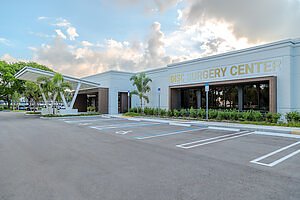
Florida's New Spine Hub: Inside the Tech and PE Playbook of DISC
WEST PALM BEACH, FL – June 29, 2026 – The sleek, modern façade of the new DISC Surgery Center at Palm Beach, which officially opened its doors today, represents more than just a new healthcare facility. It marks the arrival of a powerful new business model in South Florida's medical landscape. Backed by a roster of elite surgeons and the financial might of private equity, the center is a case study in operational innovation—a convergence of advanced robotics, specialized outpatient care, and a strategy aimed at fundamentally reshaping the economics of complex surgery.
While the press release touts a state-of-the-art facility, the real story lies in the meticulously engineered system behind it. DISC is not just building a clinic; it's deploying a highly replicable, high-margin healthcare product. Its parent company, TriasMD, and their backer, Chicago Pacific Founders, are betting that this model—which combines top-tier talent with the efficiencies of an ambulatory surgery center (ASC)—is the future of musculoskeletal care. The question for Palm Beach, and for the broader U.S. healthcare market, is what this future will look like for patients, physicians, and payers.
A New Standard in Surgical Care?
At 15,618 square feet, the Palm Beach facility is a purpose-built environment for high-acuity outpatient procedures. With three operating suites, seven preoperative rooms, and five post-anesthesia care bays, it’s designed to move patients through complex spine and joint replacement surgeries without the need for a traditional hospital stay. This model hinges on technology and technique.
"There is no surgery center in Florida like DISC, which is truly the future of spine and total joint care," said Dr. Jason M. Cuéllar, the center's medical director. His statement points to the facility's heavy investment in "ultramodern robotics, image guidance and minimally invasive surgical technologies." These aren't just buzzwords. In practice, this means surgeons are equipped with systems like the Mazor X for robotic-guided spinal screw placement or Stryker's Mako for hyper-precise knee and hip replacements. This technology allows for smaller incisions, less tissue damage, and significantly faster recovery times—the key ingredients for successful outpatient surgery.
DISC's track record at its California locations suggests the model is effective. Internal data from its Newport Beach center, for instance, boasts zero hospital transfers, infections, or re-operations for complex spine surgery patients. This data is crucial for convincing both surgeons and insurance providers that procedures once confined to inpatient hospitals can be safely and effectively performed in an ASC setting. By de-hospitalizing care, DISC aims to offer a more comfortable patient experience while significantly reducing overhead and overall costs, creating a win-win scenario that is attractive to both patients and insurers looking to escape exorbitant hospital bills.
Assembling an 'Elite Team' in a Crowded Market
DISC's strategy is not just about infrastructure; it's about talent. The company's success depends on attracting top-tier surgeons comfortable with pioneering new techniques. The recruitment of Dr. Cuéllar as medical director is a clear signal of this intent. A board-certified orthopedic spine surgeon with both an M.D. from Stanford and a Ph.D., Cuéllar is a leading figure in motion-preservation surgery, having performed over 1,700 artificial disc replacement procedures. His profile, which includes extensive research and a patient-centric philosophy born from his own experience with chronic back pain, substantiates the center's claim of assembling an 'elite team.'
However, DISC is entering a mature and competitive market. West Palm Beach is already home to established and well-regarded providers like the Spine & Orthopedic Center and the Paley Orthopedic & Spine Institute. These institutions have long served the community with comprehensive spine and joint care. DISC is not looking to compete on volume for all orthopedic issues. Instead, its operational innovation is one of hyper-specialization. By focusing exclusively on high-end, minimally invasive procedures and creating a 'physician-centric' environment with cutting-edge tools and efficient workflows, DISC aims to become the preferred destination for the region's most sought-after surgeons and their high-value cases. This creates a powerful flywheel: elite surgeons attract complex cases, which justifies investment in elite technology, which in turn attracts more elite surgeons.
The Private Equity Playbook in Healthcare
The engine driving this expansion is private equity. DISC's parent, TriasMD, is a portfolio company of Chicago Pacific Founders (CPF), a healthcare-focused investment firm with approximately $4.5 billion in assets under management. CPF's strategy is not to just fund healthcare, but to partner with companies that are actively 'transforming' it. The DISC model fits this thesis perfectly. It is a specialized, scalable, and potentially highly profitable platform for delivering care.
"The opening of DISC Palm Beach represents another important milestone in our commitment to expand patient access to high-quality musculoskeletal care throughout Florida," stated Lee Levanduski, CEO of TriasMD. This expansion is a deliberate execution of a well-funded playbook. Private equity investment in ASCs has exploded in recent years, as investors see an opportunity to consolidate a fragmented market and capitalize on the shift from inpatient to outpatient care.
This trend, however, is not without its critics. Industry analysts and patient advocates have raised concerns about the potential downsides of a profit-first mentality in medicine. Reports have linked some private equity acquisitions to rising prices, increased pressure on physicians to perform more procedures, and in some hospital settings, even a decline in care quality and staffing. In Florida, a hands-off regulatory approach with few disclosure requirements for ownership changes can make it difficult to track the impact of these investments. While DISC's public-facing mission is centered on patient satisfaction and superior outcomes, the underlying business model is engineered for financial returns, a reality that will shape its operations and its role in the community for years to come. The success of the Palm Beach center will therefore be watched not only as a medical endeavor but as a bellwether for the future of private equity's growing influence on American healthcare.