
- First EU Approval: FertilAI's AI platform is the world's first regulatory-approved AI software for optimizing fertility treatment timing. - Dataset Size: The platform is trained on over 100,000 fertility cycles. - Regulatory Milestone: StimAI (Class IIa) and OvuPredict (Class I) cleared under stringent EU Medical Device Regulation (MDR).
Experts view FertilAI's EU-approved AI platform as a significant advancement in reproductive medicine, offering data-driven precision to optimize fertility treatment timing while addressing operational inefficiencies in clinics.
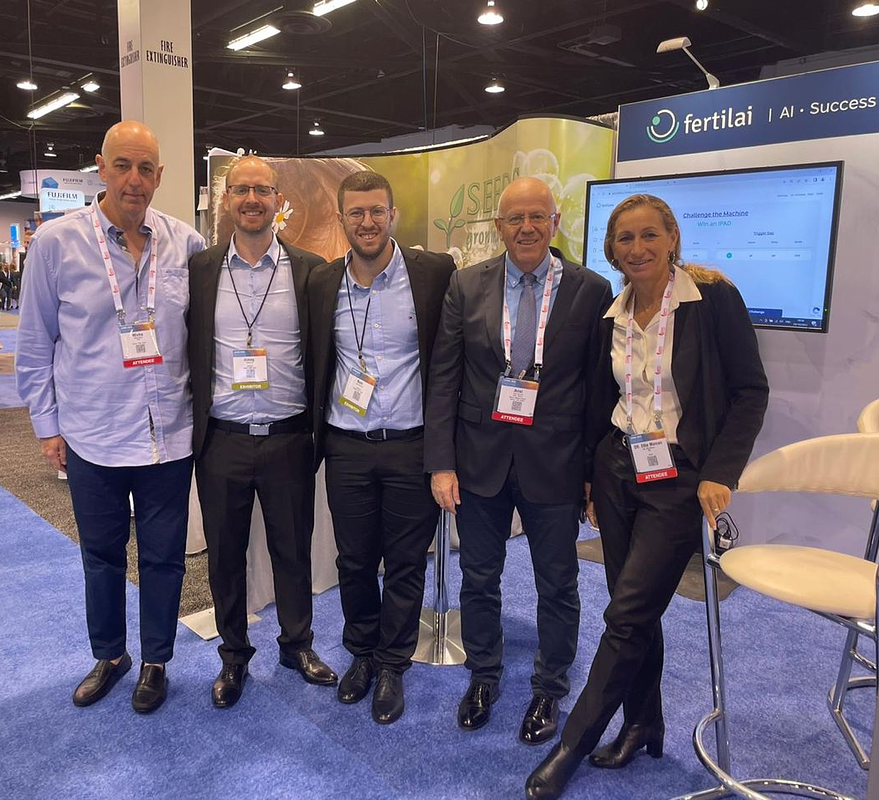
FertilAI's AI Gets EU Nod, Aims to Reshape Fertility Treatment
TEL AVIV, Israel – April 15, 2026 – In a move that signals a new era for reproductive medicine, Israeli health-tech firm FertilAI has secured a landmark CE mark under the stringent EU Medical Device Regulation (MDR) for its predictive artificial intelligence platform. The company's tools, StimAI and OvuPredict, represent what is understood to be the world's first regulatory-approved AI software designed specifically to help physicians optimize the timing of fertility treatments during active cycles.
This certification paves the way for the deployment of AI-driven decision support across European fertility clinics, promising a dual benefit: enhancing clinical precision for patients on their difficult journey to parenthood and providing a powerful tool for clinics struggling with workload and operational bottlenecks. By analyzing vast datasets to predict optimal intervention points, the technology aims to transform a process often fraught with uncertainty into a more data-informed science.
The Dawn of Predictive Timing in Reproduction
At the heart of FertilAI's offering is the Fertilane platform, a cloud-based Software-as-a-Service (SaaS) solution designed for seamless integration with existing Electronic Medical Record (EMR) systems. This allows clinicians to access its predictive power directly within their daily workflow. The platform, trained on a massive dataset of over 100,000 fertility cycles, delivers its insights through two distinct, newly approved algorithms.
StimAI (EU MDR Class IIa): This tool is designed for in vitro fertilization (IVF) cycles. It predicts the expected number of mature oocytes (eggs) that would be retrieved based on various potential timings for the 'trigger shot,' a critical step that initiates final egg maturation. By presenting data-backed scenarios, StimAI empowers physicians to choose a timeline that not only maximizes the potential yield for an individual patient but also allows the clinic to better manage and balance the daily workload in its high-stakes laboratory environment.
OvuPredict (EU MDR Class I): Focusing on natural cycles, this algorithm supports clinicians by predicting a patient's ovulation up to six days in advance. According to published research, this foresight can help optimize the timing of less invasive procedures like Intrauterine Insemination (IUI) and Frozen Embryo Transfers (FET), potentially improving pregnancy chances significantly. Operationally, it can reduce the need for frequent patient monitoring appointments and create more predictable schedules for both patients and staff.
"Our goal is to accelerate and ease the patients' fertility treatment journey to parenthood, no matter the path taken," said FertilAI CEO Rohi Hourvitz in a statement. He emphasized that the technology could increase patient access to services without forcing clinics to grow their overhead.
Navigating a New Regulatory Frontier
The CE marking is more than a rubber stamp; it is a rigorous validation of safety and performance under the EU's notoriously demanding Medical Device Regulation. The different classifications assigned to FertilAI's tools—Class IIa for StimAI and Class I for OvuPredict—reflect the nuanced risk-based approach of these regulations.
Class I, assigned to OvuPredict, is for low-risk devices. However, StimAI's designation as a Class IIa device signifies a medium risk, subjecting it to a far more intense level of scrutiny from a third-party Notified Body. This higher classification acknowledges the tool's direct influence on critical IVF treatment decisions. For AI-driven software, achieving this requires demonstrating robust clinical validation, data integrity, cybersecurity, and mitigation of algorithmic bias—a significant hurdle that FertilAI has now cleared.
The approval marks a critical step forward in legitimizing AI as a diagnostic and decision-support tool in mainstream medicine, particularly for software that actively informs a clinician's treatment plan.
A Crowded Field with a Unique Focus
The fertility tech landscape is buzzing with AI innovation. A growing number of companies, including Fairtility, AiVF, and Alife Health, have developed sophisticated AI tools that have also earned CE marks. However, these platforms have largely focused on the embryology lab, using AI to assess and rank embryos for transfer based on their viability.
FertilAI has carved out a distinct and complementary niche. Instead of focusing on the embryo, its platform concentrates on the preceding and equally critical phase: optimizing the timing of the treatment cycle itself. By being the first to secure regulatory approval for predictive timing, the company establishes a first-mover advantage in a crucial, underserved segment of the AI-driven fertility market. This focus on optimizing the clinical and patient schedule addresses a different, but equally pressing, set of challenges in the fertility journey.
Addressing a Growing Global Need
The introduction of this technology is timely. Global infertility rates are on the rise, while a worldwide shortage of specialist physicians contributes to longer wait times and higher costs for treatment. The global fertility services market was valued at over $30 billion in 2023 and is projected to grow substantially, creating immense pressure on clinics to operate more efficiently.
"With the global rise in infertility and a worldwide shortage of physicians driving higher costs and longer wait times, expanding access to care is absolutely vital," Hourvitz stated. "Having a system that enables clinic scalability while actively improving clinical benefits and the patient experience is a pivotal step forward in addressing this growing challenge."
FertilAI's approach, which combines improved clinical outcomes with operational efficiency, directly targets this dual crisis. By potentially reducing the number of cycles needed for success and streamlining clinic management, the technology holds the promise of making fertility care more effective, less burdensome, and ultimately more accessible for the millions of people who need it.