
- 30 Bcf of additional natural gas storage capacity approved by FERC
- 60 Bcf total storage capacity upon completion
- 2.5 Bcf/day maximum withdrawal capability
Experts agree that the GTS expansion is critical for enhancing U.S. energy security, grid reliability, and LNG export capabilities, addressing growing demand and infrastructure vulnerabilities.
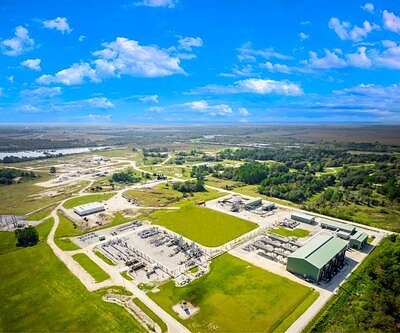
FERC Greenlights Massive Texas Gas Hub to Fortify US Energy Security
HOUSTON, TX – March 23, 2026 – The Federal Energy Regulatory Commission (FERC) has granted a critical certificate of public convenience and necessity to Caliche Development Partners III, authorizing a monumental expansion of its Golden Triangle Storage (GTS) facility in Beaumont, Texas. The approval paves the way for the Spindletop Expansion Project, a plan to add 30 billion cubic feet (Bcf) of natural gas storage capacity, positioning the facility as a dominant force on the U.S. Gulf Coast.
This latest phase of growth, which includes the development of four new underground salt dome storage caverns and related surface equipment, will more than double the facility's current authorized size. Upon completion, GTS is projected to command over 60 Bcf of total storage capacity, supported by a formidable capability to inject up to 2.2 Bcf per day and withdraw up to 2.5 Bcf per day. The expansion solidifies the strategic importance of the historic Spindletop salt dome, transforming it into a linchpin for modern energy logistics.
Bolstering a Strained Energy Grid
The federal green light for the GTS expansion arrives at a time of broad consensus among regulators and industry leaders that the nation's energy infrastructure must evolve to meet soaring demand and enhance resilience. Natural gas storage is increasingly seen as a non-negotiable component of both natural gas system stability and electric grid reliability.
This sentiment was echoed by FERC Chairman Laura Swett in her recent comments on the decision. "Storage is vital to the natural gas system's operations as it provides seasonal supply, peak demand capability and reliability during outages and extreme weather and helps load balancing," Swett stated. "It's also essential to a reliable electric grid. It gives us flexibility to keep the lights on. We would love to see more storage developed around the country to enhance both natural gas and electric reliability."
The Gulf Coast, in particular, has been identified as having a "gas storage problem," where existing capacity has not kept pace with the explosive growth in demand from power generation and liquefied natural gas (LNG) exports. This deficit leaves the region vulnerable to price volatility and supply shortages, especially during extreme weather events. The importance of resilient infrastructure was starkly highlighted when GTS itself experienced a force majeure event in January 2026, when an equipment failure during a cold snap temporarily halted operations.
By significantly boosting high-deliverability storage capacity—a hallmark of salt caverns which can be cycled more rapidly than other storage types—the GTS expansion provides a much-needed shock absorber for the market. This added flexibility helps ensure a steady flow of energy to power plants, industrial users, and LNG export terminals, even when pipelines are constrained or demand spikes unexpectedly.
Supercharging the LNG Export Boom
Beyond domestic reliability, the GTS expansion is strategically engineered to fuel America's growing ambitions as a global energy supplier. The facility's location and enhanced connectivity are set to supercharge the Gulf Coast's world-leading LNG export machine. Caliche announced it is moving forward with multiple new pipeline interconnections that will provide its customers with unparalleled access to supply from the prolific Permian, Eagle Ford, and Haynesville shale basins.
Construction is already underway on connections to Momentum's Clarity pipeline and ExxonMobil's Beaumont Refinery, with both expected to enter service this year. These will be followed by a connection to the Kinder Morgan Trident Intrastate Pipeline in early 2027 and ARM's Mustang Express Pipeline in late 2028. This dense network of pipelines will culminate in GTS becoming the only gas storage facility with a direct connection to more than one LNG export terminal, a unique advantage in a competitive market.
The expansion is timed to support a tidal wave of new LNG demand. The nearby Golden Pass LNG export terminal, which is starting up this year, is already a major customer, holding the capacity for GTS's first two caverns. With LNG demand at the Texas-Louisiana border projected to more than double from roughly 7.8 Bcf/d to as high as 16.8 Bcf/d by the end of the decade, the need for robust, flexible storage has never been greater. The GTS hub will act as a critical buffer, allowing LNG facilities to maintain consistent operations and meet their contractual obligations to international buyers.
A New Energy Giant on a Historic Foundation
The project represents one of the most significant private investments in new U.S. gas storage infrastructure in over a decade, backed by a majority investment from Sixth Street, a global firm with over $75 billion in assets under management. This partnership signals renewed confidence from major institutional investors in the critical role of natural gas infrastructure.
While the company positions GTS to become the Gulf Coast's largest storage hub by volume and injectability, the competitive landscape is vast. Existing facilities, such as Kinder Morgan's West Clear Lake, have larger single-site volume capacities. However, GTS's strategic advantage lies in its high-deliverability salt cavern technology and its unparalleled pipeline connectivity, making it a leader in flexibility and market access.
Caliche, which acquired GTS from Southern Company in 2022, is also demonstrating a broader, long-term vision that extends beyond natural gas. The company is leveraging its expertise in subsurface storage to become a diversified player in the energy transition. On the same Spindletop site, Caliche is constructing what is expected to be the world's largest dedicated helium storage cavern, slated for service in 2025. In parallel, the company is advancing a major carbon sequestration project just miles away, having already secured a lease agreement with the City of Beaumont for the subsurface rights.
This multi-pronged strategy is further exemplified by an expanded partnership with industrial gas giant Linde. In addition to helium storage, Caliche will provide natural gas delivery via a new pipeline to Linde's blue hydrogen production facility in Beaumont, directly integrating its assets with the infrastructure for next-generation fuels.