
- Air cargo capacity in the Middle East and South Asia (MEISA) is 20% below prior-year levels.
- FedEx rerouted 44 pallets of critical medical equipment (6.3 tons, $2.3M value) within 24 hours to UAE hospitals.
- The company leveraged alternative European connections to ensure continuity of cancer medication shipments to India.
Experts agree that FedEx's strategic network redesign, digital monitoring, and specialized handling are essential to mitigating supply chain disruptions in volatile regions, particularly for critical healthcare logistics.
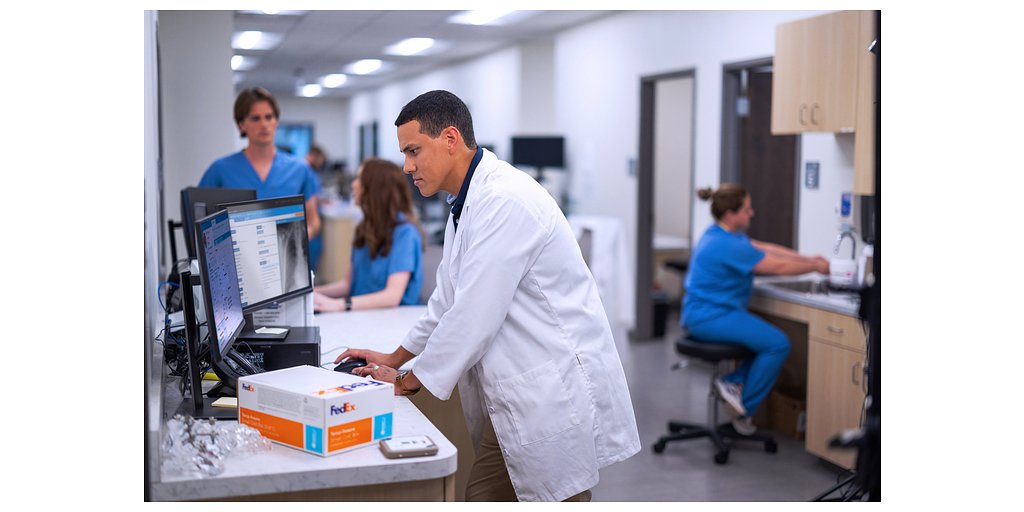
FedEx Fortifies Mideast Supply Chains Amid Regional Volatility
DUBAI, United Arab Emirates – April 29, 2026 – A confluence of geopolitical tensions and shifting economic currents is putting global supply chains under renewed pressure, particularly across the critical trade lanes of the Middle East and South Asia (MEISA). With recent data indicating that air cargo capacity from the region remains approximately 20% below prior-year levels, logistics providers are racing to build resilience into networks that have become essential lifelines for global commerce and, more critically, for healthcare.
In this volatile environment, logistics giant FedEx is highlighting a multi-pronged strategy combining network diversification, advanced digital monitoring, and specialized handling to navigate the complexities. The challenge is stark: disruptions in the Red Sea have diverted significant sea freight to air cargo, creating a surge in demand that collides with already constrained capacity. For businesses, this translates into potential delays and higher costs. For hospitals and patients, it can mean a life-or-death wait for essential medicines and equipment.
“In changing market conditions, the strength of a logistics network is measured by its ability to respond without compromising reliability,” said Taarek Hinedi, VP Operations at FedEx MEISA. “In healthcare logistics, it also means helping protect access to critical equipment, medicines, and life-saving treatments when timing and shipment integrity matter most.”
Beyond Bottlenecks: A Strategic Network Redesign
Rather than simply reacting to bottlenecks, FedEx is proactively re-engineering its network architecture to build in flexibility. A key pillar of this strategy is the diversification of its international gateways, creating redundancies that allow cargo to be rerouted around disruptions. The company has integrated alternative hubs in Johannesburg, Nairobi, Istanbul, and Amsterdam into its global system. This move is not just about adding dots on a map; it's a strategic pivot to enhance connectivity and reduce reliance on single points of failure.
Istanbul, for instance, provides a powerful bridge between Europe and Asia, offering an alternative to more traditional European hubs and opening up smoother access to Central Asia and the wider Middle East. The African gateways in Johannesburg and Nairobi tap into the continent's rapidly growing economies, establishing more direct trade routes that bypass potential congestion elsewhere.
Complementing this global air strategy is a significant investment in ground infrastructure. The FedEx Middle East Road Network is being expanded to provide seamless redistribution from major hubs like Dubai and Riyadh. This network now facilitates cross-border truck movements throughout the Gulf Cooperation Council (GCC) and Jordan, and is extending into new, challenging markets like Iraq. This multimodal approach allows for a more cost-effective and flexible solution for regional distribution, integrating smoothly with long-haul air freight to provide end-to-end service.
The Digital Edge in a Disruptive Era
Physical infrastructure alone is insufficient in the face of unpredictable disruptions. FedEx is increasingly leaning on a suite of digital tools to provide predictive insights and real-time control over shipments. At the forefront are platforms like FedEx SenseAware and FedEx Surround, which represent a shift from reactive tracking to proactive, intelligence-led logistics.
SenseAware utilizes multi-sensor devices placed within shipments to transmit near real-time data on location, temperature, humidity, and even light exposure, which can indicate if a package has been opened. This granular visibility is paramount for high-value healthcare products, where a deviation from a specific temperature range can render a life-saving drug useless. The system can trigger alerts, allowing for immediate intervention to protect the shipment's integrity.
FedEx Surround takes this a step further. It functions as an analytics engine, ingesting data from SenseAware devices, the broader FedEx network, and external sources like weather forecasts and traffic patterns. Using machine learning, the platform predicts potential delays before they happen and can suggest alternative routes or transport modes. This digital nervous system allows the company to anticipate and navigate disruptions, safeguarding sensitive shipments and providing customers with a level of assurance that goes beyond a simple tracking number.
A Lifeline for Critical Healthcare Shipments
The tangible impact of this resilient network is most evident in the high-stakes world of healthcare logistics. The company has shared several recent examples that underscore the critical importance of operational agility and specialized expertise.
In one case, FedEx teams in Europe and the UAE mobilized an air freight solution within 24 hours to move 44 pallets of critical medical equipment from the Netherlands to hospitals in the UAE. The shipment, weighing 6.3 tons and valued at over $2.3 million, contained cardiac and surgical devices needed for urgent scheduled procedures. The rapid coordination of collection, routing, and customs clearance ensured the equipment arrived on time, preventing potential delays in patient care.
Flexibility proved crucial when a vital shipment of cancer medication destined for India faced network constraints. By leveraging its diversified network, FedEx rerouted the shipment through alternative European connections, ensuring continuity of care for patients awaiting treatment. Coordinated, real-time adjustments across multiple hubs were key to navigating the disruption successfully.
Protecting shipment integrity is another core focus, particularly for temperature-sensitive pharmaceuticals. The company recently handled a time-critical medical emergency shipment from the United States that required strict temperature control before its final transport by road to Qatar. Upon arrival in the UAE, teams immediately identified the shipment, moved it to refrigerated storage, and repacked it with fresh gel packs to maintain the required temperature throughout its final journey.
This specialized capability is also being used to support a leading pharmaceutical company by transporting urgent asthma medication to address supply chain shortages and helping a long-standing Indian customer maintain a consistent supply of generic medicines into the United States. These instances highlight how a combination of international priority services and tailored handling for sensitive goods is essential to maintaining global health security.
As supply chain conditions continue to evolve, the ability to adapt quickly with a flexible network, advanced digital tools, and deep operational expertise will remain critical to maintaining the flow of global trade and safeguarding access to life-saving products. Resilience in logistics is no longer an advantage; it is an absolute necessity.