
- 515,000 babies born with sickle cell disease annually in Africa
- 70% reduction in child mortality with early diagnosis and intervention
- $30 million raised by Hemex Health in investor funding
Experts view the FDA's Breakthrough Device Designation for the Gazelle® Hb Variant Test as a critical step toward improving sickle cell disease diagnosis, particularly in underserved regions, with the potential to significantly enhance global health equity.
FDA Fast-Tracks Sickle Cell Test, Boosting Global Health Equity
PORTLAND, OR – February 06, 2026 – A novel diagnostic device aimed at transforming the management of sickle cell disease (SCD) has been placed on an accelerated regulatory path by the U.S. Food and Drug Administration. Hemex Health announced today that its Gazelle® Hb Variant Test has received Breakthrough Device Designation, a status reserved for medical technologies that have the potential to provide more effective diagnosis for life-threatening or irreversibly debilitating conditions.
The designation is a significant milestone for the Portland-based company and a beacon of hope for the millions affected by sickle cell disease worldwide. It provides Hemex Health with prioritized review and enhanced communication with the FDA, potentially shortening the timeline to bring its innovative point-of-care solution to the U.S. market. While the Gazelle test is not yet cleared for sale in the United States, it is already reshaping healthcare in over 40 countries where it has been adopted.
“The Breakthrough Device Designation reflects the FDA’s recognition of the need for improved tools to support the management of sickle cell disease,” said Patti White, CEO of Hemex Health, in a statement. “We appreciate the opportunity for early and frequent engagement with the agency as we continue to develop diagnostic technologies intended to deliver clinically meaningful information closer to patients.”
A Lifeline for Underserved Communities
Sickle cell disease is a genetic blood disorder that disproportionately affects people of African, South American, and South Asian descent. In many regions with a high disease burden, access to timely and accurate diagnosis is severely limited. Traditional testing methods, such as High-Performance Liquid Chromatography (HPLC), are considered the gold standard but require expensive equipment, stable electricity, and highly trained technicians, making them impractical for remote or low-resource settings.
This diagnostic gap has devastating consequences. Research shows that in parts of Africa, where an estimated 515,000 babies are born with SCD annually, mortality rates for children under five can be tragically high. However, early diagnosis and intervention before the age of two can reduce deaths by over 70%.
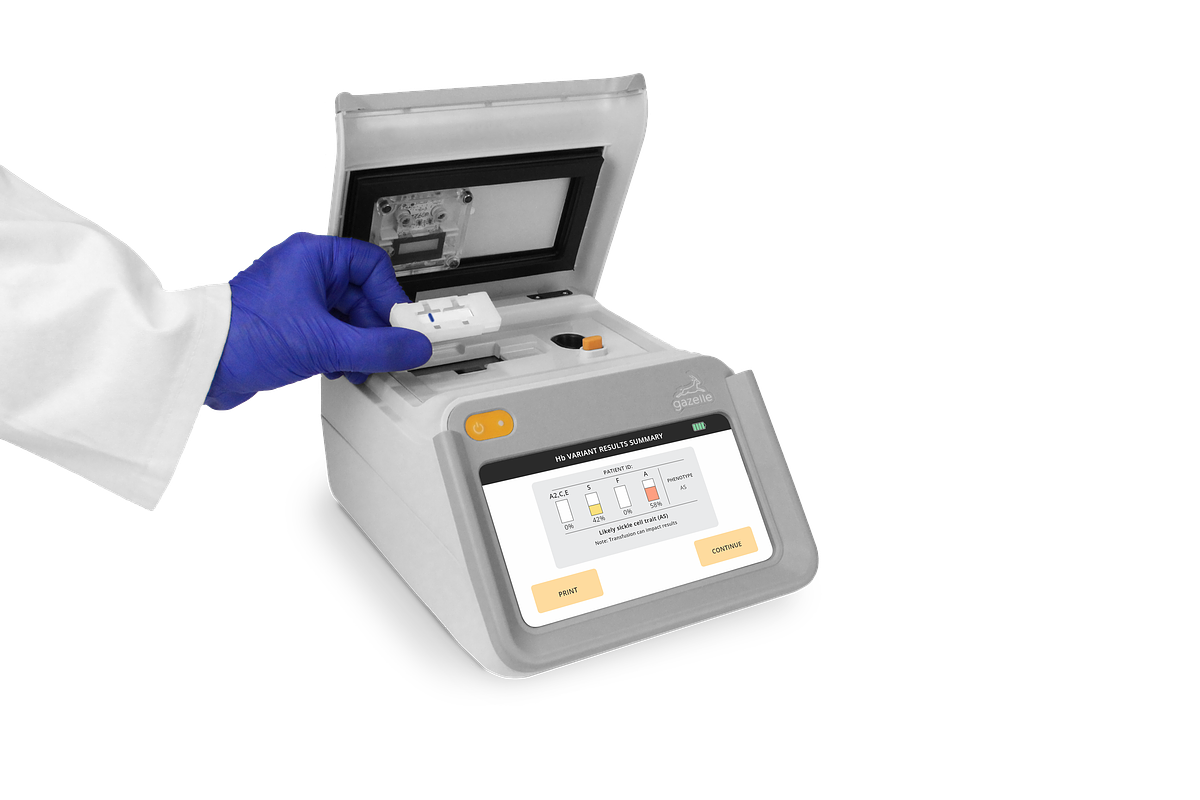
Hemex Health's Gazelle platform is engineered to directly address this challenge. The compact, battery-operated device uses miniaturized electrophoresis technology to separate and quantify hemoglobin variants from a small blood sample in minutes. Its rugged design and lack of a need for cold-chain storage make it ideal for use in field clinics and community health centers, bringing laboratory-grade testing directly to the patient.
The impact is already being felt globally. In India, which sees 90,000 to 100,000 SCD births each year, Hemex Health is a major supplier for the country's National Sickle Cell Anaemia Elimination Mission. Through a partnership with the SAMRIDH initiative, the company aims to screen over two million individuals, primarily women and children, in rural areas across eight states. A separate $2.5 million working capital facility from MedAccess is helping scale the device’s deployment in India, Africa, and the Middle East, demonstrating strong confidence from the global health community.
Disrupting Diagnostics with Innovative Technology
The technology at the heart of the Gazelle platform originated as the “HemeChip” at Case Western Reserve University, which licensed the concept to Hemex Health in 2016. Unlike simpler screening tests that provide a basic positive or negative result, Gazelle delivers quantitative data, identifying not only the presence of sickle hemoglobin but also its concentration and other clinically relevant variants. This detailed information is crucial for confirming a diagnosis, monitoring disease progression, and assessing a patient's response to therapy.
This capability has positioned Hemex Health as a disruptive force in the decentralized diagnostics market. To date, the company has raised approximately $30 million in investor funding and is currently completing its Series B round. Additionally, Hemex has received approximately $12 million in grant funding from institutions like the National Institutes of Health (NIH). This financial backing, coupled with strategic collaborations with entities like Novartis Biome, underscores the perceived value of its technology and business model.
By focusing on affordability and accessibility, Hemex Health is creating a new paradigm for managing blood-based disorders. The Gazelle device is reportedly the first and only portable platform to replicate laboratory electrophoresis for SCD and the only point-of-care test capable of identifying beta thalassemia, another common and serious hemoglobinopathy. This broadens its clinical utility and reinforces its potential as a comprehensive tool for global hematology care.
Navigating the FDA's Fast Track
The FDA's Breakthrough Devices Program is designed to help patients gain more timely access to life-saving technologies by speeding up their development and review. To qualify, a device must target a life-threatening or debilitating condition and demonstrate a potential to be more effective than current standards of care.
While the designation is a powerful endorsement, it is not a guarantee of market approval. Historical data shows the path remains rigorous. As of late 2024, of the more than 1,000 devices that had received the designation, only about 12% had successfully reached the U.S. market. A large number of designated devices remain in development or have been discontinued.
However, the program's benefits are substantial. It provides a framework for rapid and frequent communication with FDA experts, which can streamline clinical trial design and premarket review. For devices that ultimately seek clearance, review timelines can be significantly reduced - in some cases by more than 50%. For Hemex, this means a more efficient pathway to bringing a U.S.-approved version of its globally recognized technology to American patients.
The designation validates both the technology's potential and the urgency of the unmet need in sickle cell disease management. As Hemex Health continues its engagement with the FDA, the global health community will be watching closely, hopeful that this breakthrough recognition will soon translate into broader access and better outcomes for patients everywhere.