
- 53 mm capture length: The TIGERTRIEVER 25 is designed with a 53 mm capture length to address large, stubborn clots in proximal vessels.
- First-pass success focus: The device is engineered to improve the likelihood of complete clot removal in a single attempt, a critical factor in stroke recovery.
- Lower clot fragmentation rate: Previous clinical trials showed the TIGERTRIEVER platform significantly reduced clot fragmentation compared to conventional stent retrievers.
Experts view the TIGERTRIEVER 25 as a significant advancement in stroke intervention, offering improved adaptability and control to enhance first-pass success and reduce complications in complex cases.
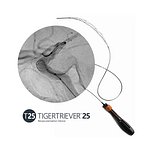
FDA Clears TIGERTRIEVER 25, A Larger, Smarter Stroke-Fighting Device
SOUTHLAKE, TX – April 16, 2026 – The U.S. Food and Drug Administration (FDA) has cleared a new weapon in the fight against severe ischemic stroke, granting clearance to Rapid Medical's TIGERTRIEVER™ 25. The announcement, coupled with reports of successful first-in-human uses in the United States, signals a significant advancement in the treatment of large vessel occlusions (LVOs), the most debilitating form of stroke.
Developed by the Israeli-American neurovascular company Rapid Medical, the TIGERTRIEVER 25 is engineered to be the largest and most adaptable thrombectomy device on the market. It aims to give neurointerventionalists a more powerful and precise tool to remove large, stubborn blood clots from the brain's main arteries, a challenge that can determine a patient's chances of survival and recovery.
A New Frontier in Stroke Intervention
The TIGERTRIEVER 25 stands apart due to its sheer size and intelligent design. With a capture length of 53 millimeters, it is specifically built to address occlusions with a high clot burden lodged in proximal vessels like the internal carotid artery (ICA) and the M1 segment of the middle cerebral artery. These are often the most challenging cases, where conventional devices may struggle.
However, its most significant innovation lies in its proprietary real-time force control. Unlike traditional stent retrievers that expand passively to a predetermined size, the TIGERTRIEVER platform allows physicians to actively control the device's expansion and interaction with the clot during the procedure. This adjustability, which an operator can fine-tune remotely, allows for a tailored approach that can adapt to a patient's unique vessel anatomy and the specific characteristics of the clot.
The first U.S. case, performed by Dr. Edgar Samaniego at the University of Iowa, highlighted these advantages. “The TIGERTRIEVER 25 demonstrated excellent conformability to the vessel anatomy, accommodating the MCA diameter with a smooth transition into the terminal ICA,” he stated. “This adaptability allows for effective engagement across long segments and makes it particularly valuable in large vessel occlusions with high clot burden, even in challenging, angulated anatomy.”
This level of control is critical. By enabling physicians to secure the clot over a longer segment and maintain engagement, the device is designed to minimize the risk of clot fragmentation. When fragments break off, they can travel further into the brain, causing new blockages (distal embolization) and complicating the patient's outcome. A distal net integrated into the device's design further helps to secure the clot during retrieval.
Elevating the Standard for First-Pass Success
In the world of stroke intervention, the ultimate goal is achieving what is known as a “first-pass success”—the complete removal of the clot in a single attempt. Every attempt to retrieve a clot carries risks and consumes precious time, during which brain cells are dying. Achieving reperfusion on the first try is strongly correlated with better neurological outcomes and a greater likelihood that a patient will regain independence.
“With every thrombectomy, we aim at our first pass being the last,” Dr. Samaniego noted, underscoring the clinical importance of this metric. The TIGERTRIEVER 25 is engineered to make this goal more attainable.
Dr. Demetrius Lopes of Advocate Health Care, who also performed one of the initial U.S. procedures, praised the device’s versatility. “Acute ischemic stroke intervention today demands a diverse and adaptable toolkit to effectively address the wide spectrum of anatomical and clinical scenarios we encounter, and I am very impressed with the versatility of the TIGERTRIEVER 25 device,” he said. “Its design streamlines the procedural approach and has the potential to simplify the pathway to achieving first-pass success—an outcome that remains critical for improving patient outcomes in mechanical thrombectomy.”
The TIGERTRIEVER platform's effectiveness is supported by previous clinical data. The pivotal TIGER Trial for the original device showed it was superior to conventional stent retrievers in restoring blood flow, while also demonstrating a significantly lower rate of clot fragmentation. This history of clinical validation provides a strong foundation for the expanded capabilities of the TIGERTRIEVER 25.
Navigating a Competitive Neurovascular Market
The TIGERTRIEVER 25 enters a competitive but rapidly evolving market for thrombectomy devices. It will compete with established players like Medtronic's Solitaire™, Stryker's Trevo™, and Penumbra's aspiration-based systems. While these devices have transformed stroke care over the past decade, unmet needs in the most complex cases remain.
Rapid Medical is positioning the TIGERTRIEVER 25 not just as an alternative, but as a solution for the specific challenges that other devices may not fully address. Its combination of size and active adjustability creates a unique value proposition for neurointerventionalists facing long, bulky clots in tortuous vessels. This focus on adjustability, which allows the device to be tailored to the patient in real-time, is a key differentiator from the passive mechanics of most existing stent retrievers.
The FDA clearance also represents a strategic victory for Rapid Medical. It significantly broadens the company's portfolio, creating a comprehensive suite of tools for stroke intervention. With the TIGERTRIEVER 13 validated for smaller, more distal vessels and now the TIGERTRIEVER 25 for large proximal ones, the company offers a platform that can address the full spectrum of ischemic stroke cases. This strategic expansion solidifies Rapid Medical’s position as a key innovator in the neurovascular space and strengthens its competitive footing.
The Regulatory Path and Future Adoption
The device likely followed the FDA's 510(k) clearance pathway, a common route for medical devices that demonstrate substantial equivalence to an existing, legally marketed device. This clearance for the TIGERTRIEVER 25 designates it as a Class II device intended to restore blood flow in patients experiencing an ischemic stroke within eight hours of symptom onset, particularly for those who are ineligible for or have failed clot-busting drug therapy (IV t-PA).
Based on the enthusiastic initial feedback from leading physicians, adoption of the TIGERTRIEVER 25 is expected to be strong, especially in comprehensive stroke centers that handle a high volume of complex cases. The ability to actively manage the procedure and potentially reduce complications offers a compelling reason for specialists to incorporate it into their toolkit. As more physicians gain experience with the device, its performance in a wider range of real-world clinical scenarios will further define its role in modern stroke care, potentially setting a new standard for treating the most severe and challenging occlusions.