
- 20 million: Annual U.S. doctor visits for ear-related conditions
- 1.6 million: Ear images and videos used to train TytoCare's AI algorithm
- 6 months+: Age range for patients the AI can assist in diagnosing ear infections
Experts view this FDA clearance as a regulatory breakthrough for AI in medicine, establishing a new category for AI-driven diagnostics and setting a precedent for future innovations in at-home healthcare.
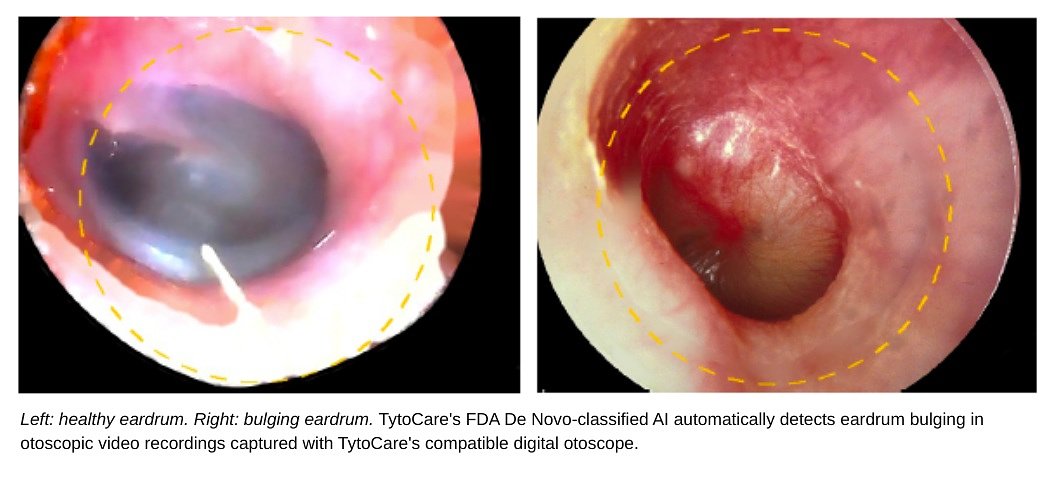
FDA Clears First AI to Diagnose Ear Infections From Home
NEW YORK, NY – April 27, 2026 – In a landmark decision that signals a new era for at-home medical diagnostics, the U.S. Food and Drug Administration (FDA) has granted De Novo classification to TytoCare for its artificial intelligence-powered eardrum analysis software. The solution, Tyto Insights™ for ENT Suite, is the first of its kind to receive such a designation, establishing an entirely new regulatory category for AI-driven analysis of the ear, nose, and throat.
This approval allows the virtual care company’s technology to analyze video recordings of the eardrum captured by its remote examination device, automatically detecting bulging—a key indicator of common ear infections like Acute Otitis Media (AOM). By bringing this sophisticated diagnostic aid into the home, the technology promises to reshape how one of the most frequent childhood ailments is managed, offering a powerful tool for parents and physicians alike.
A New Precedent in Digital Diagnostics
The FDA's decision is more than just an approval for a single product; it's a foundational moment for AI in medicine. By utilizing the De Novo pathway, which is reserved for novel, low-to-moderate risk devices with no existing market equivalent, TytoCare has effectively carved out a new classification: the "ear, nose, and throat image analyzer." This move creates a clear regulatory road for future innovations in the space, signaling the FDA's readiness to embrace AI as a legitimate component of the diagnostic toolkit.
Previously, a novel device without a predicate would face a more arduous path to market. This classification establishes Tyto Insights™ as the benchmark, enabling future, similar technologies to follow a more streamlined 510(k) approval process. This is consistent with a broader trend, as the De Novo pathway has become the primary route for a majority of novel AI and machine learning medical software authorizations in recent years.
"This is not just a product milestone, it is a regulatory breakthrough," said Elad Lachmanovich, Chief Technology and Product of TytoCare, in the company's announcement. "We are building an AI layer for primary care that can interpret clinical-grade data from the home and turn it into actionable insight. This De Novo establishes the foundation for a new generation of AI-driven diagnostics, where software continuously learns from multimodal data to guide care, triage patients, and support clinical decisions at scale."
Tackling a Persistent Pediatric Problem
The immediate impact of this technology is aimed squarely at a near-universal challenge for parents and pediatricians: the ear infection. Ear-related conditions are a leading cause of doctor's appointments for children, accounting for an estimated 20 million visits annually in the United States. AOM is the most common reason for antibiotic prescriptions in children, yet accurate diagnosis can be challenging, particularly in a virtual setting where visual assessment is limited.
TytoCare's AI addresses this by providing a consistent, data-driven analysis. The algorithm was developed and refined using the company's vast proprietary database of over 1.6 million ear images and video recordings. It is designed to assist healthcare providers by flagging potential eardrum bulging in patients aged six months and older, serving as a powerful clinical decision support tool. For parents, it provides valuable information about their child's condition, empowering them to have more informed conversations with their doctor.
The potential public health benefit is significant. More accurate and timely diagnoses could lead to a marked reduction in the unnecessary prescription of antibiotics, a critical component of global antibiotic stewardship efforts aimed at combating drug-resistant bacteria. It also helps prevent delays in treatment that can occur when families struggle to secure an in-person appointment.
Bridging Gaps in a Strained Healthcare System
Beyond its clinical utility, TytoCare's innovation arrives at a critical time for the U.S. healthcare system. A growing shortage of primary care physicians and pediatric specialists, especially in rural and underserved communities, has created significant barriers to accessing timely care. For many families, a simple earache can mean long travel times or extended waits for an appointment.
Telehealth has emerged as a vital tool to bridge these gaps, but its effectiveness for certain conditions has been limited by the inability to perform a thorough physical exam. TytoCare's "Home Smart Clinic" model, which includes a handheld device for examining the heart, lungs, skin, throat, and now ears with AI-powered insights, directly confronts this limitation. By enabling high-quality, remote examinations, the platform extends the reach of clinicians and brings a higher level of care directly into patients' homes.
This latest FDA clearance integrates the ENT Suite into a growing ecosystem of AI tools, including the company's Lung Suite. Through a new "Smart Checkup" capability, patients are given insights about their exams, fostering deeper engagement and a better understanding of their health. This integrated approach points toward a future where remote monitoring is not just about video calls, but about collecting and interpreting rich clinical data from the home.
The Path to Adoption: Promise and Potential Hurdles
While the promise of at-home, AI-assisted diagnostics is immense, widespread adoption will depend on overcoming several key challenges. The most significant is the digital divide. Access to high-speed internet and the digital literacy required to operate such devices are not universal, and disparities could risk leaving the most vulnerable populations behind. Effective user training for both patients and providers will be crucial to ensure the technology is used correctly and its results are properly interpreted.
Furthermore, as with any AI in medicine, there is the risk of "automation bias," where clinicians may become overly reliant on the technology at the expense of their own clinical judgment. The solution is positioned as a support tool, not a replacement for a physician's expertise, a distinction that will be critical to maintain in practice to ensure patient safety and diagnostic integrity.
Despite these hurdles, the clearance of Tyto Insights™ for ENT Suite marks a definitive step toward a more accessible, data-driven, and decentralized model of healthcare. As AI continues to mature, its integration into primary care from the home is no longer a futuristic concept but a present-day reality, poised to fundamentally change how we manage health for the entire family.