
- 10,282+ participants: FastBull's 2026 GOLD Global S1 Demo Trading Contest has attracted over 10,282 traders with ten days remaining before registration closes.
- $1.5 million in virtual profits: The top five performers in the 2025 Asia S1 contest collectively generated $1.5 million in virtual profits.
- 400x leverage: Contestants trade with a virtual account balance of $100,000 and 400x leverage, focusing solely on XAUUSD (spot gold).
Experts acknowledge the contest's value in providing risk-free trading education but caution that simulated success may not translate to real-world performance due to psychological and risk-management differences.
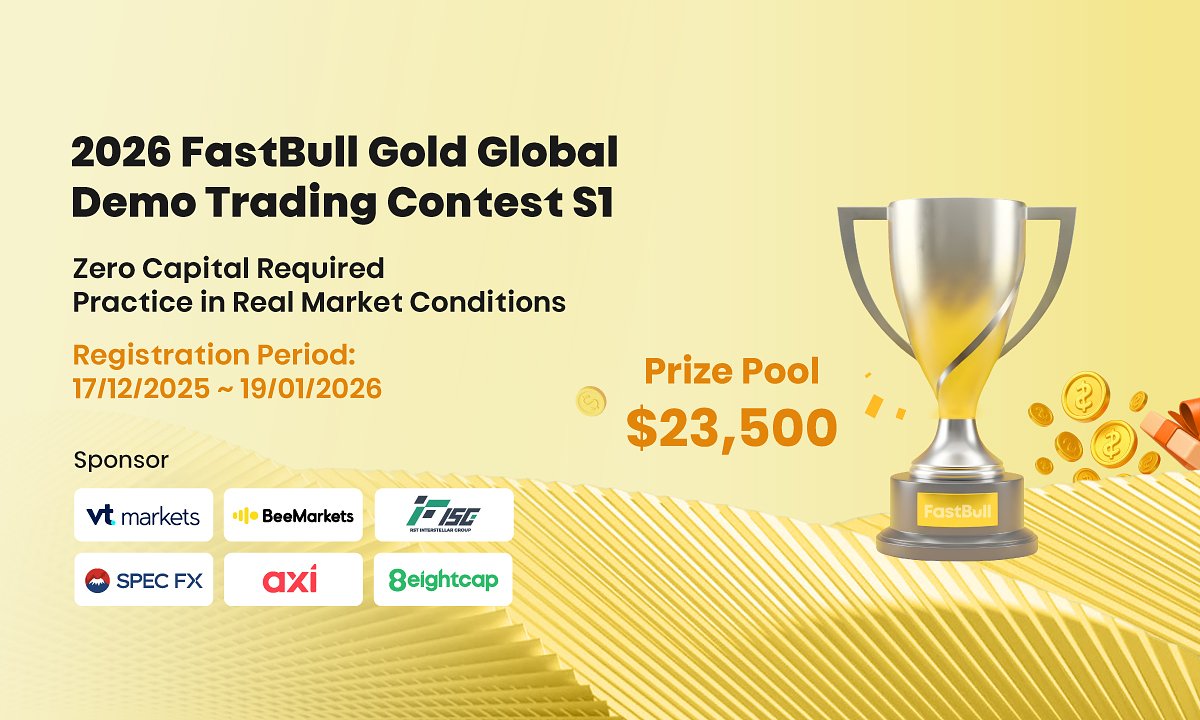
FastBull's Global Gold Contest Lures 10,000+ Aspiring Traders
HONG KONG – January 09, 2026 – Financial technology platform FastBull has captured the attention of the global trading community, announcing that its 2026 GOLD Global S1 Demo Trading Contest has already attracted over 10,282 participants. With ten days still remaining before registration closes on January 19, the massive turnout signals a significant global appetite for risk-free entry into the notoriously volatile gold market.
Following a successful regional competition in 2025, the company has expanded its contest to a worldwide audience, offering a standardized environment for traders to test their skills. The competition, which is free to enter and commences on January 20, pits participants against each other using identical virtual accounts. The event not only highlights a growing trend in the gamification of financial education but also reveals a sophisticated business strategy connecting traders, data platforms, and online brokers.
A Digital Gateway to the Gold Market
The contest's framework is designed to create a level playing field. Each of the thousands of participants will be automatically allocated a virtual account with a starting balance of $100,000 and a powerful 400x leverage. The sole trading instrument permitted is XAUUSD, or spot gold, a market known for its sharp price movements and popularity among short-term traders.
This model builds directly on the success of the 2025 FastBull Trading Contest Asia S1, which drew 6,167 traders. In that event, the top five performers—hailing from Pakistan, Indonesia, India, and the Philippines—collectively generated a virtual profit of $1.5 million and were awarded real, sponsored trading accounts. By expanding this model globally, FastBull is effectively democratizing access to trading education on an unprecedented scale. Aspiring traders can experience the mechanics of executing trades, managing positions, and controlling risk under real market conditions without any financial exposure.
All activity is channeled exclusively through the FastBull Web or App platforms, a requirement that immerses participants in the company's ecosystem. This provides hands-on experience with its charting tools, technical indicators, and visualized order displays, turning the competition into a large-scale user onboarding and training program. As Emma Chen, FastBull's Marketing Director, noted, the goal is to create an environment where rankings accurately reflect trading decisions.
"In the Asia S1 2025 contest, we observed significant differences in entry and exit timing, position management, and drawdown control among traders, even under identical account parameters and market conditions," Chen stated in the official announcement. "The 2026 GOLD Global S1 will continue to enforce consistent rules, minimizing non-trading factors, so that rankings more accurately reflect trading decisions and execution skills."
The Strategic Ecosystem Behind the Contest
While the contest presents itself as a purely educational event for users, it serves a crucial strategic function for FastBull and its partners. For FastBull, which positions itself as a financial information platform and not a brokerage, these events are a powerful engine for user acquisition and engagement. The surge in participants from the regional 2025 contest to the 2026 global event demonstrates a successful growth strategy that drives users to its proprietary platform.
For the sponsoring brokers—a list that includes prominent names like VT Markets, BeeMarkets, FXTM, Axi, FISG, and Spec FX—the contest is a highly effective lead-generation tool. By providing the prize pool, which includes a $6,000 cash reward for first place and thousands more in real trading accounts for the top 20, these brokers gain direct marketing access to a self-selected audience of thousands of individuals actively interested in trading. This model can be more cost-effective than traditional advertising, delivering qualified leads who have already engaged with a trading environment.
The prizes themselves are designed to bridge the gap between the simulated contest and the real-world trading offered by the sponsors. Winners receiving a real trading account are incentivized to continue their journey with the sponsoring broker, turning a contest participant into a potential long-term client. This symbiotic relationship places FastBull at the center of a thriving ecosystem, connecting a global community of traders with brokers eager for new customers, all while collecting valuable data on trader behavior.
Simulated Success vs. Real-World Pressure
Despite the clear benefits of risk-free practice, a critical debate surrounds the efficacy of demo trading contests in preparing individuals for the realities of live markets. The primary advantage is undeniable: they provide a safe sandbox to learn platform mechanics and test strategies. However, experts in behavioral finance consistently point to a significant psychological chasm between trading with virtual money and trading with one's own capital.
The absence of real financial risk can foster habits that are detrimental in a live environment. The contest's high 400x leverage, for example, encourages hyper-aggressive, high-risk strategies that can produce spectacular short-term gains in a simulation but would likely lead to catastrophic losses with real money. The competitive, leaderboard-driven format may incentivize a gambling-like mindset, where participants 'go for broke' in pursuit of a top rank—a strategy that is the antithesis of the disciplined risk management required for sustainable, real-world trading success.
While FastBull correctly notes that the contest reveals differences in trading strategies, the question remains whether the winning strategies are replicable or even advisable in a live setting. The top performers in such contests often achieve returns that are astronomically high and unsustainable over the long term. This can create unrealistic expectations for new traders, who may become disillusioned when they cannot replicate their simulated success in a live account where the emotional pressures of fear and greed come into play.
The contest's structure, offering tangible rewards like cash and funded accounts, represents an attempt to connect the simulation to reality. For the top 20 traders, the prize is an opportunity to apply their skills in a live environment, albeit often with a sponsored stake. For the other 10,000+ participants, the primary takeaway remains the educational experience, which, while valuable, must be viewed with a clear understanding of its limitations.