
- 75 million adults in Europe struggle with basic reading comprehension.
- 200,000 participants registered and 3,600 events planned across 25 nations.
- €2.44 billion budget for the EU's Creative Europe Programme (2021-2027).
Experts view the #ReadForReal campaign as a critical intervention to address literacy deficits, fostering cognitive and emotional resilience while promoting cultural diplomacy across Europe.
Europe's Answer to a Silent Crisis: The #ReadForReal Campaign
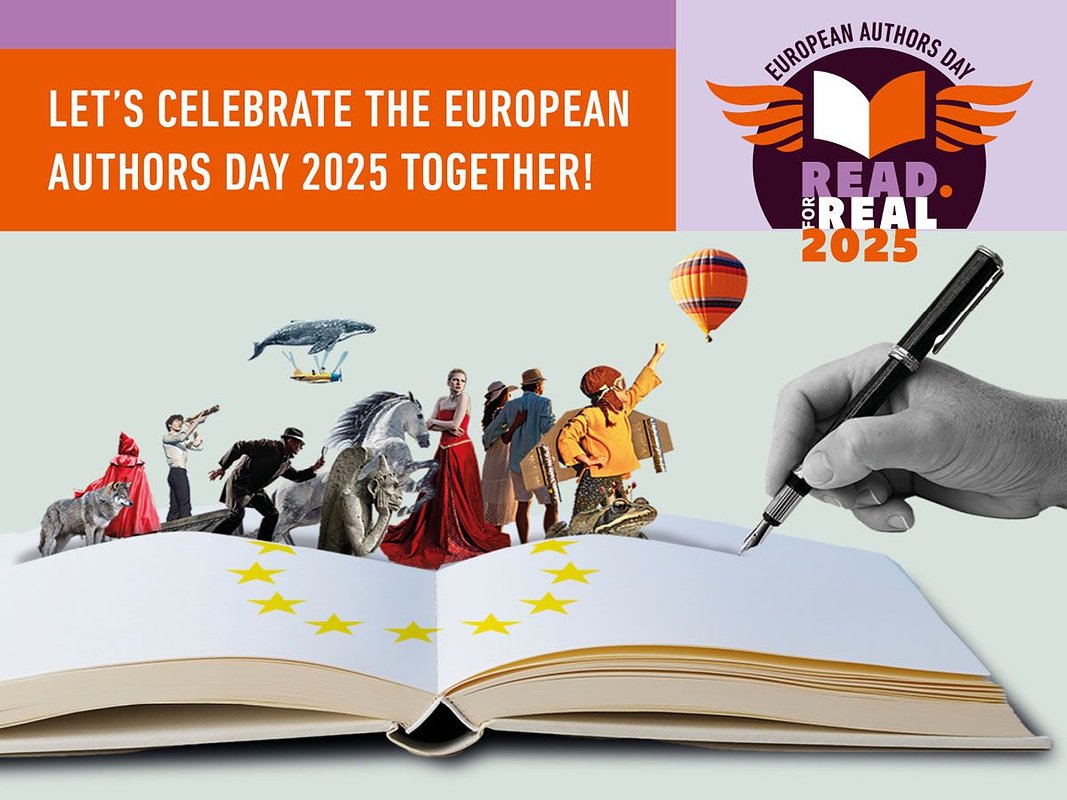
BRUSSELS, Belgium – November 26, 2025 – As digital noise reaches a fever pitch across the continent, a quieter, more profound movement is taking root. Today marks the official launch of European Authors Day 2025, a sprawling, ambitious initiative rallying under the banner #ReadForReal. Co-funded by the EU's Creative Europe Programme and running until December 12, this is far more than a literary festival. It is a strategically designed response to a startling and often-overlooked crisis: more than 75 million adults in Europe struggle with basic reading comprehension. With over 200,000 participants already registered and nearly 3,600 events planned across 25 nations, #ReadForReal is a massive mobilization aimed at reconnecting a fragmented society through the simple, powerful act of deep reading.
The High Stakes of Low Literacy
The 75 million figure, a cornerstone of the campaign's messaging, is not just a statistic; it represents a significant drag on Europe's social and economic potential. Independent research from bodies like the OECD has long drawn a direct line between reading proficiency and the mitigation of social and economic disparities. In a world grappling with misinformation and political polarization, the skills nurtured by literature—critical thinking, empathy, and sustained concentration—are no longer soft skills but essential tools for a functioning democracy.
The organizers of #ReadForReal are positioning the campaign as a direct intervention. Their slogan emphasizes an escape from the shallow engagement of social media feeds toward the "truly and deeply" immersive experience of a book. The initiative's premise is that reading fiction, in particular, is a powerful engine for empathy, allowing individuals to inhabit different perspectives and cultures. As one academic specializing in cultural policy noted, "When you address a literacy deficit, you're not just teaching people to decode words. You're building the cognitive and emotional infrastructure for a more resilient, understanding, and innovative society." This campaign reframes reading not as a mere hobby, but as a fundamental pillar of civic health and personal development, arguing that a continent that reads together, thrives together.
A Decentralized Design for Mass Engagement
The true innovation behind #ReadForReal lies in its operational design. Rather than a top-down, centrally managed event, the campaign functions as a distributed network, empowering local actors to drive engagement. The consortium, led by Poland's Universal Reading Foundation, provides a framework and free resources—from lesson plans and posters to digital assets—via its central hub, www.readforreal.eu. However, the execution is deliberately handed over to schools, libraries, publishers, and even individuals.
This grassroots model is facilitated by national coordination centers, or "hubs," in each participating country. These hubs translate materials and provide localized support, enabling a bespoke approach that respects cultural nuances. In Poland, for instance, the campaign has forged an unconventional partnership with the national postal service, with 2,000 post offices offering customers an "inspirational notebook" with any book purchase. This kind of creative, hyper-local partnership is what gives the campaign its texture and reach, moving it beyond institutional walls and into the fabric of daily life.
The coordinating body, the Universal Reading Foundation, brings a formidable track record to the project. In 2024, it became the first Polish organization to win the prestigious Library of Congress Literacy Award for its work with refugee communities and low-income families. Its history of successful national campaigns, such as #ReadingDad2024, demonstrates a keen understanding of how to build broad-based cultural movements. This experience is crucial in scaling a project of this magnitude, aiming to grow from its current 3,600 events to 10,000 by 2027.
Literature as Europe's New Cultural Diplomacy
A key feature of the initiative is its explicitly cross-border nature. European authors are encouraged to visit countries other than their own, meeting audiences who speak different languages and sharing their work through translators. This element transforms the campaign from a series of disconnected national events into a powerful exercise in cultural diplomacy. It directly addresses the EU's goal of fostering a shared European identity, not through policy directives, but through the shared experience of story.
By facilitating these encounters, #ReadForReal helps dismantle cultural silos and promotes Europe's rich linguistic diversity as a strength rather than a barrier. It’s a tangible demonstration of how literature can serve as a bridge, creating moments of genuine human connection that transcend nationality. This focus aligns perfectly with the objectives of the EU's Creative Europe Programme, which seeks to promote the cross-border circulation of European content and support artist mobility. In an era of resurgent nationalism, using literature to foster mutual understanding is a subtle but potent strategic choice.
The Complexities of EU-Funded Culture
While the ambition of #ReadForReal is laudable, its reliance on EU funding places it within a complex and sometimes contentious ecosystem. The Creative Europe Programme, with a budget of €2.44 billion for 2021-2027, is a vital lifeline for the continent's cultural sectors, especially as many member states—including Germany, Sweden, and Finland—made significant cuts to their own cultural budgets in 2025. This makes EU support more critical than ever, but it also comes with scrutiny.
Critics, such as a recent report from the MCC Brussels think tank, argue that Creative Europe's funding priorities can sometimes promote a "radical socio-political agenda," tying grants to themes like migration, gender, and environmentalism. This has led to accusations of "policy-based budgets" that risk politicizing art and culture. "There's a fine line between promoting positive social values and imposing an ideological framework on artists," commented one independent arts consultant. "The challenge for any EU-funded project is to navigate these requirements without sacrificing artistic freedom."
Furthermore, bureaucratic hurdles and perceived funding disparities, where larger institutions often benefit more than smaller grassroots organizations, remain persistent concerns within the program. While #ReadForReal's decentralized model seems designed to circumvent some of these issues by empowering smaller players, it still operates within this broader political and financial landscape. The campaign’s success will therefore depend not only on its ability to inspire readers, but also on its skill in navigating the intricate and often-politicized world of European cultural policy. Its journey will be a case study in the potential, and the pitfalls, of building a unified cultural movement on a continent of diverse nations.