
- $628 million: Projected market size for urology imaging systems by 2035
- AI-powered Prostate Attention Map (PAM): New technology to enhance prostate cancer diagnosis accuracy
- Two new systems launched: MyLab™E85 GTS Edition and portable MyLab™C30 GTS
Experts view AI-driven tools like Esaote's PAM as a pivotal development in standardizing prostate cancer diagnostics, improving precision and efficiency while reducing unnecessary biopsies.
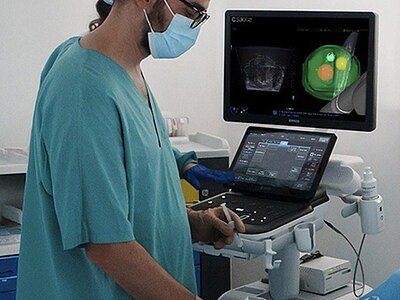
Esaote's AI Maps Future of Prostate Cancer Diagnosis at EAU 2026
LONDON, UK – March 13, 2026 – Italian medical imaging leader Esaote Group today unveiled a significant advancement in the fight against prostate cancer, introducing its exclusive Prostate Attention Map (PAM) technology at the 41st Annual European Association of Urology (EAU) Congress. The AI-powered innovation, designed to dramatically enhance the precision of urological imaging and biopsy guidance, signals a major step forward in the company's commitment to advanced guided therapy solutions.
The announcement, a highlight of the ongoing congress in London, was accompanied by the launch of two new urology-dedicated ultrasound systems: the advanced MyLab™E85 GTS Edition, which features the new PAM technology, and the versatile, portable MyLab™C30 GTS. These introductions mark a strategic expansion of Esaote's Guided Therapy Solutions (GTS) line, reinforcing its position in a highly competitive global market.
The Technology: AI as a Urological Co-Pilot
At the heart of the announcement is the Prostate Attention Map, a sophisticated tool that leverages artificial intelligence to automatically analyze multiparametric MRI (mpMRI) volumes. By processing these complex scans, PAM identifies and highlights suspicious regions of interest, effectively creating a detailed 'attention map' for the urologist. This map serves as an intelligent guide, designed to improve target accuracy during subsequent ultrasound-guided biopsies.
The PAM technology is fully integrated into Esaote's established UroFusion software, which fuses pre-biopsy mpMRI images with real-time ultrasound. This integration creates a seamless, AI-enhanced workflow that aims to elevate the standard of care.
"Our UroFusion package is designed to provide focal guidance during prostate targeted biopsies," said Marta Daniel, Guided Therapy Product and Clinical Solutions Manager at Esaote, in a statement released today. "Thanks to A.I., urologists have a seamless workflow, with similar duration as a standard biopsy exam, while improving confidence and accuracy during their biopsy procedures."
This focus on workflow efficiency is critical. By maintaining procedure times comparable to standard methods while adding a layer of AI-driven insight, the technology seeks to make advanced precision accessible without disrupting clinical routines. The launch of the new portable MyLab™C30 GTS system further supports this goal, extending high-quality imaging capabilities to a variety of clinical settings beyond the main imaging suite.
A Quest for Unprecedented Clinical Accuracy
The introduction of AI into the diagnostic pathway for prostate cancer is seen by many experts as a pivotal development. For years, clinicians have grappled with the challenge of accurately identifying and targeting clinically significant prostate cancers while avoiding the overdiagnosis and overtreatment of indolent disease. AI-driven tools like PAM represent a powerful new asset in this effort.
Independent experts believe such technologies can help standardize the interpretation of complex MRI scans, a process that can be subject to variability between readers. "AI empowers clinicians to be more precise and efficient," noted one associate professor of urology at a leading American university, speaking on the general trend. The goal is to reduce the number of unnecessary biopsies and ensure that patients who do require intervention are diagnosed with greater certainty.
This sentiment is echoed by practitioners on the front lines. A Berlin-based urologist recently commented that AI tools provide "real comfort and confidence" during biopsy procedures, helping to confirm lesion locations and enabling a level of precision that is crucial for both diagnosis and the planning of focal therapies. Patients, he added, have responded positively to the use of advanced technology in their care.
While Esaote's PAM is newly introduced, its potential aligns with this broader clinical objective: to move beyond subjective interpretation toward data-driven, highly accurate diagnostics. As the technology is demonstrated in hands-on sessions at the EAU congress, the focus will be on its ability to reliably improve detection rates and provide actionable insights that lead to better patient outcomes.
Strategic Positioning in a Competitive Market
Esaote's launch is a calculated move in the rapidly growing urology imaging systems market, which is projected to exceed $628 million by 2035. The increasing prevalence of urological disorders and a global emphasis on early cancer detection are fueling demand for more sophisticated diagnostic tools.
Esaote is not alone in this space. The company competes with global giants like Siemens Healthineers, which offers its AI-Rad Companion for prostate MRI analysis, and GE Healthcare, another major player with a long history in advanced imaging. In this competitive landscape, Esaote is differentiating its offering by focusing on the complete guided therapy workflow. The tight integration of its PAM software with the UroFusion platform and dedicated MyLab hardware is designed to provide a cohesive, user-friendly ecosystem for urologists.
By enhancing its Guided Therapy Solutions line, the Italian firm is solidifying its niche as a provider of intelligent, clinically relevant solutions that bridge the gap between diagnosis and intervention. The portability of the new MyLab™C30 GTS also opens up new market segments, allowing high-end diagnostic capabilities to be deployed more flexibly within hospitals and clinics.
From Lab to Clinic: The Path to Widespread Adoption
Despite the clear potential of technologies like PAM, the journey from a congress launch to widespread clinical adoption involves navigating several practical hurdles. A primary barrier is the significant capital investment required for new advanced imaging systems. Healthcare institutions must weigh the upfront cost against long-term benefits in efficiency and improved patient outcomes.
Furthermore, the successful implementation of any new AI platform hinges on its ability to integrate smoothly into existing hospital IT infrastructures, which often involves complex issues of interoperability, data security, and workflow management. Adequate training for urologists and radiologists is also paramount to ensure they can use the tools effectively and trust the AI-generated insights.
Reimbursement policies from insurers and national health systems will also play a critical role. The availability of specific billing codes and adequate payment for AI-assisted procedures can either accelerate or stall the adoption of new medical technology.
However, powerful forces are driving the adoption forward. The relentless demand for more precise, personalized medicine, combined with the need for greater efficiency in resource-strained healthcare systems, creates a strong incentive to embrace innovation. By actively demonstrating its technology and fostering dialogue with leading specialists at EAU 2026, Esaote is working to build the clinical confidence and institutional support necessary to bring its vision for a more precise future in urological care into routine practice.