
- Patents Secured: Electra.aero has obtained critical U.S. patents (e.g., U.S. Pat. #12384550, #12298151) protecting its hybrid-electric USTOL technology.
- Takeoff Distance: The EL9 aircraft can take off and land in under 150 feet, enabling operations from small spaces like soccer fields.
- Pre-Orders: Over 2,200 pre-orders from 60+ customers, including major operators like Bristow Group.
Experts view Electra’s hybrid-electric USTOL technology as a practical and near-term solution for regional air travel, leveraging established certification pathways and addressing key challenges in eVTOL development.
Electra Patents Secure Path for Hybrid-Electric Short-Haul Flight
MANASSAS, Va. – February 11, 2026 – Aerospace innovator Electra.aero has fortified its position in the race to redefine regional air travel, securing a series of U.S. patents that protect the core of its hybrid-electric, Ultra Short Takeoff and Landing (USTOL) technology. The patents are a critical milestone, safeguarding the complex control and power systems that enable the company’s nine-passenger EL9 aircraft to perform helicopter-like takeoffs from spaces as small as a soccer field, while retaining the efficiency and safety of a conventional airplane.
These intellectual property protections cover the essential software and hardware that make Electra’s “blown-lift” concept a practical reality. By securing the underlying architecture, the company clears a significant hurdle on its path toward FAA certification and the commercial launch of its aircraft, which is slated for the end of the decade.
A New Blueprint for Flight Control
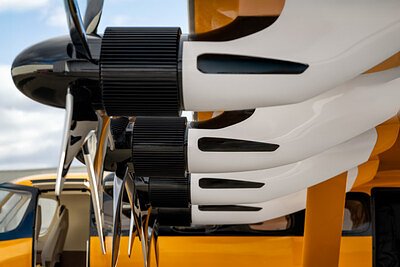
At the heart of Electra’s innovation is a blown-lift system where multiple electric propulsors distributed along the front of the wing blow air over its surface, dramatically increasing lift at low speeds. This allows the EL9 to take off and land in less than 150 feet. While the concept is not new, making it safe, reliable, and easy to fly has been a persistent engineering challenge.
The newly granted patents (including U.S. Pat. #12384550 and #12298151) address this directly by creating a novel flight control system. Instead of pilots managing multiple throttles and complex configurations, Electra’s system uses a single, integrated interface. The pilot simply selects a flight mode—like takeoff or cruise—and the onboard computers dynamically adjust thrust from each individual electric motor to achieve the desired flight path. This transforms the propulsion system into an active flight control surface.
"Where traditional aircraft rely on aerodynamic control surfaces, our distributed propulsion system makes the motors themselves an active flight control element," explained Chris Courtin, Electra's Director of Technology Development, in a recent announcement. "That improves precision, reduces workload, and makes Ultra Short aircraft fly like any other fixed wing aircraft."
This patented architecture effectively translates a complex aerodynamic feat into a manageable task for the pilot, a crucial step for gaining regulatory approval and ensuring broad adoption by commercial operators.
Charting a Pragmatic Path to Certification
Beyond the technical innovation, Electra is pursuing a deliberately pragmatic business and regulatory strategy that sets it apart from many competitors in the crowded Advanced Air Mobility (AAM) market. The company has formally applied for FAA type certification under the existing Part 23 regulations for conventional airplanes. This move sidesteps the newer, still-evolving “powered-lift” category that many electric Vertical Takeoff and Landing (eVTOL) aircraft fall under, potentially avoiding unforeseen regulatory delays and complexities.
By designing an aircraft that operates like a standard fixed-wing plane during most of its flight envelope, Electra is leveraging a well-understood and established certification pathway. The company has already submitted its Project Specific Certification Plan to the FAA, outlining its approach to demonstrating compliance. With flight tests of the first full-scale EL9 prototype planned for 2027, Electra is targeting commercial service entry between late 2029 and 2030.
This strategic choice, now bolstered by a protected intellectual property portfolio, is designed to de-risk the journey to market and provide investors and customers with a more predictable timeline.
The Hybrid Advantage: Beyond the eVTOL Hype
Electra’s technology offers a compelling alternative to the fully electric eVTOL model, which has faced persistent challenges with battery energy density, range limitations, and the need for extensive ground-charging infrastructure. The EL9’s hybrid-electric architecture uses a fuel-efficient turbogenerator to power its electric motors and recharge its batteries in flight.
This approach gives the aircraft significantly greater range and payload capacity—up to nine passengers or 2,500 pounds of cargo for 500 miles. It effectively solves the range anxiety that plagues purely electric designs and allows for operations in remote or underserved areas without requiring new infrastructure. This capability is central to Electra’s vision for “Direct Aviation,” a model that connects communities directly by bypassing congested airport hubs and utilizing small, existing airfields, parking lots, or other open spaces.
Compared to helicopters, the EL9 promises up to 70% lower operating costs and a significantly reduced noise footprint, making it an attractive replacement for operators in logistics, medical transport, and regional passenger service. The company has already amassed over 2,200 pre-orders from more than 60 customers, including major helicopter operator Bristow Group, signaling strong market confidence in this more practical approach to next-generation aviation.
Backed by Industry Titans and Government Trust
The viability of Electra’s vision is underscored by the powerful coalition of strategic investors and government partners backing the company. Aerospace giants like Lockheed Martin Ventures, Honeywell, and Safran are not just financial investors but also technical partners. Honeywell, for instance, is supplying the EL9's flight control and actuation systems, a testament to the technology's maturity.
Furthermore, Electra has secured substantial support from the U.S. government. A Strategic Funding Partnership (STRATFI) with the U.S. Air Force, valued at up to $85 million, is accelerating the development of a full-scale pre-production prototype. The U.S. Army, Navy, and NASA have also awarded contracts to Electra to explore the technology for applications ranging from contested logistics and ship-based operations to next-generation sustainable airliners. This deep government and industry validation provides a powerful tailwind as the company moves from its successful EL2 technology demonstrator toward commercial production.
With a protected technological core and a clear strategy for certification, Electra is positioning its hybrid-electric aircraft not just as a future concept, but as a near-term solution poised to redefine the economics and accessibility of regional travel.
Topics & Related
Artificial Intelligence
Machine Learning
Related Company Pulse