
- 90% of obstructive HCM patients saw improvements in hemodynamic measures with EDG-7500.
- No meaningful changes in LVEF reported, avoiding critical safety risks of competitors.
- $2.65 billion deal strengthens Edgewise's financial position for Phase 3 trials.
Experts view EDG-7500 as a promising, safer alternative to existing cardiac myosin inhibitors, particularly for nonobstructive HCM patients with unmet therapeutic needs.
Edgewise Challenges Heart Disease Giants with Safer Drug Profile
BOULDER, CO – June 16, 2026 – In a move that could significantly disrupt the multi-billion-dollar market for cardiac therapies, Edgewise Therapeutics (Nasdaq: EWTX) today announced positive Phase 2 results for its experimental heart disease drug, EDG-7500. The data suggests the treatment is not only effective in improving symptoms for a common genetic heart condition but does so without a critical safety liability that shadows its market-leading competitors.
The announcement sent a clear signal to investors and industry giants like Bristol Myers Squibb and Cytokinetics: a new contender has arrived, armed with promising science and a fortified balance sheet. The results from the CIRRUS-HCM trial position EDG-7500 as a potential game-changer for patients with hypertrophic cardiomyopathy (HCM), a condition affecting approximately one in 500 people worldwide.
A Differentiated Approach in a Competitive Field
Hypertrophic cardiomyopathy is a chronic and often debilitating disease where the heart muscle thickens abnormally, making it harder for the heart to pump blood effectively. This can lead to shortness of breath, chest pain, and an increased risk of heart failure and sudden cardiac death. The condition manifests in two forms: obstructive (oHCM), where the thickened muscle blocks blood flow, and nonobstructive (nHCM), which lacks a physical blockage but still causes significant symptoms.
Recent years have seen breakthroughs with a class of drugs called cardiac myosin inhibitors (CMIs), namely Bristol Myers Squibb's Camzyos (mavacamten) and the recently approved Myqorzo (aficamten) from Cytokinetics. These drugs work by reducing the heart's hypercontractility. However, their very mechanism of action introduces a significant risk: they can reduce the left ventricular ejection fraction (LVEF), a key measure of the heart's pumping power. This risk is so pronounced that both drugs carry a Boxed Warning and require a strict, burdensome Risk Evaluation and Mitigation Strategy (REMS) program, involving frequent and costly echocardiogram monitoring to prevent inducing heart failure.
This is where Edgewise aims to carve out its advantage. EDG-7500 is not a CMI but a novel, oral, selective cardiac sarcomere modulator. According to the company, it is designed to slow the heart's early contraction velocity and improve its ability to relax and fill with blood, all without compromising overall systolic function. The central pillar of its value proposition is the claim that it can achieve clinical benefits without causing the LVEF reductions seen with competitors.
“From the outset, our goal was to identify a cardiovascular therapy with a profile that avoids the liability of the CMI class, with EDG-7500 emerging from that effort,” said Kevin Koch, Ph.D., President and Chief Executive Officer of Edgewise Therapeutics, in a statement accompanying the results.
Unpacking the Clinical Data
The 12-week Phase 2 trial data appears to back up these claims. In a study of 53 patients with both obstructive and nonobstructive HCM, EDG-7500 demonstrated broad and clinically meaningful improvements.
For patients with obstructive HCM, 90% saw improvements in hemodynamic measures, and 74% saw a significant drop in NT-proBNP, a key biomarker for heart failure. Patients also reported feeling substantially better, with a 24-point average increase on the Kansas City Cardiomyopathy Questionnaire (KCCQ)—a standard measure of quality of life—and 70% of patients improving by at least one functional class on the New York Heart Association (NYHA) scale.
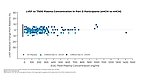
Perhaps more importantly, the drug showed robust effects in patients with nonobstructive HCM, a group with no currently approved targeted therapies. These patients saw a 65% average reduction in NT-proBNP and a 13-point increase in their KCCQ scores. Across the entire study, the company reported no meaningful changes in LVEF and no instances of LVEF dropping below the critical 50% threshold.
Leading experts have taken notice. “The totality of the Phase 2 efficacy and tolerability data continues to support a differentiated profile for EDG-7500 across HCM,” said Dr. Matthew Martinez, President of the HCM Society. “What is especially encouraging is the consistency of symptom and functional improvement across dose levels without evidence of systolic liability or heart failure risk. The EDG-7500 profile is particularly relevant in nonobstructive HCM, where preserving systolic function while improving relaxation may offer a meaningful new approach to addressing a significant unmet need.”
The Business Case: A Sharpened Focus and a Full War Chest
The positive clinical data comes at a pivotal moment for Edgewise. Just two weeks ago, the company announced the sale of its muscular dystrophy franchise to Servier in a deal worth up to $2.65 billion, including a massive $1.55 billion in upfront cash. That strategic pivot has transformed Edgewise from a diversified muscle disease company into a pure-play cardiovascular powerhouse with a war chest more than sufficient to fund its ambitious plans, including the expensive Phase 3 trials required for FDA approval.
This financial strength is critical as it prepares to enter a market where Camzyos has already achieved blockbuster status, with a run-rate exceeding $1 billion annually. While a formidable competitor, the intensive monitoring required for Camzyos has largely confined its use to specialized HCM centers. Analysts believe a safer, less burdensome alternative like EDG-7500 could break out of this niche, opening up a much larger market by being accessible to community cardiologists who manage the vast majority of heart disease patients.
Wall Street has been largely bullish, with most analysts rating EWTX a “Strong Buy” and setting price targets that suggest significant upside. The combination of a de-risked financial profile and a clinically differentiated lead asset has created a compelling investment thesis.
Path to Phase 3 and Patient Impact
With this strong data in hand, Edgewise is preparing to initiate its global Phase 3 program for EDG-7500 in the fourth quarter of 2026. The trial's design will be crucial, but the ultimate goal is clear: to deliver a therapy that provides the benefits of cardiac modulation without the associated risks and administrative hassles of current options.
For patients and physicians, this can't come soon enough. The burden of REMS programs, with their constant testing and paperwork, is a significant barrier to care. A therapy that could be prescribed with the same ease as a standard blood pressure medication would represent a paradigm shift.
If the impressive safety and efficacy profile of EDG-7500 holds up in the final stage of clinical testing, Edgewise Therapeutics won't just be a new contender in the HCM market—it could fundamentally redefine the standard of care for hundreds of thousands of patients globally.