
- 47%: Portable ultrasound market share in obstetrics and gynecology (2025)
- $2.5B: POCUS market value in 2025, projected to exceed $6B by 2035
- AI-enhanced: Kosmos platform now includes FDA-cleared presets for obstetrics, gynecology, and vascular diagnostics
Experts agree that EchoNous' expansion of the Kosmos platform represents a significant advancement in portable ultrasound technology, bridging the gap between convenience and diagnostic power while addressing key barriers to adoption through AI integration and billable workflows.
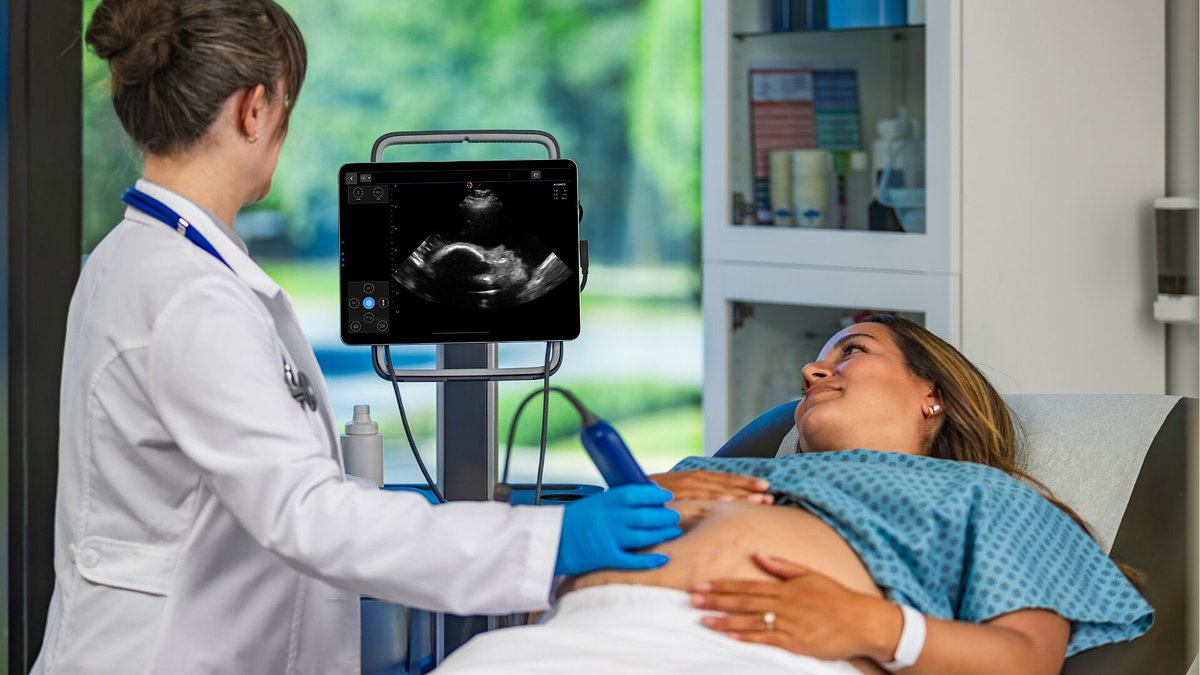
EchoNous Unlocks Advanced Ultrasound Diagnostics at the Bedside
REDMOND, Wash. – February 17, 2026 – EchoNous, a company at the forefront of artificial intelligence in medical imaging, today announced a significant expansion of its Kosmos ultrasound platform. The update introduces robust obstetrics, gynecology, and vascular diagnostic tools to the portable, AI-enhanced system, effectively equipping clinicians with capabilities previously confined to large, expensive cart-based machines.
This move aims to bridge the persistent gap between the convenience of handheld ultrasound devices and the high-performance requirements of specialized medical studies. The new software release (iOS 5.0) allows healthcare providers in settings from major urban emergency departments to remote global health outposts to perform comprehensive, billable examinations directly at a patient's bedside, signaling a major shift in the accessibility of advanced diagnostic imaging.
The Portable Revolution in Diagnostics
The latest update to the Kosmos platform is strategically targeted at high-need clinical areas: Emergency Medicine, Labor & Delivery, and Global Health. The goal is to move point-of-care ultrasound (POCUS) beyond simple visual confirmation and into the realm of detailed, quantifiable analysis. For years, the promise of POCUS has been hampered by a trade-off between portability and diagnostic power. This expansion represents a direct challenge to that compromise.
In obstetrics and gynecology—a specialty that accounts for a dominant share of the portable ultrasound market, estimated at nearly 47% in 2025—the impact could be profound. Clinicians can now perform full fetal biometry, including measuring the Gestational Sac, Crown-Rump Length (CRL), and Femur Length (FL). These measurements are critical for accurately dating a pregnancy and assessing fetal viability, tasks that are vital in both routine prenatal care and emergency evaluations.
"With this expansion, Kosmos is now more capable than ever, bridging the gap between ultra-portable tools and the robust requirements of specialists," said Matt Wall, VP of Global Marketing at EchoNous. "Whether it is a midwife in a rural clinic needing accurate pregnancy dating or a mobile sonographer performing a full vascular study on the go, we are delivering the specific tools these clinicians need to do their jobs effectively."
This democratization of technology is particularly significant for global health initiatives. In resource-limited settings where access to traditional imaging departments is scarce or non-existent, the ability to perform these advanced diagnostics with a portable device can fundamentally alter patient outcomes. It provides a powerful, affordable tool that extends life-saving capabilities to the most vulnerable populations.
Beyond the Snapshot: AI and Data Redefine Ultrasound
While portability is a key feature, the true innovation lies in the platform's intelligence and depth. EchoNous is positioning Kosmos not just as a smaller ultrasound, but as a smarter one. The system leverages artificial intelligence to guide clinicians during scans and automate complex measurements, a feature that could help mitigate one of the key barriers to POCUS adoption: the steep learning curve.
The expansion includes a suite of new FDA-cleared presets that prioritize quantification. For gynecology, this means new tools for the precise evaluation of the uterus and ovaries, allowing for accurate measurement of cysts, masses, and bladder volume. This level of detail is essential for diagnosing and managing a range of women's health issues.
For vascular specialists and mobile imaging providers, the update introduces a complete, billable workflow for Carotid, Lower Extremity Venous (LEV), and Aorta exams. Critically, this includes a reporting package that incorporates standard vascular annotations and measurements directly into DICOM Structured Reporting (SR). This automation streamlines the documentation process, reducing administrative burden and allowing sonographers to focus more on the patient. It transforms the device from a simple imaging tool into an integrated component of the clinical and billing workflow.
This focus on AI-driven quantification and workflow integration is central to EchoNous's strategic vision. By combining advanced imaging with cutting-edge AI, the company aims to create a hybrid system that offers the diagnostic quality of a cart-based unit with the flexibility and accessibility of a handheld device.
A Shifting Market and New Economic Models
The launch comes at a time of explosive growth in the POCUS market, which was valued at over $2.5 billion in 2025 and is projected to exceed $6 billion by 2035. Competition is fierce, with established giants like Philips, GE, and Fujifilm competing alongside innovators like Butterfly Network and Clarius. In this crowded field, EchoNous is carving a niche by emphasizing diagnostic fidelity and AI-powered analysis.
The introduction of a billable vascular workflow is a particularly shrewd strategic move. It directly addresses the economic realities of healthcare, creating a clear path to return on investment for private practices and mobile imaging services. By enabling providers to perform and bill for physician-ordered studies that were once the exclusive domain of imaging centers, Kosmos opens up new revenue streams and business models. This aligns with recent trends, as the Centers for Medicare & Medicaid Services (CMS) is projected to increase the physician fee schedule conversion factor in 2026, even as it adds complexity to billing compliance.
This feature makes the Kosmos platform an attractive proposition not only for its clinical benefits but also for its financial viability, appealing to hospital administrators and healthcare entrepreneurs looking to maximize efficiency and expand service offerings in a cost-effective manner.
Overcoming Hurdles to Widespread Adoption
Despite the clear benefits and rapid technological advancements, the widespread adoption of advanced POCUS faces challenges. The most significant barriers identified by clinicians are the lack of standardized training, the difficulty of maintaining skills, and a lack of confidence in performing and interpreting scans without expert supervision. The initial cost of devices, while far less than cart-based systems, can also be a hurdle.
The integration of AI-driven guidance and automated measurements within the Kosmos platform appears to be a direct attempt to address these concerns. By building intelligence into the device itself, EchoNous may help lower the barrier to entry for clinicians and build the confidence needed for broader adoption. Furthermore, by securing FDA clearance for its presets and enabling billable workflows, the company provides the regulatory and financial validation necessary for integration into the standard of care.
The journey of POCUS from a niche tool for specialists to a ubiquitous part of the physical exam is still underway. However, with expansions like the one from EchoNous, the line between the portable and the powerful continues to blur, promising a future where high-quality, data-rich diagnostic imaging is available anytime, anywhere, and for every patient.