
EastBanc's New CEO Bets on a "Renaissance" for DC's Troubled Market
- Direct office vacancy rate in D.C.: 17.9%
- EastBanc's managed assets: $4 billion
- Philippe Lanier's tech experience: Led AI-focused EastBanc Technologies (2019-2024)
Experts would likely view EastBanc's strategy as a high-risk, high-reward bet on D.C.'s long-term recovery, leveraging deep local expertise and AI-driven insights to reposition undervalued properties.
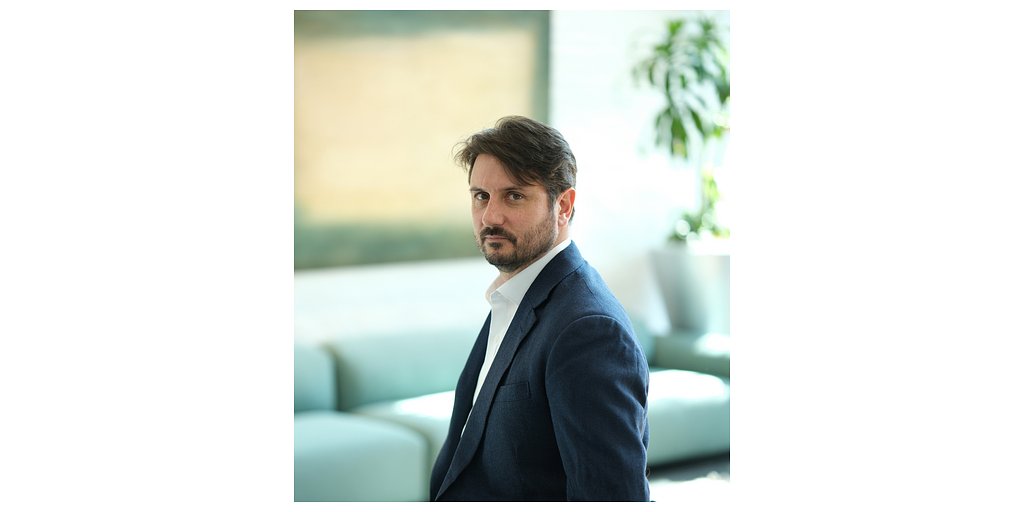
EastBanc's New CEO Bets on a "Renaissance" for DC's Troubled Market
WASHINGTON, DC – April 22, 2026 – In a significant generational leadership shift, Washington-based real estate giant EastBanc Inc. has named Philippe Lanier its new Chief Executive Officer. The move, part of a long-planned succession, installs a new executive team poised to execute a bold, contrarian strategy: to capitalize on what the firm calls a “generational buying opportunity” within the District’s deeply challenged commercial real estate market.
As the D.C. market grapples with a direct office vacancy rate of 17.9% and persistent negative absorption, EastBanc is leaning into the turbulence. The firm, which manages $4 billion in assets, is launching its “Washington Renaissance Strategy,” a plan to aggressively acquire and reposition properties at what it believes are the lowest price points in four decades.
A Generational Shift at a Critical Juncture
The leadership transition sees founder Anthony Lanier, who has guided the firm since its inception in 1987, move to the role of President. He will focus on strategic initiatives and international developments, including the company’s active portfolio in Lisbon, Portugal. The transition places his son, Philippe, at the helm of the North American portfolio during one of the most volatile periods in the city's real estate history.
“Philippe has played a central role in EastBanc’s evolution over the past two decades,” said Anthony Lanier in a statement. “What makes this transition meaningful is that it’s not just my son taking over—it’s a team that understands our markets, our partners and our long-term investment philosophy.”
Joining Philippe Lanier is a seasoned executive team that includes Brian Whitener as Executive Vice President of Acquisitions, Hope Richardson as Executive Vice President of Development, and Nadine Lanier Arsenyev as Executive Vice President of Marketing and Strategy. This team is tasked with navigating a market defined by high interest rates, skittish institutional capital, and fundamental shifts in how and where people work.
The 'Washington Renaissance Strategy'
While many investors see D.C.’s glut of empty office space as a liability, EastBanc views it as the foundation for its next chapter. The “Washington Renaissance Strategy” is predicated on acquiring “value-add” properties across the District’s urban core at a historically low cost basis. This isn't a short-term flip strategy; it's a long-term bet on the city's future.
“The current market in Washington is creating a rare window of opportunity, with high-quality assets trading at the lowest discount to replacement cost in our lifetime,” Philippe Lanier stated. He emphasized that the firm’s deep local roots and integrated platform—spanning development, construction, leasing, and management—allow it to execute complex repositioning plans that out-of-market investors cannot replicate.
The strategy directly confronts the market’s “flight to quality,” where tenants are abandoning older Class B and C buildings for modern, amenity-rich Class A spaces. EastBanc’s approach suggests it will target underperforming assets with the potential for significant upgrades, transforming them to meet future demand rather than simply competing for tenants in already-desirable buildings.
“Our success has always been rooted in long-term thinking, strong partnerships, and deep commitment to the communities where we invest,” Lanier added. “We’re not buying distress to flip—we’re building a portfolio we intend to own for the next generation.”
AI, Tech, and the Future of D.C. Properties
What sets this leadership transition and strategy apart is the unique background of the new CEO. Philippe Lanier is not just a real estate veteran; he brings a recent and intimate understanding of the technology poised to disrupt the very industry he now leads. From 2019 to 2024, he served as CEO of EastBanc Technologies, where he successfully repositioned the business as an AI-focused professional services firm before leading it through a sale to Solvd Inc.
This experience provides what his father calls a “practitioner’s perspective on the future of work.” While many in real estate view artificial intelligence as a threat that could further erode office demand by automating jobs, Lanier sees it as a tool for identifying value.
“Shifts in how and where people work—driven in part by AI—are redefining what makes real estate valuable,” Philippe Lanier explained. His perspective is that AI will not just impact tenant demand but can also be leveraged to analyze markets, predict trends, and pinpoint which submarkets and asset types are best positioned to thrive in a transformed economy. This tech-forward approach is a core component of the Washington Renaissance Strategy, guiding the firm’s acquisition and development decisions.
Navigating a Market at a Crossroads
EastBanc’s optimistic offensive comes as competitors and the broader market pursue various defensive strategies. Some developers are pivoting to office-to-residential conversions to remove vacant commercial space from the market, while institutional investors are increasingly diversifying into alternative assets like life sciences and student housing, wary of the traditional office sector.
EastBanc, by contrast, is doubling down on D.C.’s urban core, betting that its long-term, hands-on approach can unlock value where others see only risk. The firm’s established presence as a major retail landlord in Georgetown, attracting top e-commerce brands to physical storefronts, demonstrates a track record of curating successful mixed-use environments. The new strategy aims to apply that same philosophy on a larger scale across the city.
As the District continues to navigate the post-pandemic landscape, EastBanc’s multi-billion-dollar bet represents a powerful vote of confidence. The success of its “Washington Renaissance Strategy” will depend on whether this new generation of leadership can successfully merge a traditional, long-term real estate philosophy with a forward-looking, data-driven understanding of a world being reshaped by technology.