
- Funding: ₹24 crore ($2.7 million USD) in seed funding
- Market Potential: Global sleep technology market projected to exceed $65 billion by 2033
- Data Points Analyzed: Over 50 million physiological data points
Experts view DUSQ's approach as a significant shift from passive sleep tracking to active biological regulation, with strong potential to redefine the sleep technology market if it can navigate regulatory and competitive challenges.
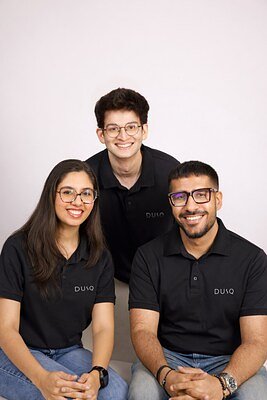
DUSQ Aims to Regulate Sleep, Not Just Track It, with ₹24 Cr Fundraise
NEW DELHI – February 16, 2026 – Indian sleep-science startup DUSQ has secured ₹24 crore (approximately $2.7 million USD) in seed funding to challenge the global sleep technology market with a radical new approach: regulating sleep rather than just tracking it. The funding round, led by consumer-focused venture capital firm Fireside Ventures, will fuel the company’s ambitious plan to scale its platform and launch in the United States, taking on established industry giants.
The investment also saw participation from Antler India, Climber Capital, Startup Sherpas, and notable angel investors, signaling strong confidence in DUSQ's mission to redefine recovery. Unlike the crowded market of wearables that provide users with daily sleep scores and data dashboards, DUSQ is positioning itself as a "regulation-first" company. It aims to move the conversation from passive data collection to active biological intervention.
Beyond the Sleep Score: A New Philosophy of Recovery
The core hypothesis driving DUSQ is that modern sleep failure is not just a matter of bad habits but a deeper issue of "brain–body desynchrony." While millions of users strap on devices from Apple, Google (Fitbit), and Oura to monitor their sleep stages, DUSQ argues that this data, while interesting, fails to address the root cause of poor rest. The company contends that true recovery requires active biological regulation to resynchronize the body's systems.
"We believe the next frontier of health-tech is not more data—it's restored biological function," said Dr. Siddhant Bhargava, co-founder of DUSQ, in a statement. "We're not building another tracker; we're building infrastructure for human recovery."
This philosophy marks a significant departure from the current paradigm. The global sleep technology market, valued at over $20 billion and projected to exceed $65 billion by 2033, is dominated by products that quantify sleep. DUSQ’s platform, which reportedly combines adhesive wearables, AI-driven insights, and vagus nerve stimulation, intends to actively facilitate the body’s natural recovery processes. Instead of simply telling a user they had a restless night, DUSQ aims to intervene and help stabilize sleep patterns for more profound and sustained rest.
From Shark Tank to Sleep Lab: A Pivot Grounded in Science
DUSQ's journey began under a different name: InnerGize. As a stress-focused wearable, InnerGize gained national visibility in India through an appearance on Shark Tank India. While the early product found strong consumer interest, the founding team—Dr. Bhargava, Shalmali Kadu, and Mitansh Khurana—discovered that stress was often a symptom of a more fundamental problem: fragmented and non-restorative sleep.
In what the company calls an "uncommon decision," the team chose to step back from scaling prematurely. They embarked on a two-year, long-horizon research phase, analyzing a massive dataset of over 50 million physiological data points. This deep dive led to a new understanding of the connection between autonomic nervous system signaling, neural downshifting, and poor recovery, prompting a fundamental rebrand and a new mission under the name DUSQ.
This scientific pivot was supported by the establishment of a proprietary, fully equipped in-house sleep laboratory. Here, the team has spent the last year conducting structured trials to test and validate their autonomic recovery pathways under controlled conditions. According to the company, early results have been promising, demonstrating the system's ability to support sustained recovery cycles and stabilize uninterrupted sleep—a tangible shift from merely observing rest to actively enabling it.
An Indian Deep-Tech Contender on the Global Stage
The ₹24 crore seed round is more than just capital for a promising startup; it represents a landmark moment for India's burgeoning deep-science and med-tech ecosystem. Historically, the global health technology landscape, particularly in the advanced consumer wellness sector, has been dominated by companies from the United States and Europe. DUSQ's significant institutional backing signals a growing conviction that globally competitive, science-first technology can be built and scaled from India.
This sentiment was echoed by the lead investor. "Sleep is emerging as one of the most important health frontiers globally," commented Ankur Khaitan, Principal at Fireside Ventures. "What stood out for us about DUSQ was the team's willingness to rethink the problem and build with genuine scientific depth and clear differentiation from day one. With a launch-ready product and strong IP foundation, we believe it can define the global sleep solutions category."
The investment will be deployed to expand DUSQ's neuroscience and hardware teams, deepen its intellectual property portfolio, and prepare for its high-stakes entry into the U.S. market. For the Indian startup scene, DUSQ’s trajectory could serve as a powerful new blueprint for building global companies based on rigorous scientific innovation rather than software-based business model disruption alone.
The Path Ahead: Navigating the Competitive U.S. Market
While DUSQ's vision is compelling and its funding robust, the road ahead, particularly its planned U.S. launch, is fraught with challenges. The American market is not only the largest and most mature for sleep technology but also the most competitive and heavily regulated.
To market a device that claims to "regulate" biological function, DUSQ will likely need to navigate the complex and costly regulatory pathways of the U.S. Food and Drug Administration (FDA). Depending on its specific claims and mechanism of action, the platform may require clearance through the 510(k) premarket notification process or the even more rigorous Premarket Approval (PMA) process, both of which demand substantial clinical data to prove safety and efficacy.
Furthermore, the company will face off against a slate of entrenched incumbents with massive brand recognition and marketing budgets. Establishing credibility and capturing market share will require not only a technologically superior product but also a masterful market entry strategy and the ability to educate consumers on the difference between passive tracking and active regulation. While consumer sleep devices are gaining traction, the medical community still largely relies on clinical-grade actigraphy for diagnostics, creating a high bar for new technologies to prove their clinical relevance and accuracy.
Despite these hurdles, DUSQ is forging ahead with its plan to shift the global conversation from sleep optimization to genuine sleep restoration. By building a platform on a foundation of deep scientific research, the Indian startup is making a bold play to not just participate in the sleep-tech boom, but to fundamentally redefine its future.