
- 5,000–15,000 MW: Potential geothermal electricity capacity in Canada, enough to power millions of homes.
- $1M+: Cost of a single unsuccessful geothermal exploration well, a major investment barrier.
- 2026: Year the Canadian Thermal Model initiative was unveiled at the World Geothermal Congress.
Experts would likely conclude that this initiative represents a pivotal step in unlocking Canada's vast geothermal potential by reducing exploration risks through advanced AI and data integration, positioning geothermal as a key component of the country's clean energy future.
Drilling into Data: How AI Is Unlocking Canada's Geothermal Power
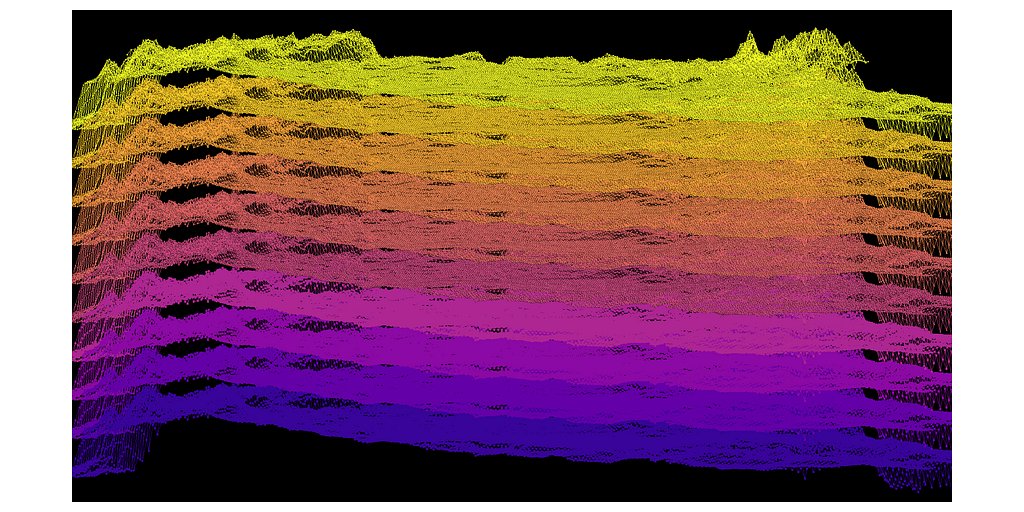
CALGARY, AB – June 08, 2026 – On the opening day of the World Geothermal Congress, a landmark initiative was unveiled that aims to fundamentally redraw Canada's energy map. Seequent, The Bentley Subsurface Company, and the Cascade Institute, a think tank at Royal Roads University, announced a collaboration to create the Canadian Thermal Model—a comprehensive, national-scale map of the country’s deep geothermal resources. By pairing world-leading geophysics software with novel machine learning, the project seeks to illuminate the immense heat energy stored deep beneath the earth and, in doing so, de-risk and accelerate its development as a pivotal source of clean, reliable power.
As global investment surges into geothermal as a dependable, always-on renewable, this initiative addresses the single greatest barrier that has kept Canada’s potential largely dormant: subsurface uncertainty. The project represents a critical convergence of technology, research, and industry, aiming to transform geothermal from a niche opportunity into foundational infrastructure for Canada's energy future.
“Canada has a significant opportunity to advance geothermal when the need for reliable, always-on clean energy has never been greater,” said Jeremy O’Brien, Energy Segment Director at Seequent, in a statement released today. “Realizing that potential starts with greater subsurface certainty and making data accessible to key stakeholders. The Canadian Thermal Model brings these elements together to create a national view of deep geothermal resources, helping to reduce risk, guide investment, and accelerate development.”
The Sleeping Giant of Canadian Energy
Beneath the surface, Canada is a geothermal giant. The Geological Survey of Canada (GSC) has long identified vast resources, particularly in the Western Canada Sedimentary Basin and the Canadian Cordillera. Estimates suggest a potential between 5,000 and 15,000 megawatts of baseload electricity—a staggering figure capable of powering millions of homes and displacing significant fossil fuel consumption. Yet, despite this immense potential, Canada has lagged conspicuously behind global leaders, with only a handful of projects moving beyond the exploratory phase.
One of the most significant hurdles has been the high upfront cost and perceived risk of exploration. Unlike wind or solar, where resources can be easily measured, geothermal energy requires drilling deep into the earth's crust to confirm the presence of sufficient heat, permeability, and fluid. The geological risk associated with this process can make investors hesitant, as a single unsuccessful well can cost millions.
This is where the lack of a comprehensive, high-resolution national dataset has been most acutely felt. While the GSC has provided foundational maps, the data coverage is often sparse, leaving developers to conduct expensive, site-specific surveys. Projects like the Clarke Lake Geothermal Project in British Columbia, which aims to repurpose an abandoned gas field, demonstrate the viability of Canadian geothermal but also highlight the need for a scalable, data-driven approach to unlock the resource nationwide.
From Sparse Data to a National Blueprint
The Canadian Thermal Model is engineered to solve this exact problem. Its innovation lies in the fusion of two powerful technologies: Seequent's established geophysics software, Oasis montaj, and the Cascade Institute’s novel machine learning algorithm, InterPIGNN.
Seequent’s Oasis montaj is a workhorse in the geosciences, used globally to process, analyze, and visualize vast and varied datasets—from magnetic and gravity surveys to seismic and electromagnetic readings. It provides the digital workbench for integrating all available information about the Earth’s subsurface. For this project, it will serve as the engine for collating disparate geological and geophysical data from across the country.
The true breakthrough, however, comes from the application of the InterPIGNN algorithm. While technical details are emerging, the name suggests it is a type of Physics-Informed Neural Network (PINN). Unlike conventional AI that learns solely from data patterns, PINNs are trained to obey the fundamental laws of physics—in this case, the principles of heat transfer and fluid dynamics in geological formations. This allows the model to make highly accurate predictions even in areas where direct data is missing, effectively filling in the blanks on the map with a high degree of scientific confidence.
By feeding the rich, multi-layered data processed by Oasis montaj into this physics-aware AI, the collaborators can move beyond simple interpolation. The system will learn the complex relationships between surface-level geophysical signals and deep subsurface conditions, allowing it to predict temperature at depth with unprecedented accuracy and scope. This data-driven approach promises to transform geothermal exploration from a high-stakes gamble into a calculated science, providing a foundational blueprint that can guide investment and policy for the entire nation.
A Coalition for Clean Energy
The project's strength is not just in its technology, but in the breadth of its partnership. This is not merely a bilateral agreement between a tech company and a think tank; it is a multi-sectoral coalition designed to bridge the gap between research, policy, and commercial application.
The Cascade Institute, with its focus on using complexity science to solve pressing global problems, leads the project through its Deep Geothermal program. It brings the research muscle and the innovative machine learning framework. But to ensure the model is both robust and practical, it has enlisted a team of key partners.
Simon Fraser University will contribute academic rigor, helping to validate the methodologies and explore the broader environmental implications. The Geological Survey of Canada's Pacific Division provides access to its invaluable archives of public data and decades of institutional expertise, lending governmental credibility and ensuring alignment with national resource standards. Critically, the inclusion of 400C Energy, a company actively developing geothermal projects, provides a vital reality check. Their industry-specific knowledge ensures the model’s outputs are practical and directly applicable to the challenges faced by commercial developers.
“Canada has world-class subsurface expertise and a growing opportunity to lead in geothermal,” noted Thomas Homer-Dixon, Executive Director of the Cascade Institute. “This project will provide a foundational resource to demonstrate the technical and economic viability of geothermal energy at scale.”
The Economic and Policy Ripple Effect
By creating a public, high-confidence map of Canada's geothermal resources, the Canadian Thermal Model is poised to catalyze a wave of economic activity and policy innovation. For investors, it dramatically lowers the barrier to entry by reducing geological risk. For the energy sector, particularly oil and gas companies with transferable drilling expertise and infrastructure, it provides a clear roadmap for diversification into clean energy.
This initiative could spur the creation of thousands of high-skilled jobs in geology, engineering, and drilling, offering a just transition for workers in the fossil fuel industry. Furthermore, by providing a stable, 24/7 source of renewable power, geothermal can enhance Canada’s energy security and grid stability, complementing intermittent sources like wind and solar.
Perhaps most importantly, the model will provide the concrete evidence base that policymakers need. Currently, geothermal development in Canada is often navigated through regulatory frameworks designed for mining or oil and gas. A clear picture of the resource's scale and location will empower federal and provincial governments to craft dedicated geothermal legislation, targeted financial incentives, and streamlined permitting processes. It moves the conversation from “if” to “where and how.”
This data-driven, collaborative approach aligns Canada with global best practices seen in leading geothermal nations. It underscores a fundamental shift in how complex energy transitions are managed—not by single actors, but by a networked ecosystem of innovators from industry, academia, and government, all working from a shared, trusted source of information.