
- 5,000-metre drilling program across Murmac and Strike uranium projects
- C$6 million funded by Manhattan Uranium, with up to 70% interest earned
- 13.80% U₃O₈ high-grade zone intersected in previous Murmac drill hole
Experts would likely conclude that this strategic drilling initiative in the Athabasca Basin represents a high-potential, low-risk exploration model that aligns with growing global uranium demand and modern ESG standards.
Drilling for the Future: A Smart Uranium Bet in the Athabasca Basin
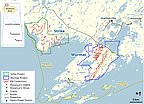
HALIFAX, NS – June 04, 2026 – In the vast, resource-rich Canadian Shield of northern Saskatchewan, the drills are about to start turning. Fortune Bay Corp. and its partner, Manhattan Uranium Discovery Corp., are launching a large-scale, 5,000-metre drilling program across their Murmac and Strike uranium projects. While the search for mineral wealth is a story as old as the landscape itself, this initiative represents a convergence of modern innovation: a savvy financial strategy, cutting-edge geological science, and the powerful tailwinds of a global energy transition.
The program, set to test up to 25 priority targets near Uranium City, isn't just another exploration venture. It’s a calculated move at the intersection of resource development and global demand, unfolding in a region known as the “Saudi Arabia of uranium”—the Athabasca Basin. As the world grapples with building a carbon-free energy future, the success or failure of projects like this will have ripple effects far beyond the remote Canadian north.
A Strategic Partnership for a Modern Energy Rush
At the heart of this story is a partnership model that exemplifies prudent innovation in the high-risk, high-reward world of mineral exploration. The entire C$6 million drilling program is being funded by Manhattan Uranium, which in return can earn up to a 70% interest in the projects. Fortune Bay, acting as the operator, gains a 10% management fee and, more importantly, retains exposure to a potential world-class discovery without diluting its treasury.
This is a masterclass in disciplined capital allocation. As Fortune Bay CEO Dale Verran explained, "This partner-funded program provides Fortune Bay shareholders with meaningful exposure to uranium discovery upside, without requiring Fortune Bay to fund the exploration expenditures." He added that the strategy, "reflects our disciplined approach to capital allocation, allowing high-potential uranium projects to be advanced through partnerships while we preserve capital and maintain focus on Goldfields, our flagship gold project."
For junior exploration companies, which often live and die by their ability to raise capital, this model is a powerful tool. It de-risks the exploration phase for Fortune Bay while allowing Manhattan, a company strategically positioned to capitalize on the American nuclear renaissance, to gain a significant foothold in one of the world's most prospective uranium districts. It’s a symbiotic relationship that allows both companies to pursue aggressive growth in a capital-efficient manner.
Unearthing Potential in a World-Class District
The financial structure is clever, but it’s the ground beneath their feet that generates the real excitement. The Athabasca Basin is legendary, supplying around 20% of the world's uranium from deposits that are often 10 to 100 times richer than the global average. The Murmac and Strike projects are situated on the northern edge of this basin, a historically productive area with established infrastructure—a rare advantage in such a remote region.
The upcoming drill program isn’t a blind shot in the dark. It’s a systematic campaign built on a mountain of data. Previous work has already delivered tantalizing hints of the area's potential. At Murmac, a previous drill hole intersected an exceptionally high-grade zone, with an individual assay hitting 13.80% U₃O₈. At the Strike project, historical small-scale mining in the 1950s reported grades as high as 3.5% U₃O₈, a figure later confirmed by Fortune Bay's own surface sampling which returned assays up to 3.51% U₃O₈.
Gareth Garlick, Fortune Bay's Technical Director, noted that the team is targeting areas where geology, geophysics, and geochemistry align. "Previous work has confirmed key ingredients for basement-hosted uranium mineralization... including graphitic host rocks, structural preparation, uranium anomalism, alteration and high-grade uranium results," he commented. The program will target over 60 kilometers of these prospective corridors, following up on known high-grade zones while testing brand-new targets.
Powering the Global Nuclear Renaissance
This exploration push is happening against the backdrop of a dramatic resurgence for nuclear energy. Once viewed with skepticism, nuclear power is now increasingly seen as an indispensable tool for achieving net-zero emissions. The insatiable energy demands of artificial intelligence and data centers—with giants like Microsoft and Meta actively seeking nuclear power sources—are adding a powerful new driver to the market.
This renewed demand is creating a structural supply deficit. The world’s reactors require roughly 180-190 million pounds of uranium annually, yet mine production languishes around 130-140 million pounds. This gap has sent uranium spot prices soaring past US$85 per pound, with long-term contract prices even higher. Geopolitical instability, which has disrupted supply chains from traditional sources, has only intensified the West's need to secure supply from stable jurisdictions like Canada.
The Murmac and Strike projects are therefore perfectly positioned. A significant discovery here would not only be a company-maker for Fortune Bay and Manhattan but would also contribute to the critical supply needed to fuel a growing fleet of traditional reactors and the next generation of Small Modular Reactors (SMRs).
Navigating a Legacy: Responsibility in Resource Exploration
Innovation in the 21st century isn't just about technology or finance; it's also about responsibility. The area around Uranium City carries the environmental scars of a bygone era of mining, when operations in the 1950s and '60s were conducted with little regard for long-term consequences. Today, the landscape is entirely different.
Modern exploration in Saskatchewan operates under a stringent regulatory framework that mandates comprehensive environmental planning and meaningful engagement with local and Indigenous communities. Companies like Fortune Bay have formalized ESG (Environmental, Social, and Governance) policies, recognizing that a social license to operate is as critical as a geological find. Building respectful, long-term relationships with the Dene, Cree, and Métis communities whose traditional territories host these projects is now a fundamental part of the process.
As the drills begin to turn at Murmac and Strike, they are digging for more than just uranium. They are exploring a new model of resource development—one that is financially astute, technologically advanced, and socially conscious, all in service of powering a cleaner global future.