
- 125 confirmed cases, 906 suspected infections, and 223 deaths as of May 28, 2026
- 90% of suspected cases in Ituri province, the outbreak's epicenter
- No approved vaccine or cure for the Bundibugyo ebolavirus strain
Experts warn that the untreatable Ebola strain, combined with conflict and systemic collapse in DRC, creates an unprecedented public health crisis requiring urgent, large-scale intervention.
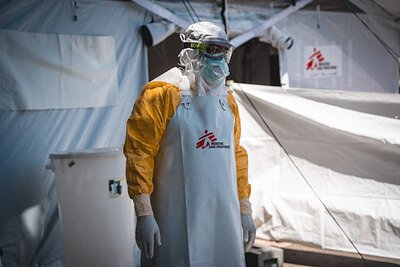
DRC's Perfect Storm: Ebola Returns in a New, Untreatable Form
GOMA, DRC – June 01, 2026 – A formidable and tragically familiar foe has returned to the Democratic Republic of Congo, but this time it carries a new and unnerving identity. A rapidly evolving outbreak of Ebola disease is tearing through the country's conflict-scarred eastern provinces, driven by a rare strain for which there is no approved vaccine and no specific cure.
Humanitarian organizations are scrambling to mount a response in a region already brought to its knees by decades of violence and systemic collapse. As of May 28, health officials have reported 125 confirmed cases, 906 suspected infections, and 223 deaths across the provinces of Ituri, North Kivu, and South Kivu. But aid workers on the ground warn these numbers, grim as they are, represent only a sliver of a crisis whose true scale is impossible to grasp. With extremely limited testing and access to remote areas blocked by insecurity, the virus is spreading in the shadows.
A Race Against an Unfamiliar Foe
The current outbreak is caused by the Bundibugyo ebolavirus, a less common but still highly dangerous relative of the Zaire strain that caused the devastating 2014-2016 West African epidemic. While its case fatality rate, historically around 25-50%, is lower than the Zaire strain's terrifying 90%, it remains a potent killer. The critical challenge for responders is that the primary weapon against the Zaire strain—the approved Ervebo vaccine—is not licensed or proven effective against Bundibugyo.
This leaves health workers "back to the basics," fighting the virus with little more than supportive care, contact tracing, and isolation—strategies that are incredibly difficult to implement in one of the world's most complex humanitarian emergencies. While the World Health Organization and other bodies are fast-tracking research on candidate vaccines and therapeutics, including an antiviral called Remdesivir and monoclonal antibody treatments, experts caution that any viable options are months away from being ready for clinical trials. For now, the frontline is a battle of containment, not cure.
"We are working in a particularly difficult context," says Dr. Alan Gonzalez, MSF deputy director of operations, in a recent statement. "Testing capacity remains insufficient, and hundreds of samples are still awaiting processing in laboratories. Isolation and care capacity are also insufficient. All of this is impeding the rapid scale-up of the response and creating legitimate anxieties and fears among communities."
A Crisis Compounded by Conflict
The virus is not spreading in a vacuum. It has found fertile ground in eastern DRC, a region where the public health system has long been a casualty of perpetual conflict. Ituri province, the outbreak's epicenter, accounts for over 90 percent of suspected cases and has been the scene of intense fighting and massive displacement.
"This outbreak is affecting regions already severely weakened by years of ongoing conflict and massive displacement," explains Ewald Stals, MSF's representative in DRC. "In Ituri, as well as in North and South Kivu, insecurity has forced millions of people to flee their homes in search of safety. This constant movement is compounded by fragile and underfunded health systems."
This constant churn of people makes the foundational work of epidemic control—identifying cases and tracing their contacts—a near-impossible task. Displaced families living in crowded, unsanitary camps are exceptionally vulnerable. Furthermore, reaching these communities is a logistical and security nightmare, with travel restrictions and active violence hampering the delivery of staff and supplies. Médecins Sans Frontières (MSF) reports that several hundred tons of medical and logistics supplies have been delivered, but the needs far outstrip the available capacity.
"In some health facilities, admission and isolation capacities are already reaching their limits," Stals adds. "In this context, rapid case identification, contact tracing, and the isolation of sick people become particularly difficult, increasing the risk of further spread of the disease."
The Silent Epidemic of Fear
Beyond the direct threat of the Bundibugyo virus, a second, more insidious crisis is unfolding. Fear of Ebola, fueled by rumors and a deep-seated mistrust of authority, is creating a "silent escalation" of other health emergencies. In a tragic paradox, the very presence of Ebola treatment centers is causing people to shun healthcare altogether.
MSF teams on the ground report a sharp drop in patients seeking care for common but deadly conditions like malaria, measles, respiratory infections, and childbirth complications. Pregnant women are avoiding prenatal check-ups, and parents are not bringing sick children to clinics for fear of being diagnosed with Ebola and forced into isolation. This avoidance threatens to create a wave of indirect mortality that could ultimately dwarf the death toll from the virus itself.
Combating this fear is now as crucial as combating the virus. Aid groups are deploying health promotion teams to engage directly with communities, explaining the disease, dispelling rumors, and building the trust necessary for the response to succeed. This close collaboration is vital, as fear and misinformation can delay people from seeking timely care, allowing the virus to spread further within families and communities before it can be contained.
As the response ramps up, MSF is constructing new Ebola Treatment Centers (ETCs) and isolation units across the three affected provinces. A 65-bed ETC is underway in Ituri, an 80-bed center has opened in Goma, North Kivu, and two more are being set up in South Kivu. Teams are also working tirelessly to reinforce infection prevention measures in existing hospitals to prevent them from becoming sites of amplification. The coming weeks will be critical, a desperate race to scale up care, accelerate testing, and rebuild trust before this perfect storm of disease, conflict, and fear spirals completely out of control.