
- €7 million Adjusted EBITDA on €173 million revenue in 2025
- 45,000 new e-scooters and e-bikes ordered for 2026 expansion
- €10 million revolving credit facility secured with Rabobank
Experts would likely conclude that Dott's strategic cost-cutting and operational streamlining have positioned it as one of the few micromobility operators achieving profitability, though it faces intense competition in a consolidating market.
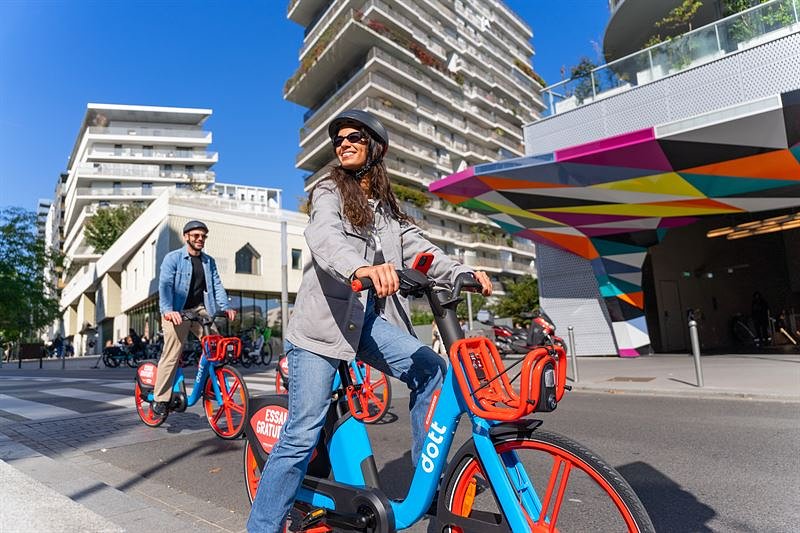
Dott Hits Profitability, Orders 45,000 Vehicles for Major Expansion
AMSTERDAM, Feb. 23, 2026 – Micromobility operator Dott has announced a significant financial turnaround, achieving its first-ever full-year profit on an adjusted basis for fiscal year 2025. The company reported a €7 million Adjusted EBITDA on revenues of €173 million, a landmark achievement in an industry long challenged by the economics of shared mobility. This financial milestone is coupled with an aggressive growth strategy, underpinned by a massive order of 45,000 new e-scooters and e-bikes set for deployment in 2026 and a strategic shift in its executive leadership.
A Disciplined Path to Profit
Dott's journey to profitability marks a pivotal moment for the company, which, like many of its peers, has navigated a complex landscape of high operational costs and intense competition. The reported €7 million positive Adjusted EBITDA for 2025 stands in contrast to an unadjusted EBITDA loss of €4 million, a difference the company attributes to €11 million in one-time restructuring costs. These costs were largely associated with the integration of rival operator TIER and the establishment of a "Lean HQ," signaling a period of intense internal reorganization.
The financial turnaround was driven by a multi-faceted strategy. Following the merger with TIER, which was finalized in early 2024, Dott focused on streamlining its operations. This involved not only significant headquarters cost reductions but also strategic withdrawals from "financially unsustainable" markets, such as its exit from London in March 2024. While these moves, along with the complex process of migrating TIER users to the Dott platform, initially impacted revenue, the company states that underlying economics improved significantly in the latter half of the year.
"2025 was a transformational year for Dott, as we simplified the organisation and reduced costs to create a leaner, more scalable platform," said Maxim Romain, who recently took the helm as CEO. He pointed to stronger rider engagement and a shift toward more flexible revenue-sharing models with city partners as key drivers of the improved performance.
Fueling Growth with New Fleet and Fresh Capital
With a newly solidified financial foundation, Dott is now shifting its focus to aggressive expansion. The company has placed an order for 45,000 new vehicles—comprising approximately 32,000 e-scooters and 13,000 e-bikes—funded by proceeds from a previously issued Nordic bond. This new fleet is currently being shipped for deployment across key city clusters in Europe and the Middle East, with arrivals slated for the second quarter of 2026.
This large-scale investment is aimed at enhancing both user experience and vehicle economics. CEO Maxim Romain highlighted the success of a new e-bike model in Paris during the fourth quarter of 2025 as a proof of concept. "Q4 performance in Paris was a highlight, with our new e-bike model significantly improving user experience and vehicle economics," Romain commented. "We plan to replicate this across further markets in 2026."
Dott's growth ambitions are backed by a reinforced capital structure. The company recently secured a €10 million super senior revolving credit facility with its long-term partner, Rabobank, providing additional cash flow flexibility. Furthermore, a €15 million extension to its Series D equity round is expected to close by the end of March 2026, signaling continued investor confidence.
Raoul Gatzen, Dott's CFO, expressed satisfaction with the results. "We are very satisfied to have delivered the first positive Adjusted EBITDA in Dott's history, while strengthening our balance sheet through the Nordic Bond issuance and equity raise," he stated. "We exit 2025 streamlined and focused and, with cost savings fully annualising and the new fleet arriving in 2026, we are well positioned to drive margin expansion and stronger cash generation."
New Leadership for the Next Phase of Mobility
Coinciding with its financial and operational pivot is a significant change in Dott's executive suite. As of January 2026, co-founder Maxim Romain, formerly the Chief Operating Officer, has stepped into the role of Chief Executive Officer. His predecessor and fellow co-founder, Henri Moissinac, has transitioned to the position of Executive Chairman.
This leadership realignment appears designed to steer the company through its next phase of growth. Romain's background as COO positions him to oversee the complex logistics of the massive fleet rollout and maintain a sharp focus on operational efficiency. "Maxim has led the business day-to-day since inception and, as CEO, will ensure Dott remains focused on operational excellence as we roll out the new fleet," Moissinac noted.
In his new role as Executive Chairman, Moissinac will concentrate on the bigger picture. "I am excited to dedicate more time to longer-term strategic initiatives, ensuring we stay at the forefront of the next wave of innovation in micromobility," he explained. This division of duties—execution under the CEO and long-term vision under the Executive Chairman—is a common structure for maturing technology companies preparing to scale.
Navigating a Competitive and Consolidating Market
Dott's achievement of adjusted profitability places it among a select group of operators demonstrating a viable path to financial sustainability. The micromobility sector is undergoing significant consolidation, with profitability emerging as the key differentiator. While Dott's €7 million Adjusted EBITDA is a crucial first step, it operates in a market with formidable competitors. US-based Lime, for instance, reported an Adjusted EBITDA exceeding $140 million in 2024 and was free cash flow positive for the second year running. Meanwhile, other major players like Bolt, while growing revenue, continue to post net losses.
This context underscores the importance of Dott's strategic discipline in 2025. By integrating TIER, shedding unprofitable operations, and optimizing its cost structure, the company has built a foundation for what it hopes will be sustained profitable growth. Looking ahead, Dott has reaffirmed its guidance for fiscal year 2026, projecting an Adjusted EBITDA in the range of €30 to €40 million. This confident forecast, combined with its massive fleet investment, signals Dott's intention not just to survive, but to thrive and capture a larger share of the evolving urban transportation landscape.