
- 500% efficiency gain: Some customers report cutting document preparation and signing time by as much as 500%.
- 70+ native integrations: Docupilot supports over 70 native integrations, including connectors for Zapier, Make, and Airtable.
- Compliance standards: The platform is compliant with major standards including HIPAA, GDPR, ISO 27001, and SOC.
Experts would likely conclude that Docupilot's integration of eSignature and document generation into a unified workflow addresses a critical business inefficiency, offering significant time savings and reducing errors, particularly for small to mid-sized businesses seeking streamlined, cost-effective solutions.
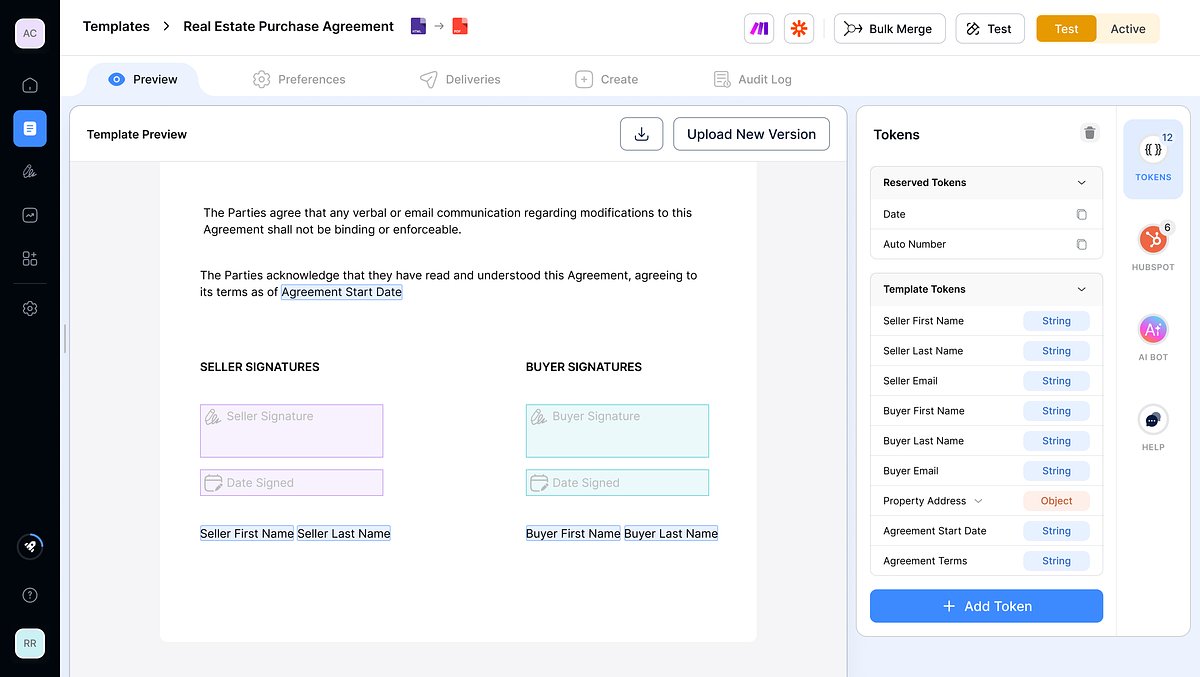
Docupilot Unites eSignature and Document Gen to End Workflow Sprawl
DOVER, Del. – April 21, 2026 – Document automation software provider Docupilot today announced a significant platform evolution, integrating automation-first eSignature capabilities directly into its core document generation engine. The move creates a unified, seamless workflow designed to eliminate the long-standing business inefficiency of juggling separate applications for creating, delivering, and signing critical documents.
For years, businesses have patched together workflows using one tool for drafting contracts, another for populating them with data, and a third for collecting signatures. This fragmented process is often a source of friction, manual error, and lost time. Docupilot’s enhancement aims to transform this disjointed process into a single, automated journey.
“Our goal is to make document workflows smoother from start to finish,” said Rohit Reddy Abbadi, CEO of Docupilot, in the company's announcement. “Customers no longer have to generate a document in one place and send it for signature in another; now the entire process lives in a unified workflow that saves time and reduces friction.”
The End of Document Workflow Disruption
The new functionality allows users to orchestrate a complete document lifecycle within a single interface. A typical example, such as a sales contract, can now be automatically generated by pulling customer data from a CRM, sent to the client for a secure signature, and then have the executed copy automatically synced back to the original CRM record without a single manual export or application switch.
This end-to-end automation is powered by what the company calls its “automation-first, API-ready” eSignature support. The feature is not simply an add-on but an integral part of the document delivery process. It includes secure, trackable signing and automated reminders for pending documents, directly addressing a major pain point for sales, HR, and legal teams who rely on timely document execution.
By embedding the signature process, Docupilot is targeting the operational drag caused by context switching. The company reports that its customers have seen dramatic efficiency gains, with some claiming to have cut document preparation and signing time by as much as 500%. This is achieved by leveraging intelligent templates with dynamic placeholders and conditional logic, which automatically populate documents from connected data sources like CRMs, HR systems, and online forms.
Navigating a Crowded and Consolidating Market
Docupilot's strategic move places it in direct competition with a field of established and specialized players. The document management space is crowded, with companies like PandaDoc offering comprehensive document lifecycle automation, and giants like DocuSign and Adobe Sign dominating the eSignature market while expanding their own document generation capabilities. Other key players, such as Conga, have built strong ecosystems, particularly within the Salesforce environment, by bundling document generation and signing.
However, Docupilot is differentiating itself by focusing on a combination of seamless integration, accessibility, and flexibility. While competitors also offer integrated solutions, market analysis and user reviews frequently praise Docupilot for its intuitive interface, competitive pricing, and robust customer support, making it an attractive option for small to mid-sized businesses that may find enterprise-grade solutions too costly or complex.
The broader SaaS industry trend is undeniably moving toward platform consolidation. Businesses are increasingly looking to reduce “software sprawl”—the proliferation of single-function apps that create data silos and complicate workflows. By creating an all-in-one solution, Docupilot is aligning with this market demand for streamlined, efficient, and integrated digital tools. Its strategy appears to be not just to compete on features, but to win on the simplicity and power of a truly unified workflow.
Under the Hood: A Look at Technical Capabilities
Beneath the surface of this unified user experience is a flexible and powerful technical architecture. Docupilot empowers users to create dynamic templates using multiple methods, including a visual no-code builder, a Microsoft Word add-in, and even PowerPoint or Excel. This flexibility ensures that teams can work with familiar tools while leveraging sophisticated automation.
The platform’s integration capabilities are a cornerstone of its value proposition. With a REST API, webhooks, and over 70 native integrations—including connectors for Zapier, Make, and Airtable—Docupilot can pull data from virtually any business system. This allows for deep and custom workflows that fit a company's unique tech stack. While it now offers its own built-in eSignature solution, the platform maintains its integrations with other e-signature providers like DocuSign and Dropbox Sign, giving customers the flexibility to use their existing tools if they choose.
Security and compliance are paramount in document signing, and Docupilot has built its eSignature feature on a foundation of trust. The platform is compliant with major standards including HIPAA, GDPR, ISO 27001, and SOC. All data is protected with SSL encryption, and documents can be password-protected to ensure only authorized parties have access, providing the necessary security for handling sensitive legal, financial, and HR documents.
The Human and Financial Impact of Automation
Beyond the technical features, the most significant impact of this unified approach is on people and productivity. By automating tedious, repetitive tasks, Docupilot aims to free employees from low-value administrative work and empower them to focus on more strategic initiatives. This shift has a direct effect on both job satisfaction and the bottom line.
Across various departments, the benefits are tangible. HR teams can instantly generate and send offer letters and onboarding packets by connecting to their HRMS. Sales teams can produce accurate proposals and contracts in minutes instead of hours. Legal departments can ensure compliance and consistency by using locked-down templates for NDAs and service agreements. In each case, the reduction in manual data entry not only saves time but also dramatically reduces the risk of costly human errors.
This move from tedium to triumph represents a key aspect of modern digital transformation: using technology not just to do the same things faster, but to fundamentally change how work is done. As businesses continue to adapt to remote and hybrid work models, the demand for streamlined digital workflows that enhance efficiency without sacrificing security is higher than ever. Docupilot's integrated platform is a direct response to this demand, positioning itself as a central hub for one of the most fundamental processes in any business: the creation and execution of documents.