
- Real-time clinical signals: Doceree's Trigger DOOH uses aggregated, de-identified data to activate ads based on live patient activity.
- HIPAA compliance: The system avoids individual patient data, focusing instead on location-based trends.
- National network: Deployed across a vast array of medical facility screens.
Experts view Doceree's Trigger DOOH as a groundbreaking step toward precision healthcare advertising, but caution that its success hinges on maintaining patient trust and ethical boundaries in sensitive environments.
Doceree's New 'Smart' Billboards: A Cure for Ad Waste or a New Patient Risk?
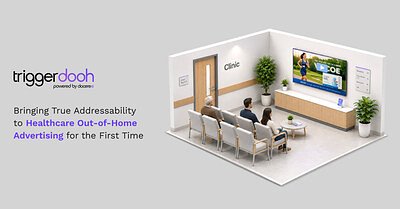
CANNES, FRANCE – June 23, 2026 – Amid the glitz of the Cannes Lions festival, a stage typically reserved for creative triumphs, a health-tech firm unveiled a technology that could fundamentally rewire the infrastructure of healthcare advertising. Doceree, an AI-powered marketing platform, has launched Trigger DOOH, a system designed to make digital billboards and screens in and around medical facilities context-aware. The pitch is simple yet profound: what if an ad for a new migraine treatment could appear on a screen near a neurology clinic precisely when there's a surge in patient check-ins for that very condition?
This is the promise of “true addressability” in the physical world, a concept that has long been the holy grail for life science marketers. By activating campaigns based on aggregated, real-time clinical signals, Doceree aims to transform the blunt instrument of out-of-home advertising into a surgical tool. As the company’s Founder and Global CEO, Dr. Harshit Jain, stated, “The moments that matter in a patient journey don't happen on a screen — they happen in waiting rooms, at pharmacies, in clinics.” Trigger DOOH, he argues, finally makes those moments “addressable, measurable, and actionable.”
But as we stand at the precipice of this new frontier, the innovation brings with it a host of complex questions that extend far beyond marketing ROI. It forces a critical examination of the line between helpful information and commercial influence, and the sanctity of the patient experience in an increasingly data-driven world.
From Broadcast to 'Triggered' Precision
For decades, advertising in healthcare settings has been a game of educated guesses. A brand might place ads in a cardiology center's waiting room, hoping to reach a relevant audience, but with no real way to confirm who was seeing the message or when. It was a broadcast medium—high-impact, but blind to context. Trigger DOOH proposes to change this by layering the company's patented Triggers™ technology over a national network of screens. This system ingests aggregated, de-identified data—such as a spike in dermatology appointments at a medical plaza—and uses it as a trigger to serve relevant advertising on nearby screens.
The competitive landscape for point-of-care media is not empty. Giants like PatientPoint Health Technologies, formed from a merger with Outcome Health, operate vast networks of screens in tens of thousands of physician offices. They already offer programmatic capabilities, allowing advertisers to target locations based on historical claims data, including diagnosis codes and prescription patterns. However, Doceree's claim to being a “first” rests on its emphasis on live clinical signals. This suggests a more dynamic, real-time activation model that responds to the immediate flow of patients, rather than targeting a location based on past data profiles.
This shift from probabilistic to deterministic targeting in the physical world is significant. It promises to slash wasted ad spend and deliver a level of efficiency previously confined to online channels. “For years, marketers were told that out-of-home and precision simply could not coexist in healthcare,” noted Kamya Elawadhi, Doceree's Co-Founder and President. “Trigger DOOH proves otherwise.” The goal is to make a billboard in a hospital campus as intelligent and responsive as a web banner, closing the loop between physical presence and clinical intent.
The High-Stakes World of HIPAA and Trust
Any technology that touches healthcare data, no matter how indirectly, immediately enters a regulatory minefield. Doceree is quick to emphasize that its entire system is engineered for compliance. The company states that targeting is “driven entirely by aggregated, de-identified clinical signals rather than individual patient data,” ensuring every ad activation is HIPAA-aligned and free of personally identifiable information. This is not just a legal necessity; it's a prerequisite for market survival.
The healthcare advertising industry is still haunted by cautionary tales like the fraud scandal that befell Outcome Health, where inflated data and misrepresentation shattered client trust. In this environment, verifiable, privacy-centric operations are paramount. Doceree's approach aligns with a broader industry pivot away from invasive tracking methods like third-party cookies and toward context-based strategies. By focusing on the de-identified activity within a location, the technology sidesteps the need to track individuals, a key requirement for operating responsibly in a post-cookie, privacy-first era.
However, compliance is only the floor. The true challenge lies in earning and maintaining the trust of not just pharma clients and their compliance teams, but also the patients and providers who inhabit these spaces. An independent privacy advocate noted, “Being HIPAA-compliant is the absolute minimum. The real test is whether this technology feels respectful to a person sitting in a waiting room, anxious about their health. The perception of privacy is as important as the technical reality.”
Redefining the Patient's Waiting Room
The most profound impact of Trigger DOOH may be on the patient experience itself. On one hand, the delivery of contextually relevant information could be genuinely beneficial. A patient waiting for a difficult consultation could see information about a new support group, or someone managing a chronic condition could learn about a novel therapy they were unaware of. In the best-case scenario, it turns passive waiting time into an opportunity for empowerment and education.
On the other hand, it introduces a new layer of commercialism into what many consider a sacrosanct space. The waiting room is not a retail environment; it's a place of vulnerability and anxiety. The introduction of highly targeted advertising, however relevant, risks being perceived as intrusive. Patient advocacy groups have long been wary of direct-to-consumer advertising's potential to create demand for expensive treatments or cause friction between patients and their doctors. Amplifying that messaging at the very point of care could exacerbate those concerns.
There is a fine line between informing and influencing. An anonymous healthcare ethicist commented, “The danger is that the waiting room becomes an extension of the pharmaceutical sales funnel. We have to ask if this technology serves the patient's need for objective information or the advertiser's need for a captive audience.” The success of this model will depend heavily on the quality and nature of the content delivered. Educational material, disease awareness campaigns, and patient support information will likely be received very differently than aggressive brand marketing.
Ultimately, Doceree is providing a powerful new capability to an industry under immense pressure to prove its value and efficiency. By transforming physical spaces into addressable media channels, Trigger DOOH offers life science brands a compelling way to connect with audiences at moments of peak intent. The technology itself is a formidable innovation, but its long-term acceptance will hinge on a delicate and ongoing negotiation of ethics, transparency, and the fundamental purpose of the spaces where we seek care.