
- DJI RS 5: 10-meter tracking range, 3kg payload, 1.46kg weight
- DJI Osmo 360: 8K/30fps video, 120MP photos, 1-inch sensor
- DJI Power 2000: 26dB ultra-quiet operation, UPS mode
Experts view DJI's integrated creator ecosystem as a strategic shift that could redefine production workflows by offering seamless hardware compatibility and efficiency.
DJI's Vision for a Creator Ecosystem Comes into Focus at NAB 2026
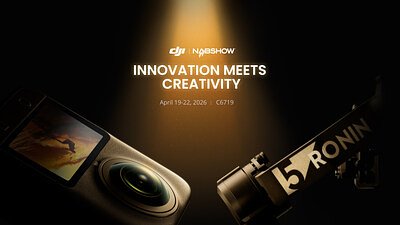
LAS VEGAS, NV – April 17, 2026 – As the broadcast and media industry converges on Las Vegas for the 2026 NAB Show, DJI is poised to showcase more than just new hardware. The company, a dominant force in drone and camera stabilization technology, is presenting a meticulously crafted vision for a fully integrated creator ecosystem. From professional cinematographers to aspiring vloggers, DJI's strategy, on display from April 19-22, is clear: to provide a seamless, end-to-end workflow from image capture and stabilization to audio recording and on-set power.
While the company's booth will feature its award-winning Ronin and Osmo product lines, the underlying story is one of strategic synergy. Recent product launches across its portfolio are culminating in an interconnected suite of tools designed to simplify production logistics and unlock new creative potential. This push solidifies the company’s ambition to be an indispensable partner for every facet of modern storytelling.
The Professional's Arsenal: Refining the Ronin Ecosystem
For years, the Ronin series has been a staple on film and television sets, earning both Oscars and Emmys for its robust stabilization technology. At NAB 2026, DJI is reinforcing its commitment to the professional market by highlighting the practical power of this ecosystem. The centerpiece of its new offerings is the recently launched DJI RS 5, a lightweight commercial camera stabilizer that elevates the line's intelligent capabilities.
Featuring a next-generation RS Intelligent Tracking Module, the RS 5 can lock onto and follow subjects—from people and vehicles to pets—from as far as 10 meters away, even reacquiring them if they momentarily leave the frame. Combined with a 5th-generation stabilization algorithm that delivers significantly higher motor torque, the gimbal promises exceptionally smooth footage in the most dynamic shooting scenarios. Despite its power, it maintains a payload capacity of 3kg while weighing just 1.46kg, making it ideal for the mirrorless camera setups favored by many solo operators and small crews.
To demonstrate the practical application of its high-end gear, DJI's booth will feature a professional-grade film set complete with a vehicle outfitted for complex car chase sequences. Attendees can get hands-on experience with versatile rigging solutions for the flagship Ronin 4D cinematic camera, the workhorse Ronin 2, and the new RS 4 Pro, showcasing how these tools integrate to capture shots that were once the exclusive domain of Hollywood-level budgets.
Democratizing Creativity: The Expanding Osmo Universe
While the Ronin line caters to high-end productions, DJI's Osmo series is aggressively pushing to make professional-grade features accessible to a much broader audience. This year's showcase reveals a significant expansion of the Osmo family, directly challenging established players in the consumer camera market.
Leading the charge is the DJI Osmo 360, the company's first-ever 360-degree camera. Aiming squarely at market leader Insta360, the Osmo 360 boasts an impressive 1-inch equivalent sensor capable of capturing 8K/30fps video and massive 120MP photos. This leap in image quality, combined with 10-bit D-Log M color profiles and compatibility with the new DJI Mic 3, positions it as a powerful tool for immersive content creators.
Further diversifying the lineup are the Osmo Nano, an ultra-lightweight 52-gram wearable camera designed to compete with the Insta360 Go, and the highly anticipated Osmo Action 6. Rumored to feature a groundbreaking variable aperture and a large 1/1.1-inch sensor, the Action 6 is set to take on GoPro by offering unprecedented optical control in an action camera form factor. For mobile creators, the new Osmo Mobile 8 smartphone gimbal introduces enhanced subject tracking, potentially using LiDAR for more precise focus, while the DJI Mic 3 wireless audio system offers professional features like 32-bit float internal recording and a 400-meter range in an ultralight package.
Powering the Production: A Strategic Move Beyond the Lens
Perhaps the most significant indicator of DJI's strategic evolution is the prominent placement of its DJI Power line. This expansion into portable power stations marks a calculated move to solve one of the most persistent problems on any film set: reliable, quiet, and portable energy. This venture positions DJI not just as a provider of capture devices, but as a supplier of critical production infrastructure.
The lineup, including the robust DJI Power 2000, the versatile Power 1000 v2, and the compact Power 500, enters a competitive field dominated by brands like Jackery and Anker. However, DJI is leveraging its unique position by integrating features specifically for its user base. These power stations offer dedicated SDC ports for rapidly charging DJI drone batteries, a key value proposition for the thousands of aerial cinematographers who rely on the company's drones. With features like long-lasting LFP batteries, ultra-quiet operation as low as 26dB, and Uninterruptible Power Supply (UPS) modes, these units are designed to improve workflow efficiency for everyone from indie filmmakers on remote shoots to large crews needing to power lights and monitors without a noisy generator.
An Integrated Vision in a Competitive Arena
Ultimately, DJI's presence at NAB 2026 is about connecting the dots. The message is that a creator no longer needs to assemble a piecemeal kit from various manufacturers. Instead, they can capture footage on an Osmo Action 6, stabilize it on an RS 5 gimbal, record crystal-clear audio with a DJI Mic 3, and keep everything running all day with a DJI Power 2000. This tightly integrated ecosystem promises not only hardware compatibility but a more streamlined and efficient creative process.
This strategy is a direct response to a broader industry trend toward comprehensive, all-in-one solutions. As DJI demonstrates its complete workflow through hands-on demos and workshops with acclaimed creators like Blake Ridder and Brandon Li, it sends a powerful message to its competitors. While rivals continue to innovate in their respective niches, DJI's holistic approach aims to make the whole of its ecosystem greater than the sum of its parts. This vision, if fully realized, could fundamentally reshape the expectations of creators and further solidify the company's central role in the future of digital storytelling.
Topics & Related
Software & SaaS
AI & Machine Learning
Generative AI
ChatGPT
Revenue
Related Company Pulse