
- $2.28M: Annual rental income from both properties
- 100% leased: Retail center occupied by national tenants like Kohl's and HomeGoods
- $55M+ in matured loans: Developer's debt at time of bankruptcy filing
Experts would likely conclude that these high-performing commercial properties represent a compelling investment opportunity despite the developer's financial distress, given their strong tenancy, location advantages, and stable income potential.
Distress Meets Demand: A Prime WV Real Estate Play Emerges from Bankruptcy
NORTHBROOK, IL – June 23, 2026 – On the surface, the words “bankruptcy sale” often signal distress, risk, and underlying market weakness. But for the discerning investor, they can also signal a rare opportunity to acquire premier assets untethered from a previous owner’s financial woes. Such a scenario is currently unfolding near West Virginia University, where a developer’s Chapter 11 filing has put two recently constructed, high-performing commercial properties on the auction block, creating a fascinating case study in separating asset quality from corporate failure.
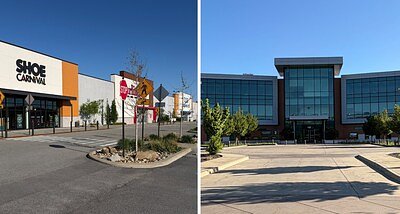
Hilco Global and Onyx Asset Advisors have announced a July 6 bid deadline for a Class A office building and an adjacent, fully occupied retail center in Morgantown, West Virginia. Together, these properties generate over $2.28 million in annual rental income. The paradox is stark: the assets are thriving, yet they are being sold through a bankruptcy court. For executive investors, the key is to look past the headline and analyze the fundamentals, which tell a story not of regional decline, but of a developer's overreach creating a unique market opening.
A Tale of Two Fortunes: Thriving Assets, Ailing Developer
The properties themselves are the picture of a successful modern development. The 136,865-square-foot retail center, completed in 2022, is 100% leased to a roster of national powerhouses including Kohl's, HomeGoods, Ross, and Burlington. This isn't a collection of struggling mom-and-pop shops; it's a fortress of credit-worthy tenants that anchor a major commercial hub. Next door, the 43,287-square-foot Class A office building, built in 2019, is partially secured by a 15-year lease with Jackson Kelly, one of the region's top law firms.
"The opportunity to acquire institutional-quality assets with strong tenancy and immediate cash flow is increasingly difficult to find in today's market," noted Christian Koulichkov, a director at Hilco Global, in the official announcement. His counterpart, Kevin Otus of Onyx Asset Advisors, added that the combination of “stable tenancy, recent construction and strong regional fundamentals makes this a compelling investment opportunity.”
Their assessment underscores the central conflict. The problem isn't the properties; it’s the balance sheet of their developer, West Ridge, Inc. Court documents reveal a classic story of debt-fueled expansion hitting a wall. The developer and its affiliates filed for Chapter 11 protection in August 2025, facing over $55 million in matured loans. Filings showed liabilities for the parent company potentially as high as $100 million against assets of no more than $50 million. This move was a direct response to creditors pushing to place the company into receivership. The bankruptcy, therefore, is a financial restructuring event for the developer, not an indictment of the commercial viability of its creations.
The Morgantown Resilience Factor: A Market Anchored by Stability
Any seasoned investor knows that location and market dynamics are paramount. Here, the story only gets stronger. The properties are located in the West Ridge Commons, a major commercial corridor along Interstate 79 that benefits from a powerful economic anchor: West Virginia University. WVU is the region's largest employer, providing a steady stream of students, faculty, and professionals who fuel consumer spending and demand for services.
The health of the broader commercial district provides critical context. The properties are surrounded by other major national retailers and destinations like Bass Pro Shops, Menards, and Dave & Buster's, signaling a robust and synergistic retail ecosystem. More telling are the financial results of the Tax Increment Finance (TIF) district that encompasses the development. While West Ridge, Inc. faltered, the Monongalia County Commission, which oversees the TIF, has emphasized the district's strength. At the time of the bankruptcy filing, officials noted that the district's sales tax collections were trending approximately 28% ahead of the previous year, a powerful indicator of vibrant economic activity that transcends the developer's specific issues.
This resilience is the safety net for a potential buyer. The income stream from tenants like HomeGoods and PetSmart isn't dependent on West Ridge, Inc.'s solvency; it's dependent on the continued consumer activity in the Morgantown region. All signs suggest that foundation is solid, making the bankruptcy an isolated event rather than a symptom of a sick market.
The Investor's Playbook: Sizing Up the Bankruptcy Bargain
With a bid deadline of July 6 and a potential auction to follow on July 13, the process is designed for a swift and decisive sale. For investors, this presents a multi-faceted opportunity. The primary appeal is acquiring stable, income-producing assets, potentially at a discount to what they might cost in a conventional sale. The structured bankruptcy process, managed by specialists in distressed assets, provides transparency and a clear path to ownership free of the seller's legacy liabilities.
The retail center offers immediate, predictable cash flow from its 100% occupancy and long-term leases with national brands. It is a classic core real estate investment, now available through an unconventional channel. The Class A office building presents a core-plus or value-add opportunity. With a strong anchor tenant in Jackson Kelly already in place, a new owner has the immediate task of leasing the remaining space. In a market supported by a major university and a growing professional class, this represents a clear path to increasing the property's net operating income and overall value.
While the bankruptcy of a prominent local developer like West Ridge, Inc. is a significant event, it has created a clear dislocation between asset value and ownership structure. The company's financial missteps have put high-quality, cash-flowing properties into play. This is precisely the type of situation where sophisticated capital can step in, recapitalize the assets under a sustainable framework, and unlock their inherent value. The upcoming deadline will reveal just how much appetite there is for this prime piece of West Virginia real estate, but the fundamentals suggest the interest will be robust.