
- 23% wider than conventional dressings, designed for precise sacral coverage
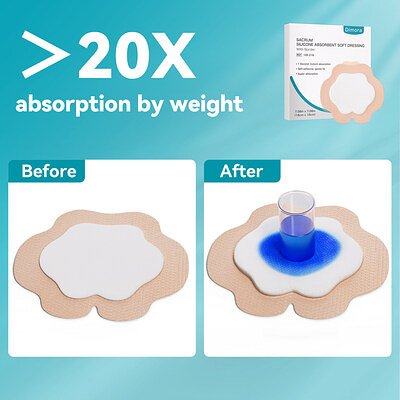
- Absorbs over 20x its weight in fluid within seconds, reducing maceration risk
- Global advanced wound care market projected to reach $23B by 2034, growing at 6.52% CAGR
Experts would likely conclude that Dimora Medical’s new dressing represents a significant advancement in pressure injury prevention, with its innovative design and absorption technology offering a cost-effective solution to a major healthcare challenge.
Dimora Medical Unveils New Dressing to Combat Costly Pressure Injuries
NEW YORK, NY – May 20, 2026 – Dimora Medical today launched an advanced sacral dressing designed to tackle one of the most persistent and costly challenges in modern healthcare: pressure injuries. The new Sacrum Silicone Absorbent Soft Dressing enters a rapidly growing market with features aimed at improving patient outcomes while easing the significant burden placed on caregivers in both home and clinical settings.
A New Design for a High-Risk Area
Pressure injuries, commonly known as bedsores, are a severe complication for patients with limited mobility, particularly affecting the sacrum—the area at the base of the spine. Dimora Medical’s new dressing is engineered specifically for this vulnerable region, incorporating several key design innovations highlighted in its launch.
A standout feature is its unique extended tail-wing shape, which the company states is 23% wider than conventional products. This increased surface area is designed for more precise and secure coverage of the sacral anatomy, a critical factor in preventing leakage from wound exudate and protecting the area from friction and shear forces that contribute to skin breakdown.
At the heart of the dressing lies a superabsorbent polymer (SAP) composite core. According to the company, this material can absorb and lock away more than 20 times its own weight in fluid within seconds. This rapid absorption is crucial for managing wound exudate, which, if left against the skin, can lead to maceration—the softening and breaking down of tissue—delaying healing and increasing infection risk. By maintaining a moist but not overly wet environment, the dressing aims to support the body's natural healing processes more efficiently.
The design also prioritizes patient comfort and ease of use for caregivers. A gentle silicone adhesive layer provides secure fixation without causing the skin trauma often associated with traditional adhesives, making it particularly suitable for the fragile skin of elderly patients. This allows for removal with minimal discomfort, streamlining the often-frequent process of dressing changes.
Addressing a Multi-Billion Dollar Healthcare Challenge
The introduction of Dimora Medical’s dressing comes as the healthcare industry grapples with the immense clinical and economic impact of pressure injuries. The global advanced wound care market was valued at over $13 billion in 2025 and is projected to surge past $23 billion by 2034, growing at a compound annual rate of 6.52%. This growth is fueled by an aging global population and a rising prevalence of chronic conditions like diabetes and vascular disease, which increase wound-related complications.
In the United States alone, the annual cost of managing hospital-acquired pressure injuries is estimated to be as high as $26.8 billion. Individual patient care can cost tens of thousands of dollars, encompassing extended hospital stays, specialized treatments, and management of complications like infection.
This staggering financial burden underscores the industry’s push towards more effective preventative care. Advanced dressings, while sometimes having a higher initial unit cost, are increasingly viewed as a crucial investment. By reducing the frequency of dressing changes, preventing complications, and potentially accelerating healing, these products can significantly lower the overall cost of care. The design of Dimora's new dressing, focused on extended efficacy and secure application, aligns directly with this cost-saving, preventative strategy.
Easing the Immense Burden on Caregivers
Beyond the hospital walls, the daily reality of wound care falls heavily on home health aides and family members. Research consistently shows that caring for individuals with chronic wounds imposes a significant physical, emotional, and financial burden. Long hours, complex care routines, and the emotional toll of seeing a loved one in pain contribute to high rates of caregiver burnout and depression.
Products that simplify caregiving are therefore not just a convenience but a critical support mechanism. A dressing that is easier to apply, removes gently, and can be worn for longer periods reduces the number of painful and disruptive interventions for the patient. For the caregiver, this translates into less time spent on physically demanding tasks and more time for providing comfort and companionship.
Dimora Medical has stated its mission is to "make home care easy," and this new product appears to be a tangible step in that direction. By addressing the practical challenges of sacral wound management, the dressing has the potential to improve the quality of life for both the person receiving care and the person providing it.
Innovation in a Competitive and Evidence-Based Field
Dimora Medical enters a competitive market, with established players like Mölnlycke and Medline offering their own lines of advanced sacral dressings. Success in this space depends not only on innovative features but also on a strong evidence base.
While specific clinical trials on Dimora’s newly launched product are not yet available, the underlying technology is well-supported by extensive clinical research. Multiple large-scale studies and meta-analyses have demonstrated the effectiveness of silicone foam dressings in preventing sacral pressure injuries. One comprehensive meta-analysis found that these dressings significantly reduced the incidence of both early-stage and more severe pressure injuries compared to standard care protocols. This existing body of evidence provides a strong foundation for the clinical principles behind Dimora's design.
The company's differentiation will likely hinge on its specific claims—the 23% wider coverage and the superior absorption capacity—and its ability to demonstrate how these features translate into superior real-world performance. The new sacrum dressing is being introduced in packs of ten for $26.99, with a promotional discount to encourage adoption through online channels, suggesting a strategy focused on accessibility for home care users. As healthcare continues its shift toward managing chronic conditions outside of the hospital, solutions that empower patients and their families will remain at the forefront of medical innovation.