
- 180 million device installations
- 40 million users
- Latency as low as 0.04 seconds with 4K@60FPS or 2K@240FPS streaming capabilities
Experts would likely conclude that DeskIn represents a significant evolution in remote access technology, bridging the gap between work and lifestyle applications with strong performance metrics and security features that cater to both individual and enterprise needs.
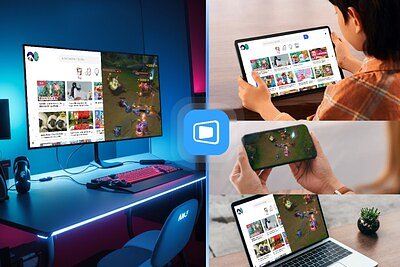
DeskIn: Remote Access Evolves From IT Tool to Lifestyle Essential
SINGAPORE – February 26, 2026 – The concept of remote access, long confined to the realm of IT support and corporate networks, is undergoing a significant transformation. Singapore-based Zuler Technology Pte. Ltd. is at the forefront of this shift with its remote desktop solution, DeskIn, which it is positioning not merely as a functional tool but as an essential “lifestyle app” for a new generation of users. With a reported 180 million device installations and 40 million users, the company is making a bold claim for a central role in our increasingly connected digital lives.
DeskIn’s mission is to dissolve the boundaries between devices, making a high-performance gaming PC, a work computer loaded with files, or a family member’s smartphone equally accessible from anywhere. This move reflects a broader trend where the lines between work, entertainment, and personal life are blurring, demanding tools that are as versatile as the users they serve.
A Tool for Work, Play, and Everything In-Between
Unlike traditional remote desktop software designed with a singular focus on corporate utility, DeskIn is engineered for a diverse audience. The platform aims to be the go-to solution for students needing to access powerful home computers from a lightweight tablet in class, freelance designers running resource-heavy software from a café, and families providing remote tech support to relatives.
This “lifestyle” positioning is supported by a feature set that extends far beyond simple screen sharing. User feedback frequently praises the platform's accessibility and intuitive interface, which lowers the barrier to entry for non-technical individuals. The free version, in particular, is noted for its robust capabilities, including features like audio calls and screen extension that competitors often place behind a paywall. This strategy appears to resonate with users who feel other free services have become overly restrictive or too aggressive in detecting perceived commercial use.
While the company frames this for the “AI Generation,” the technology’s immediate appeal lies less in explicit artificial intelligence features and more in its intelligent design. The software’s core, a proprietary technology dubbed the ZeroSync® Engine, leverages real-time communication (RTC) and cloud rendering to create a seamless experience. This is the technical foundation for the platform's ambitious goal: to make remote interaction feel as if you are physically present with the device.
High-Performance for Demanding Users
DeskIn is making a concerted effort to capture the loyalty of users with high-performance needs, a segment that has often been underserved by general-purpose remote access tools. For gamers and creative professionals, the two most critical metrics are latency and visual fidelity—areas where DeskIn focuses its technical prowess.
The company claims its ZeroSync® Engine can deliver latency as low as 0.04 seconds and stream visuals in up to 4K resolution at 60 frames per second (FPS), or even 2K at 240 FPS. These figures are not just for marketing; they are critical for enabling remote play of AAA games or smooth manipulation of complex 3D models in CAD software. The platform includes dedicated “Gaming” and “High-Performance” modes that optimize the connection for these demanding tasks.
Further catering to these niches, DeskIn offers extensive support for peripherals that are essential for professional workflows and entertainment. This includes compatibility with game controllers, 3D mice, and high-precision drawing tablets, allowing users to replicate their native desktop environment from afar. This focus on performance and specialized hardware support distinguishes it from simpler, browser-based solutions and places it in direct competition with established high-performance players, often at a more accessible price point.
Security and Trust in a Hybrid World
As remote access becomes more integrated into daily life, security is a paramount concern for users and businesses alike. DeskIn addresses this by promoting a multi-layered security framework designed to protect data and privacy. The platform utilizes bank-grade AES-256 end-to-end encryption for all data transmissions, ensuring that remote sessions and file transfers are shielded from interception.
Beyond encryption, the software provides granular control over access. Users can implement two-factor authentication (2FA) for account security, create allowlists or blocklists to control which devices can connect, and manage permissions for remote users, such as access to files, the clipboard, or audio. A key feature for privacy-conscious users is the “Privacy Screen,” which blacks out the screen of the controlled device to prevent visual eavesdropping during a remote session.
Zuler Technology states it holds ISO 27001 and ISO 9001 certifications, benchmarks for information security and quality management, respectively. These credentials, combined with robust security features, are crucial for building trust, especially as the platform targets not only individual users but also small teams and large enterprises navigating the complexities of hybrid work environments. By offering enterprise-grade security features across its plans, DeskIn is making a strong case as a reliable and secure backbone for the modern, distributed workforce.