
- $2B to $15B: The global market for automotive cockpit domain controllers is projected to grow from $2 billion in 2024 to $15 billion by 2034.
- 26 Locations: Desay SV operates in 26 locations worldwide, partnering with over 80 automotive brands.
- 2013: Desay SV established its presence in Japan, expanding to key automotive hubs like Hiroshima, Toyota, and Yokohama.
Experts would likely conclude that Desay SV's AI Intelligent Cabin Domain Controller Platform and ADAS solutions position the company as a strong contender in the rapidly evolving automotive technology landscape, particularly in the competitive Japanese market, where software-defined vehicles and intelligent in-cabin experiences are becoming critical differentiators.
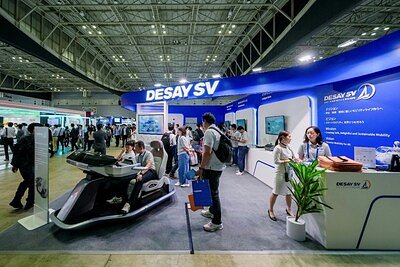
Desay SV Unveils AI Cockpit, Deepens Push into Japanese Auto Market
YOKOHAMA, Japan – May 27, 2026 – Global mobility technology company Desay SV celebrated its 40th anniversary today by unveiling a suite of advanced artificial intelligence innovations at the Automotive Engineering Exposition (AEE) 2026. The showcase, held under the theme "40 Years for Smarter Mobility," highlighted the company's strategic push to redefine the in-vehicle experience and deepen its commitment to the highly competitive Japanese automotive market.
At the center of the exhibition is the company's new flagship technology, the AI Intelligent Cabin Domain Controller Platform, EA01U. This platform, along with a comprehensive advanced driver-assistance system (ADAS) solution, represents Desay SV's vision for a future where vehicles are not just modes of transport but intelligent, adaptive partners for their occupants.
The Battle for the Intelligent Cabin
Desay SV is making a bold claim with its EA01U platform, promoting it as featuring an "industry-first seamless cloud-edge integration." This hybrid architecture is designed to deliver the best of both worlds: the low-latency, real-time response of edge computing processed directly within the vehicle, and the immense processing power and learning capability of the cloud. The system leverages what the company calls an edge-side Omni Model and Mixture of Experts (MOE) to power sophisticated voice and gesture recognition, all managed by an AI-native operating system.
The goal is to create a truly personalized and intuitive environment. The platform supports scenario-adaptive functions that learn user preferences and allows for seamless interaction across a driver's personal devices and the vehicle's systems. Its scalable architecture is also designed for cross-domain integration, meaning it can manage not just cabin infotainment but also driving and parking functions from a central hub.
This move places Desay SV directly in the heart of one of the most fiercely contested arenas in the automotive industry. The global market for automotive cockpit domain controllers is projected to surge, with some analysts predicting it will grow from just over $2 billion in 2024 to more than $15 billion by 2034. Tech giants like Qualcomm, with its dominant Snapdragon Cockpit platforms, and NVIDIA, with its powerful DRIVE systems, are also heavily invested in creating unified, AI-driven in-car experiences. While Desay SV's "industry-first" claim highlights its specific combination of technologies, it underscores a broader industry race to perfect the hybrid cloud-edge model that is seen as essential for the next generation of software-defined vehicles.
Advancing Automated Driving with Global Validation
Complementing the in-cabin experience, Desay SV also presented its comprehensive full-stack ADAS solution. The company emphasized the scalability of its suite, which combines a hardware platform, software algorithms, and system integration services to support a wide range of vehicles, from mass-market models to premium cars.
To bolster its credentials on the global stage, Desay SV noted that this ADAS solution, first shown at Auto Shanghai 2025, has already undergone validation through live urban and highway test drives in Germany during the IAA Mobility 2025 event. While specific details on the tests and partners involved were not disclosed, the announcement is intended to signal the system's maturity and adaptability to different international road environments and regulations. This focus on a globally validated, scalable solution is critical for any supplier aiming to secure contracts with multinational automotive brands.
A Blueprint for the Challenges of the AI Era
During a seminar at the exposition, Kosuke Kawasaki, the Managing Director of Desay SV Japan, provided insight into the company's strategic thinking. He outlined three major challenges confronting the automotive sector as it integrates AI: managing the escalating complexity of the user experience, aligning the subjective feeling of comfort with objective technical execution, and striking the right balance between stringent safety requirements and user convenience.
According to Kawasaki, Desay SV's strategy to tackle these issues rests on two pillars: an open development model that encourages ecosystem collaboration and a full-lifecycle AI operation platform that integrates development and deployment. This approach suggests a move away from proprietary, walled-garden systems toward a more collaborative framework. By fostering partnerships and providing tools that streamline AI integration, the company aims to help automakers evolve their value proposition from simply delivering functions to creating integrated, emotionally resonant user experiences. This philosophy is crucial in an era where the software and user interface are becoming as important as the vehicle's mechanical performance.
40 Years of Evolution, A Decade of Focus on Japan
The announcements in Yokohama are a culmination of Desay SV's 40-year evolution from a component supplier to a global mobility technology powerhouse with 26 locations worldwide and partnerships with over 80 automotive brands. This long history has, according to the company, built operational resilience and a deep understanding of the industry's cyclical and transformative nature.
A key part of this global strategy is a dedicated, long-term focus on the Japanese market. Since first establishing a presence in Japan in 2013, Desay SV has steadily expanded its footprint, opening offices in key automotive hubs including Hiroshima, Toyota, and Yokohama. This localized presence is not merely for sales; it reflects a commitment to providing localized engineering support and fostering deep partnerships with Japanese OEMs, who are known for their exacting standards and long-term supplier relationships.
By showcasing its most advanced technology at one of Japan's premier automotive engineering events, Desay SV is sending a clear message. The company is not just a foreign supplier looking for sales but a dedicated partner investing in the local ecosystem, aiming to contribute to the future of mobility in Japan and around the world. As vehicles become increasingly defined by their software and intelligence, Desay SV is positioning itself to be a critical architect of that future.