
- 16% CAGR: Global Industry 4.0 market projected to grow at a compound annual rate of over 16%. - 40% by 2026: AI-driven capabilities expected to be embedded in over 40% of production scheduling systems. - Net Zero by 2050: Delta Electronics committed to achieving Net Zero emissions by 2050, validated by the Science Based Targets initiative (SBTi).
Experts would likely conclude that Delta’s integrated approach to autonomous factories—combining automation, AI, and sustainability—represents a significant leap forward in manufacturing efficiency and environmental responsibility, positioning the company as a key player in the Industry 4.0 landscape.
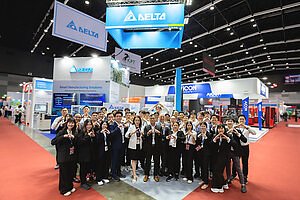
Delta’s Blueprint for the Autonomous Factory: Smarter, Greener, Connected
BANGKOK, THAILAND – June 17, 2026 – At Manufacturing Expo 2026, a single booth is drawing a crowd not for a single gadget, but for an idea: the complete, unified factory. Delta Electronics (Thailand) is pulling back the curtain on a strategy that moves far beyond selling individual robots or software. Instead, it’s showcasing a comprehensive blueprint for the future of production—an integrated ecosystem where automation, artificial intelligence, and energy management converge.
This isn’t just another step in the slow march of Industry 4.0. It’s a direct response to the immense dual pressures facing modern manufacturers: the relentless demand for higher productivity and the non-negotiable imperative to operate sustainably. Delta’s showcase suggests the solution isn’t to tackle these challenges separately, but to solve them simultaneously through a single, connected intelligence layer. As Delta Thailand's Country Manager, Ms. Atitaya Surapunthu, stated at the event, "The future of manufacturing will be defined by how well companies connect operational intelligence across the entire factory ecosystem. Manufacturers need greater visibility across production, energy usage, logistics, and facilities to improve resilience, efficiency, and sustainability simultaneously."
The New Factory Floor: Integrating Intelligence and Sustainability
The vision presented by the power and thermal management giant is built on three core pillars designed to dismantle the operational silos that have long plagued factory floors. The first, Integrated, Intelligent Manufacturing, tackles the physical layer. Here, Delta combines robotics, AI-powered quality inspection, and advanced assembly machines. This is aimed squarely at high-stakes industries like electronics and AI server assembly, where microscopic precision and absolute consistency are paramount. By automating these intricate tasks, the goal is to enhance traceability and efficiency while drastically reducing the need for manual intervention.
The second pillar, Smart Factory Digitalization, represents the brain of the operation. This is where the physical and digital worlds merge. By integrating platforms like its DIAEAP+ Equipment Automation Program and the DIATwin digital twin platform, Delta offers manufacturers a real-time, virtual replica of their entire production line. This is a critical leap beyond simple monitoring. It provides predictive insights and data-driven intelligence, turning a reactive environment into a proactive one.
Finally, the third pillar, Smart Infrastructure, Energy & Logistics Management, expands the scope of intelligence beyond the assembly line to the entire facility. By integrating HVAC optimization, energy management systems, and smart warehouse solutions, the company aims to create a factory that doesn’t just produce efficiently, but operates efficiently. This holistic view is where the promise of sustainability becomes tangible, optimizing everything from material flow to energy consumption and carbon output.
Beyond Automation: The Power of the Digital Twin
While automation and robotics are familiar concepts, the true game-changer in Delta’s strategy is its deep investment in digitalization, particularly the digital twin. This technology is at the heart of how the company proposes to de-risk and accelerate the transition to smarter manufacturing. The DIATwin platform allows a manufacturer to build, test, and optimize a virtual model of a machine or an entire production line before a single piece of physical hardware is installed.
For an electronics manufacturer preparing to launch a new product, this is revolutionary. Instead of costly and time-consuming physical trial-and-error adjustments on the factory floor, engineers can simulate thousands of cycles in a virtual environment. They can identify potential bottlenecks, refine machine performance, and verify assembly processes with digital precision. This dramatically reduces downtime, accelerates new product introductions, and ensures that when the physical line goes live, it operates at peak efficiency from day one. In a market where speed and reliability are key differentiators, this virtual proving ground offers a significant competitive advantage.
This move aligns perfectly with broader industry trends. With the global Industry 4.0 market projected to grow at a compound annual rate of over 16%, investment in technologies like AI and digital twins is exploding. Industry analysts note that by 2026, AI-driven capabilities are expected to be embedded in over 40% of production scheduling systems, making platforms like Delta's not just innovative, but essential for staying competitive.
The Green Imperative: From Efficiency to Net Zero
Perhaps the most compelling aspect of Delta's integrated strategy is its deep-seated focus on sustainability. This is not a marketing afterthought; it is woven into the company’s DNA. The parent company, Delta Electronics, Inc., is a signatory of the RE100 initiative, committing to 100% renewable energy use by 2030, and has had its goal of achieving Net Zero emissions by 2050 validated by the rigorous Science Based Targets initiative (SBTi).
This corporate commitment gives immense credibility to the solutions on display. When Delta talks about enabling "carbon reduction performance," it’s backed by a proven track record. Its smart infrastructure solutions are designed to provide granular visibility into energy consumption, allowing plant managers to hunt down and eliminate waste. The efficiency gains from AI-powered inspection and optimized robotics don't just improve the bottom line; they reduce material waste and the energy consumed by rework, directly lowering a factory's embedded carbon footprint.
For manufacturers facing pressure from investors, regulators, and consumers to improve their environmental performance, this is a powerful proposition. Delta is effectively offering a toolkit to help its customers achieve their own Net Zero and RE100 goals. By linking operational efficiency directly to sustainability outcomes, the company is making the business case that being green and being profitable are two sides of the same coin.
A High-Stakes Market in a Shifting Landscape
Delta is making its play in a fiercely competitive arena. Industrial giants like Siemens, Rockwell Automation, and ABB are also vying for dominance in the smart factory space, each with their own comprehensive platforms. However, Delta's deep expertise in power electronics, combined with its all-in-one integrated approach, offers a unique value proposition. It is betting that manufacturers, particularly in the booming Southeast Asian market, will prefer a unified ecosystem over a patchwork of solutions from different vendors.
This strategy directly addresses the primary barriers to smart factory adoption: complexity and cost. While the initial investment remains a hurdle for many, an integrated platform promises to simplify implementation, reduce integration headaches, and provide a clearer path to ROI. By demonstrating its solutions in its own factories, Delta is also building a powerful case study for their effectiveness.
The showcase in Bangkok is more than a product launch; it’s a statement of intent. It signals that Thailand and the broader ASEAN region are not just locations for global manufacturing, but are becoming epicenters of industrial innovation. By developing and deploying these advanced, integrated systems locally, Delta Thailand is helping to define the next generation of global manufacturing—one that is not only automated and intelligent, but also sustainable and resilient.