
- Smart Buildings 3.0: Delta's Intelligent Community Management System (iCMS) integrates energy, security, and environmental data for predictive optimization.
- Healthcare Impact: Delta's Asset & Personnel Tracking Solution reduces equipment/staff location time from minutes to seconds, improving patient safety.
- Autonomous Ecosystem: VORTEX system uses drones, robots, and AI for automated inspections and security, cutting incident response times.
Experts would likely conclude that Delta's holistic, AI-driven approach to building automation represents a significant leap forward in sustainability, efficiency, and safety, positioning the company as a strong competitor in the evolving smart buildings market.
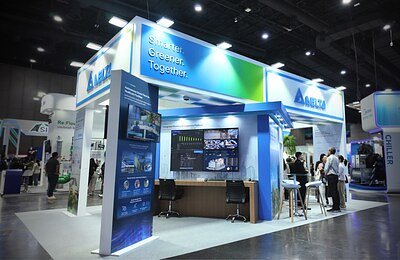
Delta's Blueprint for Healthy, Sustainable, and Autonomous Buildings
BANGKOK, THAILAND – June 04, 2026 – The floor at NOVA Expo 2026 is a cacophony of innovation, with exhibitors from across the globe showcasing the future of the built environment. Yet, at the booth of Delta Electronics (Thailand), the message is not about a single gadget or a standalone piece of software. It’s about a fundamental shift in how we conceive of our buildings—from passive structures of concrete and steel to active, intelligent, and integrated ecosystems.
Delta, a global heavyweight in power management, is leveraging the expo—themed “Re:Build – Upgrading Today for a Net-Zero Future”—to demonstrate a suite of solutions that cohesively manage everything from air quality and energy use to autonomous robotic security. This isn't about selling individual devices anymore. As the company sees it, the future lies in holistic systems that deliver tangible results.
"As buildings become more connected, customers are looking for solutions that go beyond individual devices and deliver measurable operational value," said Ms. Atitaya Surapunthu, Thailand Country Manager for Delta Thailand. Her statement cuts to the core of a market-wide evolution. Facility owners are no longer satisfied with siloed systems; they demand a unified platform that enhances efficiency, safety, and sustainability in one fell swoop.
The Shift to Smart Buildings 3.0
The concept of a “smart building” is not new, but its definition is rapidly evolving. The first wave brought us basic automation—lights on timers, rudimentary HVAC controls. The second wave introduced more sensors and connectivity, allowing for better remote monitoring. We are now entering the third generation, where the true power of integration, data, and artificial intelligence is being unlocked.
This new paradigm, which one might call Smart Buildings 3.0, is defined by three key drivers: radical energy efficiency to meet net-zero targets, a post-pandemic hyper-focus on occupant health and well-being, and the operational resilience that comes from data-driven insights. It’s a trend validated by the very existence of NOVA Expo, which has become a critical hub for the region's push towards sustainable construction and retrofitting.
Delta’s showcase is a masterclass in this third-wave thinking. Their Intelligent Community Management System (iCMS), for example, doesn't just monitor energy. It integrates security surveillance, traffic flow analysis, and environmental data into a single pane of glass. For a facility manager, this means moving from reactive problem-solving to proactive, predictive optimization. It's the difference between seeing a high energy bill at the end of the month and having the system automatically dim lights in an unoccupied wing while adjusting ventilation based on real-time air quality readings.
Redefining Healthcare and Hospitality
Nowhere is this integrated approach more critical than in high-stakes environments like hospitals and hotels. Delta has wisely targeted these verticals with tailored solutions that address their most pressing challenges.
In healthcare, the chaos of a busy hospital floor often creates operational blind spots. A critical ventilator goes missing, a specialized nurse is hard to locate during an emergency. Delta’s Asset & Personnel Tracking Solution tackles this head-on. By combining real-time positioning with event alerts and visual management, it transforms hospital operations. This isn't merely an efficiency gain; it's a direct contribution to patient safety and quality of care. When a hospital can reduce the time it takes to find equipment or staff from minutes to seconds, it can save lives.
In the hospitality sector, the battle is won or lost on guest experience. Delta’s Smart Hospitality Public Area Solutions aim to perfect this experience while simultaneously boosting operational efficiency. Imagine a hotel lobby where the indoor air quality is constantly monitored and purified, where U+ Care222 disinfection technology provides an added layer of hygiene, and where lighting scenes dynamically adjust to create the perfect ambiance. For the guest, it’s a seamless feeling of comfort and safety. For the operator, it’s a healthier environment achieved with lower energy consumption, a powerful combination in a competitive market.
The Autonomous Edge: Drones, Robots, and AI in Command
Perhaps the most forward-looking part of Delta’s vision is its VORTEX Autonomous Ecosystem. This is where the building begins to develop a life of its own. The system combines drones, ground-based robots, and advanced AI video analytics under a unified cloud management platform. This isn't science fiction; it's the next frontier of facility management and security.
Picture this: a drone conducts an automated EHS (Environmental, Health, and Safety) inspection of a factory roof, identifying a potential hazard without putting a human worker at risk. Later that night, it performs a security patrol around the perimeter, its AI-powered camera detecting an anomaly. An alert is instantly sent to the central system, which dispatches an autonomous robot to the location for a closer look, all while streaming live video to a remote security officer. This reduces manual workload, shortens incident response times, and dramatically enhances site safety.
This autonomous hardware is powered by the VORTEX Cloud-Based IP Surveillance platform. The true innovation here is the AI. Its ability to perform semantic searches—like “show me all red vehicles that entered through the north gate between 2:00 and 3:00 AM”—and conduct cross-camera investigations turns a passive surveillance system into a proactive security tool. It’s a force multiplier for security teams, allowing them to manage sprawling, multi-site facilities with greater effectiveness and efficiency.
An Integrated Strategy in a Competitive Field
Delta is not operating in a vacuum. The building automation space is crowded with established giants like Siemens, Schneider Electric, and Honeywell, all of whom offer their own sophisticated platforms. However, Delta's strategy appears to be one of targeted differentiation.
By leveraging its deep expertise in power electronics and combining it with a significant investment in AI, robotics, and open standards—evidenced by its LOYTEC solutions that support major protocols like BACnet and KNX—Delta is carving out a unique position. It’s not just selling a building management system; it’s selling a comprehensive, future-proofed ecosystem with a strong emphasis on sustainability and automation.
Their focus on specific, high-growth verticals allows them to offer solutions that are not just generic but deeply attuned to the nuances of those industries. By presenting this holistic vision at NOVA Expo 2026, Delta is making a clear statement: the buildings of tomorrow will do more than just house us. They will actively work to keep us safe, healthy, and efficient, paving the way for a more sustainable urban future.