
- $1.5B: Estimated annual cost savings from optimized referral management (implied by efficiency gains).
- 80%: Reduction in low-yield outreach efforts for post-acute providers (claimed impact).
- 50M+: Data points analyzed by Trella Health's new tool.
Experts would likely conclude that Trella Health's data-driven approach represents a significant advancement in post-acute care coordination, offering measurable efficiency gains and improved patient outcomes through smarter referral management.
Data, Not Just Handshakes: Trella Health Redraws the Referral Map
ATLANTA, GA – June 15, 2026 – In the sprawling, often fragmented landscape of American healthcare, the journey a patient takes after leaving the hospital is fraught with invisible hurdles. For decades, the process of referring patients to home health, hospice, or skilled nursing facilities has been governed more by established relationships and historical habit than by data. This has created what industry insiders call a “referral black hole,” where inefficiency, delayed care, and missed opportunities are the norm. Today, Atlanta-based Trella Health launched a tool that aims to bring a powerful flashlight into that darkness, signaling a fundamental shift in how the post-acute care sector operates.
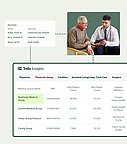
The company unveiled Physician Group Explore & Analyze, a new feature within its Trella Insights platform. While the announcement of a new software feature might seem routine, its strategic focus on entire physician groups—rather than just individual doctors—represents a significant evolution in a market desperate for a competitive edge.
The Problem with the Status Quo: Navigating the Referral Labyrinth
The post-acute care sector, encompassing everything from in-home nursing to long-term rehabilitation, is under immense pressure. Providers face a challenging environment of tightening regulations, stagnant reimbursement rates, and the industry-wide pivot toward value-based care, where payment is tied to patient outcomes, not services rendered. In this new reality, proving value is paramount, and that requires data.
Yet, for many home health agencies, hospices, and skilled nursing facilities, actionable data has been elusive. Their business development teams often rely on a combination of anecdotal evidence, existing personal connections, and sheer guesswork to identify potential referral sources. This approach is not only inefficient, consuming valuable time chasing low-yield leads, but it also fails to provide a complete picture of the market. A liaison might have a great relationship with one cardiologist, but remain completely unaware that the physician’s larger practice group overwhelmingly refers patients to a competitor.
This lack of visibility is more than a business problem; it impacts patient care. Inefficient referral management can lead to delays in starting care, communication breakdowns between providers, and a disjointed experience for patients at their most vulnerable. The need for a more intelligent, data-informed approach has never been more acute.
From Guesswork to Precision: A New Blueprint for Growth
Trella Health’s new feature is designed to replace market assumptions with market intelligence. By aggregating and analyzing billions of data points from claims, referrals, and electronic health records, the Physician Group Explore & Analyze tool allows post-acute organizations to see the forest, not just the trees. Users can now compare entire physician groups by patient volume, geographic reach, medical specialties, and, most critically, their historical referral patterns.
This enables a sales director at a home health agency, for example, to identify the top five orthopedic groups in their county that generate the highest volume of patients needing post-surgical care, and then see which skilled nursing facilities those groups currently partner with. They can drill down to see the individual physicians within each group, understand the group's operational footprint, and identify referral “leakage” trends where patients are being sent outside of an expected network.
“With Physician Group Explore & Analyze, post-acute organizations can move beyond individual physician targeting and better understand the broader physician group dynamics shaping their market,” said Kathy Ford, Trella Health’s Chief Product Officer. “This feature helps teams focus their outreach on the groups and providers most likely to drive meaningful growth, while giving them the insight they need to tailor conversations with greater precision.”
This shift from a wide net to a sharp spear promises not only to accelerate growth but also to dramatically improve the efficiency of outreach teams, allowing them to build more strategic and durable partnerships.
A Crowded Field with a Differentiated Approach
The healthcare analytics space is not without its players. A host of companies, including Aidin, CarePort Health (a WellSky company), and Netsmart, offer sophisticated platforms for referral management and market intelligence. These tools have been instrumental in digitizing and automating a process once dominated by the fax machine. However, Trella’s strategic focus on the physician group as the primary unit of analysis offers a distinct advantage.
Analyzing the collective behavior of a group provides a more stable and strategic view of the market than tracking the patterns of individual doctors, whose affiliations and referral habits can be more fluid. This macro-level view allows post-acute providers to align their service line strategies with the large-scale needs of major physician practices, fostering deeper, more integrated partnerships rather than a series of transactional relationships. This is a crucial distinction in a healthcare ecosystem that is increasingly consolidating into larger networks and accountable care organizations.
The Broader Implications: Data, Privacy, and the Future of Care Coordination
The launch of such a powerful analytical tool does not exist in a vacuum. It carries with it significant responsibilities and points toward broader trends shaping the future of healthcare. The platform operates on a foundation of de-identified and aggregated patient data, a practice governed by the strict privacy and security rules of the Health Insurance Portability and Accountability Act (HIPAA). For this model to work, companies like Trella Health must act as responsible stewards of this sensitive information, ensuring robust security and transparent data-handling policies through mechanisms like Business Associate Agreements with their clients.
From a strategic standpoint, the implications are profound. For post-acute providers, this level of insight is a powerful equalizer, allowing smaller, high-quality agencies to compete for referrals with larger, more established players by demonstrating their value with data. It also forces physician groups to become more aware of their own referral patterns, potentially leading to more optimized and accountable patient care pathways.
This launch is clearly part of a larger strategy for the AI-powered intelligence platform. Its recent acquisition of Repisodic, a platform that aids in hospital discharge planning, and its continuous expansion of data offerings—including insights on Assisted Living facilities and commercial payer rates—show a clear ambition to build a connected ecosystem. By embedding actionable intelligence directly into workflows, the company is working to bridge the gaps between hospitals, physician offices, and the full spectrum of post-acute care, ultimately driving toward a world where every patient transition is smarter, smoother, and leads to a healthier outcome.