
- 1,700+ leaders from over 90 countries attending the 2026 Summer Davos in Dalian.
- R&D investment surged from ¥4.28B (2007) to ¥28.09B (2023), now at 3.21% of GDP.
- Economy surpassed 1 trillion yuan, driven by over 10,000 tech businesses.
Experts would likely conclude that Dalian’s strategic pivot from heavy industry to a global innovation hub—backed by record R&D investment and sustainable industrial transformation—positions it as a model for high-quality, tech-driven economic growth in China.
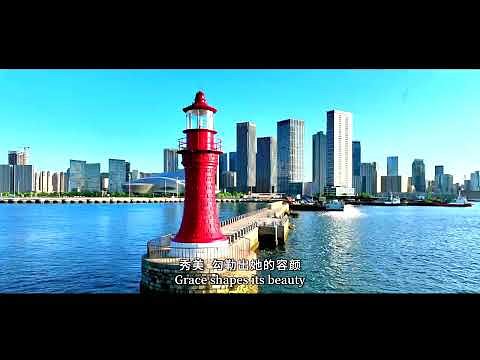
Dalian’s Davos Moment: From Industrial Giant to Global Innovation Crucible
DALIAN, China – June 23, 2026 – As the 17th Annual Meeting of the New Champions convenes today, the global spotlight returns to Dalian. This marks the ninth time the city has hosted the World Economic Forum’s “Summer Davos,” a testament to a deep-rooted partnership. With a record-breaking registration of over 1,700 leaders from more than 90 countries, the event, themed ‘Innovation at Scale,’ is more than a conference; it is a powerful statement about Dalian's own profound transformation and its ambition to offer a blueprint for the future.
Once known primarily as a bastion of China's heavy industry, Dalian is leveraging this global platform to showcase its metamorphosis into a regional science and technology powerhouse. For institutional investors and financial analysts, the city’s journey offers critical insights into China's strategic pivot towards high-quality, sustainable development and the emerging investment opportunities that follow.
The 'Davos Effect' and Dalian's Economic Metamorphosis
Hosting Summer Davos has become a powerful engine for Dalian's economic evolution. The so-called “Davos effect” is quantifiable. The 2024 edition alone helped attract 13 foreign-invested projects totaling 16.43 billion yuan ($2.42 billion), reinforcing the city's appeal to multinational corporations like Volkswagen and Pfizer, who have steadily expanded their local operations. This influx of capital is a direct result of the city’s strategic positioning as a “gateway for China's opening-up.”
The city's transformation is underpinned by a massive commitment to research and development. Dalian’s total R&D investment has skyrocketed from 4.28 billion yuan in 2007, the year it first hosted the forum, to 28.09 billion yuan in 2023. This surge has pushed R&D spending from 1.39% to 3.21% of its GDP, a figure that rivals many developed economies. Last year, Dalian became the first city in Northeast China to see its economy surpass the 1 trillion yuan threshold, a milestone built on a new foundation of over 10,000 tech-driven businesses. The focus is on nurturing 'specialized, refined, unique, and innovative' (SRDI) enterprises that can translate breakthroughs from hubs like Yinggeshi Science City and the Dalian Institute of Chemical Physics (DICP) into market-ready products, from advanced industrial software to hydrogen power solutions for drones.
Forging a Green Blueprint for Heavy Industry
Perhaps Dalian's most compelling narrative for the global investment community is its approach to the green transition. As a national petrochemical base, the city faced the monumental task of decarbonizing its industrial core. Instead of abandoning its legacy, Dalian is engineering a 'high-end, intelligent, and green' transformation, offering a potential model for industrial regions worldwide grappling with similar challenges.
This “Dalian Solution” is not merely aspirational. The city, a designated national low-carbon pilot, is leveraging its scientific prowess to drive the transition. The DICP is at the forefront, making critical advances in energy catalytic conversion and fine chemicals that reshape industrial processes. This has enabled the growth of a 400 billion yuan industrial cluster in green petrochemicals. The city's commitment is on full display for Davos attendees: the main venue is operating entirely on green electricity, projected to cut emissions by 800 metric tons, while the majority of the conference's vehicle fleet consists of new energy vehicles (NEVs), including hydrogen-powered buses. These initiatives are part of a wider strategy that has already resulted in clean energy accounting for 64% of Dalian’s total installed power capacity, a figure that speaks directly to ESG-focused investors looking for tangible progress.
Innovation at Scale: Digital Infrastructure and Global Connectivity
For fintech and technology investors, the innovation on display extends beyond industrial parks to the very infrastructure of the event itself. The forum’s network capabilities have been significantly enhanced with 5G-A technology, ensuring seamless connectivity for a global cohort of attendees. In a notable partnership, Tencent Cloud is providing broadcast-grade live streaming and a dedicated WeChat Mini Program for the forum, a practical example of how digital platforms are creating a more integrated and accessible global dialogue. This fusion of physical and digital infrastructure is central to Dalian's role as a “super connector.”
The agenda for this year's meeting is sharply focused on the questions shaping institutional strategy, with key sessions dedicated to “China's next chapter,” “technology in the real economy,” and “the energy transition as a source of competitiveness.” These discussions are taking place as China implements its 15th Five-Year Plan, which places technological self-reliance and innovation at its core. The gathering in Dalian thus provides an unparalleled opportunity for global leaders to gain firsthand intelligence on the direction of Chinese economic policy and identify the next wave of growth sectors.
As global wisdom converges with local ambition over the next three days, Dalian is not just a host but an active participant in the conversation about the future. It is presenting a compelling case study in leveraging strategic openness and targeted innovation to drive sustainable growth, offering the world a definitive answer that in an era of uncertainty, cooperation and technological advancement remain the most powerful forces for progress.