
- 20%+ cumulative price increase on essential household goods since early 2020
- 30%+ surge in paper product prices
- Zero markup on select essentials, passing 100% of wholesale savings to customers
Experts view this as a strategic 'loss leader' move designed to drive foot traffic and foster long-term customer loyalty, while positioning Curacao as a community-focused retailer during economic hardship.
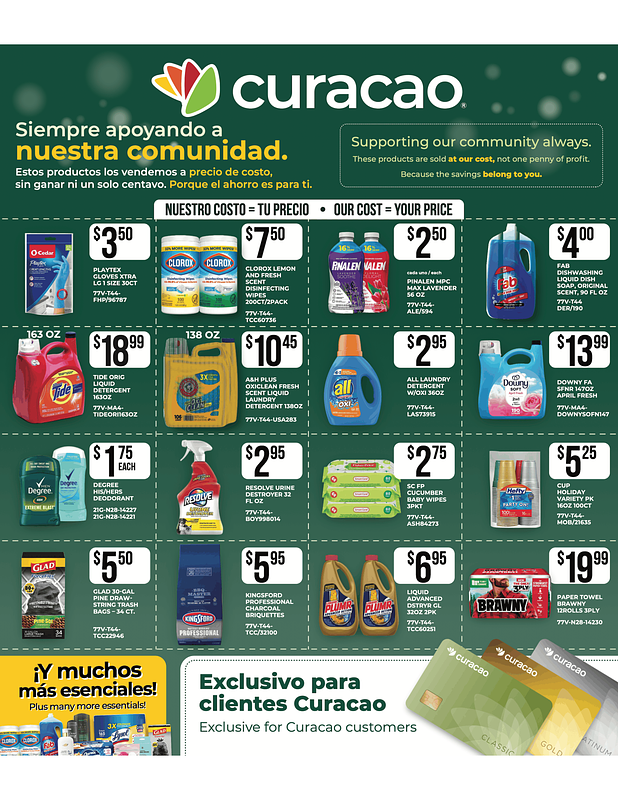
Curacao Sells Essentials at Cost in Bold Anti-Inflation Move
LOS ANGELES, CA – June 01, 2026 – In a direct challenge to persistent inflation, Curacao, one of the largest Hispanic-focused retailers on the West Coast, has launched a radical initiative to sell dozens of household essentials at the exact wholesale price it pays its suppliers, with zero markup or profit.
The move comes as families across the country grapple with the sustained high cost of living. With prices for necessities like food, gas, and rent squeezing household budgets, Curacao’s program aims to provide tangible relief by passing 100% of its wholesale savings directly to its customers. The initiative, available exclusively in the company's physical stores in California, Arizona, and Nevada, is a bold statement in a retail landscape where competitors are also vying for the loyalty of cost-conscious consumers, but often through less aggressive measures.
A Direct Response to Economic Pressure
The strain on American households is undeniable. Since early 2020, the cumulative price increase on many essential household goods has exceeded 20%, with categories like paper products surging by over 30%. This economic reality has forced many consumers, particularly those in low-to-moderate-income brackets, to change their purchasing habits, often opting for cheaper brands or simply buying less.
Curacao's “Essential Product Initiative” confronts this issue head-on. The program includes a wide range of everyday staples that families purchase repeatedly, such as Tide laundry detergent, Clorox disinfecting wipes, Downy fabric softener, and Brawny paper towels. By stripping away the retailer's profit margin entirely, the company claims customers can save several dollars per item compared to typical big-box store prices.
“Supporting our community has always been at the center of everything we do, but right now families are feeling the strain of higher prices on almost everything,” said James Lubary, Executive Vice President of Retail at Curacao, in a statement announcing the program. “With our new essential product initiative, we are choosing to give up our markup on select household essentials, so customers pay what we pay, no profit added, on the products they rely on every day.”
This approach positions the retailer as a direct ally to its core demographic, which has been disproportionately affected by the rising cost of living. The message is clear: while inflation rages, Curacao is willing to sacrifice its own profits on key items to help its customers make ends meet.
A Bold Gamble in a Competitive Market
While other major retailers like Aldi and Amazon Fresh have announced significant price cuts to combat inflation, Curacao's strategy of selling at exact cost is a distinctive and aggressive tactic. Industry analysts view this as a classic “loss leader” strategy, where a business intentionally forgoes profit on certain products to achieve a broader strategic goal: driving foot traffic.
The gamble is that customers drawn in by the promise of at-cost detergent and paper towels will not stop there. Once inside a Curacao store, they are exposed to the company's full range of higher-margin products, including electronics, furniture, and appliances. More importantly, it introduces them to Curacao's core business model: extending credit to its customers. The potential revenue from a new credit account for a large-screen television or a living room set would more than offset the zero-profit sale of a few household items.
This initiative is therefore less about the immediate transaction and more about customer acquisition and long-term loyalty. In a fiercely competitive market, creating such a strong value proposition can build a deep, lasting relationship with consumers. By tangibly demonstrating its commitment to community welfare, Curacao reinforces its brand identity, which has been cultivated over more than 45 years of serving the Hispanic community. This move could cement its status as a trusted, essential resource for its customers, yielding dividends in brand loyalty that competitors' weekly sales flyers may not be able to match.
The In-Store Experience and Program Logistics
Executing this strategy requires careful logistical planning. The initiative is pointedly not available online; customers must physically visit one of Curacao's retail locations. This in-store exclusivity is crucial to the loss-leader model, ensuring that the company has the opportunity to engage with customers and showcase its other products and services.
The program is also available only to “Curacao customers,” which likely requires shoppers to have an existing credit account or sign up for a free loyalty program. This allows the retailer to track participation and build its customer database, gathering valuable insights into purchasing habits that can inform future marketing and merchandising decisions.
To ensure the program's fairness and sustainability, it is highly probable that Curacao will implement purchase limits on these at-cost items. This common practice prevents hoarding and resale, ensuring that more families can benefit from the savings. Managing inventory will be a critical challenge; keeping shelves stocked with these high-demand, zero-profit products will be essential to maintaining a positive customer experience and the program's credibility.
For Curacao’s target audience, the bilingual service available in-store further enhances the accessibility and appeal of the program, making the shopping experience seamless and supportive.
Redefining Corporate Responsibility
Curacao's initiative raises a broader question for the retail industry: What is the role of a major corporation during times of economic hardship? By tying the program directly to its long-standing mission to support its community and the work of its charitable foundation, Curacao frames this not as a temporary promotion but as an authentic expression of its corporate DNA.
While it is a calculated business strategy, the at-cost model represents a significant departure from the standard retail playbook. It moves beyond simple discounts to create a partnership model with the consumer, where the retailer absorbs a direct financial hit on essential goods for the community's benefit. If successful in driving overall revenue and strengthening its market position, Curacao’s bold move could inspire other retailers to consider similar models.
For now, families in California, Arizona, and Nevada will be watching to see if the promised savings materialize on store shelves, potentially redefining their relationship with the retailers they depend on every day.