
- Patent Awarded: U.S. Patent No. 12,662,846 B2 for a ground sleeve system secured by a set screw.
- Concrete Elimination: Removes the need for concrete in fence post installation, reducing material and labor costs.
- Labor Efficiency: Compresses installation time from days to hours, boosting job completion rates.
Experts agree that Critterfence's patented system represents a strategic disruption in the fencing industry, offering cost savings, sustainability benefits, and competitive differentiation through proprietary technology.
Critterfence's Patent Digs a New Moat in the Fencing Industry
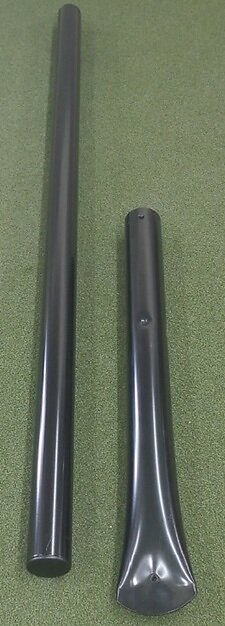
CHESTER, S.C. – June 29, 2026 – In the world of industrial transformation, seismic shifts often begin not with a bang, but with the quiet turn of a screw. This week, Critterfence LLC, a specialized fencing company based in South Carolina, was awarded U.S. Patent No. 12,662,846 B2 for a seemingly modest innovation: a ground sleeve system secured by a set screw. While a new way to install a fence post might not grab headlines like the latest AI breakthrough, it represents a masterful case study in market disruption, strategic positioning, and alignment with the core economic forces shaping our future. By eliminating the need for concrete—the messy, permanent, and carbon-intensive foundation of the fencing industry for over a century—Critterfence hasn't just improved a product; it has fundamentally altered the economic equation of a multi-billion dollar market. This patent is more than a piece of intellectual property; it's a competitive moat dug with precision, poised to upend a legacy industry from the ground up.
Beyond the Backyard: The Economics of Ditching Concrete
For decades, the standard for a sturdy fence has been unwavering: dig a hole, place the post, and fill it with concrete. It's a process that is labor-intensive, time-consuming, and unforgiving of error. Critterfence’s patented system—a machined sleeve driven into the ground, with a post locked in place by a simple set screw—methodically dismantles this old model. The economic implications are profound.
First, consider the direct input costs. A professional fencing contractor installing a 200-foot fence might use upwards of 25 bags of concrete mix. "Eliminating concrete from the equation is an immediate material cost saving on every single job," explained an industry analyst. "But the real value unlock is in labor productivity." The time spent mixing concrete, pouring it, setting the post, and waiting for it to cure is a significant drag on efficiency. A process that once took days can now be compressed into hours. For a professional crew, this means the ability to complete more jobs per week, directly boosting revenue and profitability in an industry often constrained by skilled labor availability.
The system's design also introduces a level of precision and forgiveness that concrete lacks. The integrated set screw allows installers to micro-adjust each post for perfect plumb and alignment after it's in the ground, a task that is notoriously difficult with fast-setting concrete. Furthermore, the patented dual-tier anvil, designed to drive both of the company's primary sleeve sizes (1⅝-inch and 2½-inch), standardizes the installation process and reduces the risk of damaging components, another hidden cost in traditional installations. For the burgeoning DIY market, these features transform a daunting weekend project into a manageable task, expanding the company's addressable market to homeowners who would have previously outsourced the job. This isn't just about making things easier; it's about reducing the barrier to entry and fundamentally changing the cost structure of property improvement.
Forging a Competitive Moat with Intellectual Property
In a market dominated by massive retailers like Home Depot and Lowe's, which can leverage economies of scale to squeeze margins, smaller specialty manufacturers must compete on innovation. Critterfence, which has been honing its expertise since 1984, has done exactly that. The award of U.S. Patent No. 12,662,846 B2, following a four-year application process, is the culmination of a deliberate long-term strategy to build a defensible market position.
This patent provides a legal monopoly on this specific integrated system, preventing larger competitors from simply replicating the design and flooding the market with cheaper knockoffs. It creates a powerful competitive moat. "For a company of this size, a strong patent portfolio is not a luxury; it's a survival mechanism and a primary driver of valuation," noted a strategist specializing in industrial patents. By controlling this unique technology, Critterfence can command a premium, maintain healthy margins, and control the brand narrative around this new standard of installation. The company's direct-to-consumer model, operating through specialized websites like Critterfence.com, Deerfencing.com, and PetPlaygrounds.com, is perfectly suited to capitalize on this. They can communicate the value proposition directly to their target audience without dilution from third-party retailers.
This strategic use of IP is a playbook for how niche industrial players can thrive in the 2026 economy. It's not about out-producing the giants; it's about out-thinking them. By identifying a persistent and costly pain point in a mature industry and developing a proprietary, patent-protected solution, the company has secured a defensible—and highly valuable—slice of the market. This move transforms Critterfence from merely a seller of fencing materials into a technology provider setting a new industry benchmark.
Riding the Macro-Tides of Sustainability and Labor
A truly disruptive innovation rarely succeeds in a vacuum. Critterfence's timing is impeccable, as its patented system aligns perfectly with several powerful macroeconomic trends. The most significant is the growing demand for sustainable and environmentally responsible products. Concrete production is a massive contributor to global CO2 emissions, accounting for roughly 8% of the world's total. By offering a viable concrete-free alternative, the company taps directly into the ESG (Environmental, Social, and Governance) consciousness of modern consumers and businesses.
Moreover, the system’s reusability is a key feature for a circular economy. The ability to loosen a set screw, remove a post, and redeploy an entire fence line with minimal waste is a stark contrast to the demolition and landfilling required for concrete-set posts. This appeals not only to environmentally-minded homeowners but also to commercial clients, event managers, and agricultural operations that require temporary or adaptable enclosures.
Simultaneously, the system provides an elegant solution to the persistent skilled labor shortage plaguing the construction and home services sectors. By simplifying the most technically demanding part of fence installation, it reduces the reliance on experienced crews. "Any product that allows a less-skilled worker to achieve a professional-grade result is golden in today's labor market," commented a construction industry consultant. This ease of use also feeds the massive DIY home improvement trend, a market that has remained robust as homeowners continue to invest in their properties. Critterfence's system is a product for its time, addressing the parallel needs for sustainability, efficiency, and accessibility.
A New Foundation for an Old Industry
Critterfence's patent is a clear signal that even the most traditional industries are ripe for innovation. It challenges the long-held assumption that permanence and strength must come from brute-force materials like concrete. The success of this system will inevitably force competitors to react, likely spurring a new wave of R&D across the construction materials sector focused on modular, adaptable, and less resource-intensive solutions. We are seeing a broader industrial shift away from monolithic, permanent structures toward more flexible and intelligent component-based systems. This small screw and sleeve from South Carolina may well be a harbinger of how we will build everything from fences to commercial interiors in the coming decade. It proves that the most powerful transformations often come from a deep understanding of a user's biggest problem and the focused application of clever design, a lesson that extends far beyond the fence line.