
- 25% stake: Netmarble holds a 25% stake in Coway, influencing board dynamics.
- Cumulative voting introduced: Shareholders approved a cumulative voting system, empowering minority investors.
- Dividend policy change: Coway revised its Articles of Incorporation to set dividend record dates after payout announcements, enhancing transparency.
Experts would likely conclude that Coway is cautiously modernizing its governance while maintaining a balance between shareholder rights and board control, reflecting a broader trend in South Korean corporate governance.
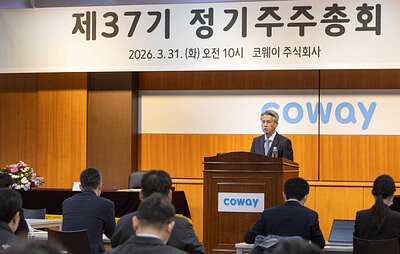
Coway's Governance Balancing Act: Shareholder Rights vs. Board Control
SEOUL, South Korea – March 31, 2026 – By Sam Lidman
In a closely watched Annual General Meeting, South Korean home appliance giant Coway Co., Ltd. presented a study in contrasts, embracing several measures to enhance shareholder rights while simultaneously rebuffing activist proposals aimed at fundamentally altering its board structure. The outcomes of the 37th AGM signal a company navigating the complex currents of modern corporate governance, modernizing its shareholder engagement while holding firm on its leadership composition.
Shareholders approved all agenda items proposed by the Board of Directors, including the ratification of financial statements and the reappointment of inside directors Junhyuk Bang, Jangwon Seo, and Soontae Kim. More significantly, the company will introduce a cumulative voting system, electronic general meetings, and a more flexible dividend policy. However, shareholder proposals from an activist fund calling for an independent chairman and a fully independent audit committee were voted down, highlighting an ongoing tension between management and a vocal investor faction.
Modernizing Governance, One Step at a Time
Coway's adoption of several governance reforms marks a significant, albeit legally prompted, step forward. The introduction of a cumulative voting system is perhaps the most notable change. This mechanism allows shareholders to concentrate their votes on a single director candidate, potentially empowering minority investors to gain representation on the board. While this move was framed as a proactive enhancement of shareholder rights, it also aligns with a recent amendment to South Korea's Commercial Act, which will mandate cumulative voting for large listed companies like Coway starting later this year. At its previous AGM in 2025, shareholders had rejected a similar proposal from an activist investor.
In a move toward greater accessibility and efficiency, the company will also implement electronic general meetings. This follows a trend set by other major Korean corporations, such as LG Electronics, to leverage technology to lower the barrier to entry for shareholder participation, allowing investors to vote and attend virtually. This digitalization of corporate democracy is seen as a crucial step in engaging a broader and more geographically dispersed investor base.
Furthermore, shareholders approved a revision to the company's Articles of Incorporation that allows the record date for quarterly dividends to be set after the dividend amount is announced. This change provides investors with greater certainty, allowing them to make more informed decisions based on a known dividend payout rather than speculating on a future announcement. This practice is gaining traction in Korea as a best practice for improving dividend predictability and shareholder transparency.
A Push for Independence Meets Resistance
While the board's proposed changes passed smoothly, the meeting was not without contention. Proposals submitted by activist investor Align Partners Capital Management, which has been campaigning for governance changes at Coway for several years, were not approved. The fund had pushed for amendments that would require the Board Chairman to be an independent director and mandate that the Audit Committee be composed entirely of independent directors.
Align Partners has argued that such changes are necessary to curb the influence of Coway's largest shareholder, gaming company Netmarble, which holds a 25% stake. The activist fund contends that the current board structure, heavily influenced by Netmarble, creates potential conflicts of interest and hinders independent oversight, ultimately depressing shareholder value. The rejection of these proposals indicates that the board and a majority of shareholders remain confident in the current leadership structure, led by Chairman Bang Jun-hyuk, who is also the founder and a key figure at Netmarble.
In its communications, Coway has defended its governance, stating that its board operates with sufficient independence and transparency. The company has credited Chairman Bang's leadership with driving significant growth and strategic success since Netmarble acquired its stake in 2020. "Coway will work to further strengthen communication with our shareholders, as well as to continue our efforts to achieve sustainable growth and enhance corporate value," CEO Jangwon Seo stated following the meeting.
Beyond the Boardroom: Growth and New Frontiers
Amidst the governance debate, Coway's management is focused on a broader strategic vision centered on innovation and market expansion. CEO Jangwon Seo's strategy hinges on sustainable growth fueled by R&D, global business acceleration, and diversification into new sectors. The company continues to be a dominant player in the home environmental appliance market with its lineup of water purifiers, air purifiers, and mattresses under its BEREX brand.
A key pillar of this future growth strategy is the 'Coway Life Solution' platform, a premium elder care service launched in 2025. This ambitious initiative aims to tap into South Korea's rapidly aging demographic by offering a comprehensive suite of services for seniors, including health management, nursing, travel, and even pet care, often integrated with Coway's core rental products. By partnering with specialized care companies and emphasizing financial transparency, Coway aims to build trust in a market segment ripe for disruption.
This strategic pivot illustrates the company's effort to create long-term value beyond immediate shareholder returns. Management's narrative is that this focus on sustainable growth and new revenue streams is the most effective way to enhance corporate and shareholder value over time. While activists focus on board composition and capital efficiency, Coway's leadership points to its operational performance and strategic foresight as evidence of its success. The results of the 37th AGM suggest that for now, a majority of shareholders are willing to continue backing this vision, even as the calls for greater independent oversight grow louder.
Topics & Related
Corporate Finance
Related Company Pulse