
- $15 million: Donation from Mark Pathy to establish the Mark Pathy Space Institute at Concordia University.
- $630 billion: Value of the global space economy in 2023, projected to reach $1.8 trillion by 2035.
- 1%: Canada's current share of the global space market, despite its technological expertise.
Experts agree that strategic investments in talent development and research, like the Mark Pathy Space Institute, are crucial for Canada to expand its role in the rapidly growing global space economy.
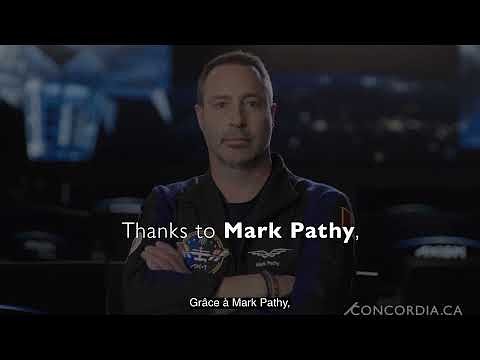
Concordia's Giant Leap: Pathy's $15M Gift Launches New Space Institute
MONTREAL, QC – May 13, 2026 – Concordia University is poised to take what its president calls "one giant leap" into Canada's burgeoning space sector, thanks to a transformational $15 million donation from entrepreneur, investor, and astronaut Mark Pathy. The gift, announced today, will establish the Mark Pathy Space Institute at the Gina Cody School of Engineering and Computer Science, a new hub designed to train the next generation of space engineers and solidify Canada's position in the rapidly expanding global space economy.
Inspired by the view of Earth from 400 kilometres up during his 2022 mission to the International Space Station, Pathy's investment aims to create a comprehensive ecosystem for space-related research and innovation. The institute will focus on talent development, advanced research, and fostering crucial collaborations between academia, industry, and government.
"Mark Pathy's vision, leadership and commitment to innovation will create opportunities for students and researchers that will have a lasting impact on our university and on Canada's role in the global space community," said Concordia President Graham Carr.
A Vision From 400 Kilometers Up
For Mark Pathy, this donation is more than a philanthropic gesture; it is the culmination of a personal journey that took him from the boardroom to low-Earth orbit. As a Mission Specialist on Axiom Mission 1 (Ax-1), the first fully private mission to the ISS, Pathy spent 17 days conducting scientific research and technology demonstrations. That experience provided him with a unique perspective on both the potential of space and the need to cultivate a robust domestic talent pipeline to support it.
"This wasn't just a philanthropic transaction for me," Pathy stated. "I saw genuine alignment of interests, objectives and values -- and I believe that by investing in students, research and real-world experimentation, Concordia can help ensure the next generation of space innovators build their future, and Canada's, right here at home."
Pathy's career has long been defined by a focus on forward-thinking investment. As CEO and Chairman of Mavrik Corp., a Montreal-based private investment firm, he has championed innovation and responsible investing, with a portfolio that includes climate tech and social innovation. This ethos aligns with the new institute's goal of not only pushing technological boundaries but also addressing challenges like space sustainability. His philanthropic track record, which includes significant contributions to healthcare through the Jess and Mark Pathy Centre of Excellence in Infectious Diseases, further underscores a commitment to advancing critical research for societal benefit.
Building Canada's Space Economy
The creation of the institute comes at a pivotal moment. The global space economy, valued at over $630 billion in 2023, is projected by the World Economic Forum to surge past $1.8 trillion by 2035. This growth is fueled by decreasing launch costs, an insatiable demand for satellite data and connectivity, and emerging industries like in-orbit manufacturing and space tourism.
Canada, despite its storied history in space with innovations like the Canadarm, currently captures only about 1% of this global market. The Canadian space sector generated $5.1 billion in revenues in 2023, but industry experts and government reports have highlighted the need for strategic investment in talent and technology to scale up. The federal government has signaled its intent to bolster the sector, creating a new National Space Council and funding programs like the Lunar Exploration Accelerator Program (LEAP).
The Mark Pathy Space Institute is positioned to directly address this national priority. "Canada has the technology, expertise and industrial base to play a much larger role in the global space sector," Pathy explained. "What I found compelling about Concordia's proposal is that it focuses on the true foundations of a national space economy: talent development, research capability, and collaboration with industry and government."
An Interdisciplinary Hub for Innovation
What sets the Mark Pathy Space Institute apart is its uniquely integrated structure. It will be the only university environment in Canada where four critical domains—robotics, propulsion, human space health, and sustainability—co-exist within a single research ecosystem. This interdisciplinary approach builds upon Concordia's existing strengths in aerospace engineering, including a Canada Research Chair in Aerospace Robotics, and its location within Montreal's world-class aerospace cluster.
A key component of the gift includes an off-campus testing facility, providing a rare hands-on environment for students and researchers to conduct engine testing, hardware verification, and other essential technical experiments. This capability moves research from the theoretical to the practical, a critical step in developing flight-ready technology and preparing a workforce for industry leaders like MDA Space, Canadensys Aerospace, and others.
"The Mark Pathy Space Institute will give our students and researchers an extraordinary platform to design, test and develop technologies that can shape Canada's future in space," said Mourad Debbabi, dean of the Gina Cody School. "By combining Concordia's engineering expertise with industry collaboration and hands-on experimentation, we will help train the next generation of innovators and ensure Canada's talent can contribute to a thriving domestic space ecosystem."
The institute's focus areas align perfectly with national and global needs, from developing next-generation robotic systems for lunar missions to creating life-support and medical technologies for human spaceflight—innovations that often find powerful applications back on Earth, particularly in remote healthcare.
A Legacy of Philanthropy and Partnership
The institute will be guided by an advisory board chaired by Pathy himself, ensuring its strategic direction remains closely aligned with the evolving needs of the space industry. Concordia plans to leverage the $15 million gift to attract additional funding from government and industry partners, securing the institute's long-term impact and sustainability.
This act of visionary philanthropy echoes the transformative gift that named the engineering school itself, from Concordia Chancellor Gina Cody. It reinforces a model where private investment acts as a catalyst for institutional ambition and national progress.
"This is the kind of visionary philanthropy that transforms a university and inspires a nation," said Chancellor Cody. "Mark Pathy's generosity will empower our students and researchers to aspire to new heights and create a lasting legacy in Canada's space sector."