
A new ready-to-print bio-kit from CollPlant promises to speed up organ engineering and drug discovery while reducing reliance on animal materials.
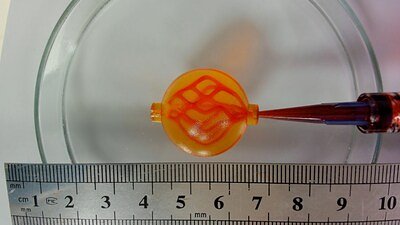
CollPlant Launches BioFlex to Accelerate 3D Bioprinting of Tissues
REHOVOT, Israel – February 23, 2026 – Regenerative medicine company CollPlant today announced the launch of BioFlex, a new ready-to-print bioink kit that aims to significantly accelerate the complex process of 3D bioprinting human tissues and organs. The new product leverages the company's proprietary plant-based recombinant human collagen (rhCollagen) and is designed for high-resolution Digital Light Processing (DLP) 3D bioprinting, a technology at the forefront of creating intricate biological structures.
BioFlex is positioned to empower biopharmaceutical companies and academic institutions by simplifying one of the most challenging aspects of tissue engineering: creating a stable, reliable, and biologically relevant material for printing. By providing an integrated kit, CollPlant hopes to fast-track research in drug discovery, the development of engineered tissues, and the long-term goal of fabricating transplantable organs.
Streamlining the Path to Biofabrication
The core innovation of BioFlex lies in its all-in-one, ready-to-use format. Traditionally, researchers have spent significant time and resources screening various components and developing custom bioink formulations for their specific needs. This process can be a major bottleneck, slowing the pace of discovery. BioFlex is designed to eliminate this hurdle by providing a standardized, optimized system that includes CollPlant’s rhCollagen-based Collink.3D™ 50, a biodegradable polymer, and proprietary photoactive agents necessary for DLP printing.
According to the company, users can follow established guidelines to create customized bioinks with tunable mechanical properties. This allows them to precisely control the physical characteristics of the final printed construct, such as its tensile strength, elasticity, and structural integrity, to better mimic the properties of native human tissues. The result is a more efficient and predictable path from a digital design to a functional tissue construct.
"We are committed to empowering both biopharma and academic researchers with high-performance 3D bioprinting solutions," said Yehiel Tal, CEO of CollPlant, in the company's official announcement. "BioFlex, our ready-to-use rhCollagen-based bioink kit, significantly streamlines the formulation process while preserving design flexibility. By integrating our standardized recombinant human collagen with biodegradable polymers and photoactive components - supported by expert-developed formulation and printing guidelines - we enable seamless preparation and highly reproducible, high-resolution printing outcomes."
A New Standard in an Ethical, Growing Market
The launch comes as the 3D bioprinting market continues its rapid expansion, driven by the immense potential of regenerative medicine. DLP printing, in particular, is favored for its speed and ability to achieve resolutions fine enough to create complex micro-architectures like vascular channels within tissues. However, the technology's progress has been partly limited by the availability of suitable biomaterials. BioFlex directly addresses this challenge by providing a robust, animal-free solution.
CollPlant's use of rhCollagen, which is genetically engineered in tobacco plants, is a key differentiator in a market where many bioinks are derived from animal sources. Animal-derived collagens can introduce variability, batch-to-batch inconsistency, and the risk of immune reactions or pathogen transmission. By providing a plant-derived human collagen, CollPlant offers a higher degree of safety, consistency, and reproducibility—critical factors for both research applications and eventual clinical use. This animal-free approach also aligns with a growing global push to reduce and replace animal testing, a movement supported by regulatory bodies like the U.S. Food and Drug Administration.
"Like our other Collink.3D™ bioinks, the BioFlex kit provides a state-of-the-art, animal-free alternative to conventional commercial systems, enabling high-resolution, scalable, and highly reproducible bioprinting of scaffolds that closely replicate the physical characteristics of native human tissues and organs," Tal concluded in his statement.
Strategic Leap in a Competitive Field
The introduction of BioFlex is a significant strategic move for CollPlant. While the company has faced financial headwinds common in the capital-intensive biotech sector, successful commercialization of its core technology is paramount. The launch expands its product portfolio beyond bulk materials into a value-added kit, targeting the crucial R&D market segment. This move aims to generate new revenue streams and solidify its position against competitors like CELLINK and Advanced BioMatrix, which also offer a range of bioinks.
CollPlant's core rhCollagen technology has already received significant validation through a major partnership with Allergan, an AbbVie company. That 2021 agreement, focused on developing dermal and soft tissue fillers for the aesthetics market, provided CollPlant with substantial upfront and milestone payments, lending credibility to its platform. While the Allergan partnership focuses on medical aesthetics, the BioFlex launch reinforces the versatility of the rhCollagen platform and strengthens the company's identity as a key technology supplier for the broader regenerative medicine industry.
By creating a product that lowers the barrier to entry for high-level bioprinting, CollPlant is not just selling a product; it is positioning itself as an enabler of innovation across the entire field. This strategy could prove crucial in attracting more collaborations and cementing its technology as an industry standard.
The Future of Fabricated Tissues
The ultimate promise of technologies like BioFlex extends far beyond the research lab. The ability to rapidly and reliably print human tissue models could revolutionize pharmaceutical drug discovery, allowing for more accurate and humane testing of new compounds on human-like tissue rather than in animals. This could lead to safer, more effective drugs developed at a lower cost.
Further down the road lies the goal of organ manufacturing. While the printing of a fully functional, complex organ like a heart or kidney remains a monumental challenge, progress depends on foundational advancements in materials and printing techniques. Creating functional vascular networks to supply blood to larger printed constructs is one of the most significant hurdles. High-resolution systems like DLP, when combined with advanced, highly biocompatible bioinks like BioFlex, represent a critical step toward solving such challenges.
With the launch of BioFlex, CollPlant is providing the research community with a more powerful and accessible tool, potentially shortening the timeline for the next wave of breakthroughs in regenerative medicine and bringing the future of biofabricated organs one step closer to reality.