
- 25,000-square-foot expansion: Coherix's new North American HQ in Ann Arbor.
- $100 million investment: Over one million engineering hours in AI-based quality-control technology.
- 25% cost savings: Claimed reduction in labor and material costs for manufacturers using Coherix's system.
Experts would likely conclude that Coherix's expansion and AI-driven manufacturing technology represent a strategic advancement in Industry 4.0, enhancing precision, efficiency, and supply chain resilience in high-stakes industries like automotive and electronics.
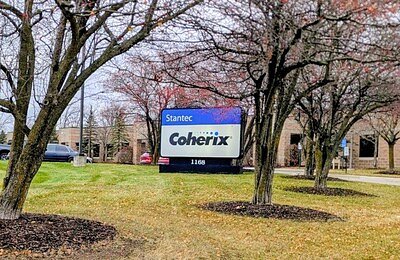
Coherix Expands Ann Arbor HQ, Fueling AI Manufacturing Revolution
ANN ARBOR, MI – March 04, 2026 – In a move that underscores both its rapid growth and Ann Arbor's rising prominence as a tech hub, AI-based quality-control leader Coherix has relocated to a new, expansive North American headquarters. The 25,000-square-foot facility on Oak Valley Drive provides a significant upgrade in space, signaling the company's response to surging demand for its advanced manufacturing technologies.
The expansion is more than a simple real estate transaction; it represents a strategic investment in capacity for manufacturing, software development, and customer service. This move positions Coherix to better serve its global clientele, which includes over 50 of the world's top automotive OEMs and more than 75 Tier One suppliers.
The Precision Imperative in Modern Manufacturing
At the heart of Coherix's growth is a solution to a complex, high-stakes problem on modern assembly lines: the precise application of structural adhesives and sealants. In industries like automotive and electronics, where robots dispense these materials at high speeds, even microscopic errors in the bead's height, width, or location can compromise structural integrity, leading to costly rework, scrap, or potential failures.
Coherix has pioneered what it calls an "industry-first" adaptive process control system to combat this issue. Its technology utilizes 3D laser-based vision systems powered by machine learning and artificial intelligence. Unlike traditional inspection systems that simply flag a defect after it has occurred, Coherix's platform inspects and adjusts the dispensing process in real-time. The system "sees" the adhesive bead as it's applied, compares it to manufacturer specifications thousands of times per second, and communicates with the dispensing robot to make immediate corrections. This proactive approach aims for "zero defects," moving quality control from a reactive to a preventative discipline.
"This move allows us to keep pace with growing customer demand for our products, speed the development of next-generation adhesive-dispensing technology and attract engineering talent," said Dwight Carlson, Coherix chairman and CEO, in the company's announcement. The technology, which represents an investment of over $100 million and one million engineering hours, is claimed to save manufacturers 25 percent or more in labor and material costs.
A Strategic Move in a Booming Tech Hub
The decision to expand within Ann Arbor is a calculated one, tapping into a rich ecosystem of innovation and talent. Recently ranked as a top-three tech hub in the nation by Bloomberg, Ann Arbor provides a fertile ground for high-tech companies. The city's growth is fueled by a confluence of venture capital, a supportive business environment, and, most critically, world-class academic institutions.
The University of Michigan, with its top-ranked engineering and robotics programs, serves as a cornerstone of this ecosystem. The university's focus on creating "full-stack roboticists" and its substantial research investments create a deep talent pool that is essential for companies like Coherix, whose technology sits at the intersection of robotics, software engineering, and AI. By expanding its local footprint, Coherix not only gains access to this talent but also contributes to the region's reputation as a leader in advanced manufacturing and automation. This symbiotic relationship helps anchor a critical high-tech industry in Michigan, building on its automotive heritage while pushing into the future.
Riding the Wave of Industry 4.0
Coherix's expansion is occurring against the backdrop of a massive industrial transformation, often called Industry 4.0. The market for AI in manufacturing is experiencing explosive growth, with projections showing an increase from around $3.2 billion in 2023 to over $20.8 billion by 2028. This surge is driven by the global push for smarter, more efficient, and more automated factories.
Key drivers include the rapid expansion of the electric vehicle (EV) market, where precise adhesive application is critical for battery assembly and lightweighting, and the increasing complexity of consumer electronics. As production lines get faster and product designs become more intricate, the margin for error shrinks, making automated, intelligent quality control a necessity rather than a luxury. The adhesive dispensing market itself is on a steady growth trajectory, expected to surpass $19 billion by 2033 as industries increasingly replace traditional fasteners like rivets and welds with advanced adhesives to reduce weight and improve structural performance. Coherix, with its 35% annual post-COVID growth rate, appears well-positioned to capitalize on these powerful, long-term trends.
Redefining Quality and Supply Chain Resilience
The impact of Coherix's technology extends far beyond the factory floor, fundamentally enhancing quality and resilience throughout the supply chain. For its customer base—which includes automotive giants like Ford, General Motors, Toyota, and Mercedes-Benz, alongside major suppliers like Bosch and Magna—the ability to guarantee the integrity of every adhesive bond is a significant competitive advantage.
The system's precision enables automakers to pursue more aggressive lightweighting strategies, which are crucial for improving fuel efficiency in traditional vehicles and extending the range of EVs. Furthermore, the technology provides complete part traceability, creating a detailed digital record of every assembly. This eliminates the need for destructive testing and provides invaluable data for predictive maintenance, reducing unscheduled downtime. In an era of persistent supply chain disruptions, building this level of predictability and quality assurance into the manufacturing process helps mitigate risk, prevent costly recalls, and ensure that the final product meets the highest standards of safety and performance. This shift from simple inspection to intelligent process control represents a pivotal step in the evolution of modern manufacturing.
Topics & Related
Software & SaaS
AI & Machine Learning
Machine Learning
Artificial Intelligence
Industry 4.0
Related Company Pulse