
- $105M Funding: Cognito Therapeutics secures $105 million in Series C financing to advance its at-home Alzheimer’s therapy.
- 77% Reduction: Spectris™ therapy showed a 77% reduction in the decline of daily activity performance in a 76-patient feasibility study.
- 2027 Launch: Company aims for commercial launch of Spectris™ in 2027 pending FDA approval.
Experts view Cognito’s Spectris™ therapy as a promising, non-invasive approach to Alzheimer’s treatment, with potential to preserve cognition and daily function, pending successful pivotal trial results and FDA approval.
Cognito Secures $105M for At-Home Alzheimer's Light & Sound Therapy
CAMBRIDGE, MA – March 05, 2026 – Cognito Therapeutics, a neurotechnology firm on the cusp of late-stage clinical results, has successfully closed an oversubscribed $105 million Series C financing round, signaling strong investor confidence in its novel approach to treating Alzheimer’s disease. The funding is earmarked to advance Spectris™, a non-invasive, at-home therapy that uses sensory stimulation to combat the neurodegenerative disorder, through pivotal trials and toward a planned commercial launch in 2027.
The investment round was led by a consortium of prominent venture firms including Morningside Ventures, IAG Capital Partners, and Starbloom Capital. The significant capital infusion arrives at a critical juncture for both the company and the millions of families grappling with Alzheimer’s. It provides the financial runway needed to analyze pivotal data, navigate regulatory submissions with the U.S. Food and Drug Administration (FDA), and scale up commercial operations.
“With this financing, we are entering a pivotal moment for our company, and for the patients and families waiting for new options in Alzheimer’s disease,” said Christian Howell, Chief Executive Officer, Cognito Therapeutics. “Spectris has the potential to become the world’s first physician-prescribed, at-home neuroprotective therapy for patients diagnosed with Alzheimer’s, designed to preserve cognition and daily function. This funding allows us to make this therapy accessible to those who need it most.”
The Science of Synchronizing Brainwaves
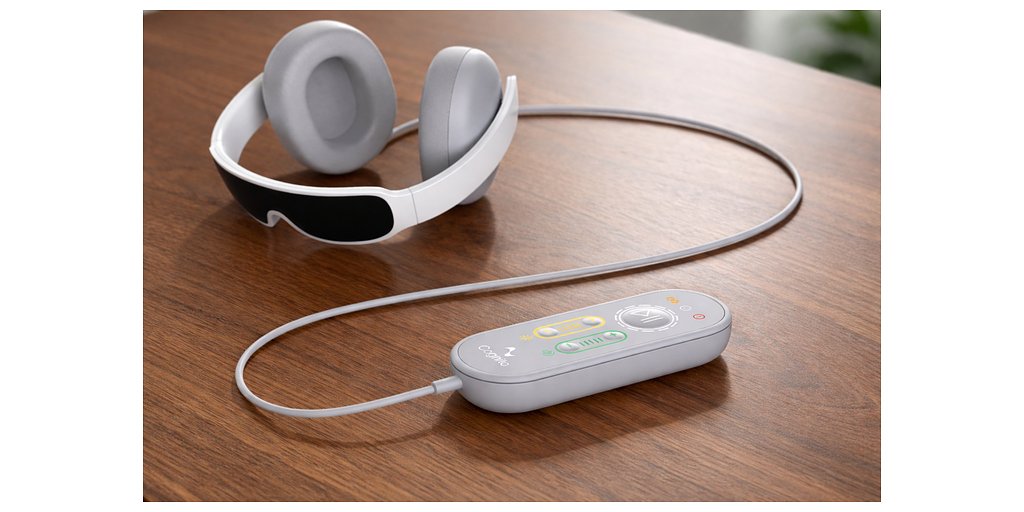
At the heart of Cognito's strategy is a sophisticated yet non-invasive technology. The Spectris™ platform is a headset and control unit designed to be used daily in a patient’s home. It delivers coordinated visual and auditory stimulation at a specific frequency—40 Hertz—to evoke a natural brain response known as gamma oscillations.
Scientific research, much of it pioneered at institutions like MIT, has established a link between disrupted gamma brainwaves and the progression of Alzheimer's. These high-frequency waves are critical for cognitive processes like learning and memory. In Alzheimer's patients, this neural activity is often diminished. Spectris™ aims to restore these rhythms by externally driving them through the brain's own sensory pathways. The hypothesis is that this restored activity can trigger a cascade of neuroprotective benefits, including improved clearance of toxic proteins like amyloid, enhanced synaptic function, and protection of white matter, the brain's crucial communication network.
Evidence from the company’s 76-patient OVERTURE feasibility study supports this theory. Over a six-month period, patients using the device showed a 77% reduction in the decline of their ability to perform daily activities and a 69% reduction in brain volume loss compared to a sham group. The therapy was well-tolerated with high adherence, and notably, it did not produce amyloid-related imaging abnormalities (ARIA), a side effect that has been a concern with some recently approved anti-amyloid antibody drugs.
A Calculated Bet in a High-Stakes Market
The $105 million investment is more than just a vote of confidence in Cognito's technology; it's a strategic move within a revitalized neurotechnology investment landscape. After a slowdown, the "Braintech" sector has seen a rebound, with capital increasingly concentrated in late-stage companies poised for regulatory and commercial success. Cognito, with its pivotal HOPE study fully enrolled and FDA Breakthrough Device Designation in hand, fits that profile perfectly.
Lead investor Morningside Ventures, known for its long-term bets in life sciences, sees this as a convergence of science and patient need. “Cognito represents a rare convergence of rigorous neuroscience research, clinical validation, elegant engineering, and a deep understanding of patient needs,” stated Gerald Chan, ScD., Founder of Morningside Ventures and Chairman of the Board at Cognito. “Spectris has the potential to redefine how a broad category of neurodegenerative diseases are treated.”
The investment also reflects the immense market opportunity. The global economic burden of dementia is projected to approach $3 trillion annually, creating a powerful incentive for innovative solutions. While recent years have seen the landmark approval of anti-amyloid drugs like lecanemab, these treatments require regular hospital infusions and carry risks, leaving a significant unmet need for safer, more accessible options.
“Novel technologies like Cognito’s, which are non-invasive and accessible, will be an important part of the broad and comprehensive treatment approach that will define the future of Alzheimer’s care,” said Howard Fillit, MD, Co-Founder and Chief Science Officer of the Alzheimer's Drug Discovery Foundation (ADDF). He envisions a future where devices, lifestyle changes, and therapeutics are combined for personalized treatment plans.
Bringing Alzheimer's Therapy Home
Perhaps the most profound potential of Spectris™ lies in its ability to shift the paradigm of care from the clinic to the living room. For patients and their families, managing Alzheimer’s is a daily struggle that erodes independence and places an enormous burden on caregivers. An at-home, self-administered therapy that can preserve cognitive function and the ability to perform daily tasks—like preparing a meal or managing personal finances—could be transformative.
This model contrasts sharply with the logistical challenges of current disease-modifying drugs, which often require bi-weekly or monthly intravenous infusions at specialized centers. By eliminating the need for frequent travel and clinical visits, Spectris™ could not only improve quality of life but also expand access to treatment for patients in rural or underserved communities.
Cognito is now laser-focused on its fully enrolled HOPE pivotal study, a 12-month trial involving approximately 670 participants across the United States. The company anticipates releasing top-line data from this crucial study later this year. Positive results would pave the way for a regulatory submission to the FDA and move the company one step closer to its goal of a 2027 market launch, offering a new ray of hope for the millions affected by this devastating disease. The company also plans to explore the platform's potential in other neurodegenerative conditions, beginning with a collaboration with the WVU Rockefeller Neuroscience Institute.
Topics & Related
AI & Machine Learning
Software & SaaS
Artificial Intelligence
Machine Learning
ESG
Regulatory Approval
Related Company Pulse