
- EU Market Access: CE Mark certification grants access to a market of over 450 million people.
- Funding Boost: AU$83 million private placement secured at a 12.3% premium, increasing cash balance to AU$289 million.
- Annual Scans: CT:VQ™ targets ~400,000 nuclear VQ scans currently performed yearly in the EU.
Experts view 4DMedical's CT:VQ™ as a transformative advancement in lung diagnostics, offering safer, more accessible functional imaging that could set a new standard for respiratory assessments.
4DMedical's AI Lung Scan Wins EU Approval, Backed by AU$83M War Chest
MELBOURNE, Australia – March 30, 2026 – In a landmark move poised to reshape respiratory diagnostics across Europe, Australian medical technology company 4DMedical (ASX:4DX) has secured CE Mark certification for its groundbreaking CT:VQ™ imaging software. The approval grants immediate commercial access to the entire European Union, a market of over 450 million people.
This pivotal regulatory milestone was strategically coupled with the announcement of a successful AU$83 million private placement from institutional investors. The capital injection is earmarked to power the technology's rapid deployment across Europe and support the company's accelerating global growth ambitions.
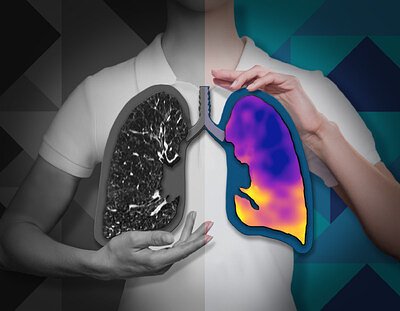
CT:VQ™ represents a significant departure from traditional lung function tests. It is the world's first technology capable of generating detailed ventilation and perfusion maps—showing how air and blood move through the lungs—from a standard, non-contrast CT scan. This eliminates the need for radioactive tracers and specialized nuclear medicine facilities, promising to make functional lung assessment safer, more accessible, and seamlessly integrated into existing hospital workflows.
A New Era for European Lung Diagnostics
For decades, clinicians diagnosing pulmonary conditions like pulmonary embolism have relied heavily on nuclear VQ scans. While effective, this method is fraught with logistical challenges, including the complex supply chain and short half-life of radioactive isotopes, the need for specialized and costly infrastructure, and limitations on patient access. 4DMedical estimates that approximately 400,000 such scans are performed annually across the EU, highlighting a significant clinical bottleneck that CT:VQ™ is positioned to address.
By leveraging the vast and growing installed base of CT scanners in European hospitals, 4DMedical's software offers a powerful alternative. "Pulmonary disease is fundamentally functional—defined by abnormalities in ventilation and perfusion—yet most routine imaging available to radiologists and pulmonologists remains purely structural," explained Andreas Fouras, Managing Director and CEO of 4DMedical, in a statement. CT:VQ™ bridges that critical gap.
The CE Mark certification is governed by the stringent Medical Device Regulation (EU) 2017/745 (MDR), which requires robust evidence of safety and performance. This includes a mandate for comprehensive post-market surveillance, ensuring 4DMedical will continuously collect real-world data to validate and improve the technology's performance after its market introduction. For European healthcare procurement officers, who increasingly prioritize solutions that enhance patient safety and clinical outcomes, the non-invasive nature of CT:VQ™ is a compelling advantage.
A Strategic Leap Fueled by Investor Confidence
The dual announcement of regulatory approval and a major capital raise sends a powerful signal of 4DMedical's strategic intent and the market's confidence in its vision. The AU$83 million single-tranche private placement was secured from select institutional investors at a price of AU$5.90 per share, a notable 12.3% premium to the 5-day volume-weighted average price preceding the deal.
This influx of capital boosts the company's pro forma cash balance to an impressive AU$289 million, providing what company documents describe as "exceptional financial capacity" to fund its European market entry and other growth initiatives for several years without needing further capital raises. The funds will be instrumental in building out a direct sales force, establishing partnerships with major European hospital networks, and supporting research collaborations to drive adoption.
Market analysts who have been bullish on the company since its technology received FDA 510(k) clearance in the United States see the CE Mark as the removal of the final major regulatory hurdle for global commercialization. "For investors, the question becomes: can 4DMedical successfully commercialize CT:VQ in Europe while maintaining momentum in the US, or will execution challenges limit upside from this regulatory catalyst?" noted one analyst report. While the strong balance sheet and unique technology position are viewed favorably, some suggest that near-term share price appreciation may be tempered as investors watch for tangible commercial traction in the new market.
The Science of Seeing Airflow
At its core, CT:VQ™ is a triumph of software, leveraging 4DMedical's patented XV Technology® platform which combines proprietary algorithms and artificial intelligence. The process is elegant in its integration. A patient undergoes a routine, low-dose CT scan without any contrast agents. The imaging data is then processed by the CT:VQ™ software, which analyzes the subtle changes in lung tissue density between different phases of the breathing cycle captured during the scan.
From this analysis, the software generates four-dimensional, color-coded maps that quantify and visualize both ventilation (airflow) and perfusion (blood flow) in every part of the lung. This provides clinicians with unprecedented, region-specific functional insights overlaid with the precise anatomical detail of the CT scan. This allows for a more accurate diagnosis of conditions, monitoring of disease progression, and planning of treatments or surgical interventions.
The ability to deliver this functional data without radiation from tracers, within existing workflows, and using equipment already present in nearly every hospital, represents a paradigm shift in cardiothoracic imaging.
Following the US Blueprint
4DMedical is not entering the European market from a standing start. The company's strategy is heavily informed by its successful early adoption in the United States, where CT:VQ™ is already deployed at six of the nation's most prestigious academic medical centers: Stanford, Cleveland Clinic, University of Miami, UC San Diego Health, University of Chicago Medicine, and most recently, the Mayo Clinic.
The adoption by institutions renowned for their rigorous evaluation of new diagnostic technologies serves as powerful third-party validation and a compelling blueprint for European expansion. "The clinical need for CT:VQ™ is universal," Fouras stated. "Europe has the clinical expertise, imaging infrastructure and research leadership to play a major role in the adoption and evidence generation for this technology."
With regulatory clearance now secured for both the US and EU, 4DMedical is positioned to rapidly commercialize its technology across two of the largest healthcare markets in the world. The company is now actively advancing plans to engage with leading European hospitals and clinicians, setting the stage for what could be a new standard in the assessment of lung health.
Topics & Related
Medical Devices
Software & SaaS
AI & Machine Learning
Artificial Intelligence
Machine Learning
Private Placement
Revenue
Related Company Pulse